Mary Shelley’s Frankenstein with Open House Theatre
(Scroll down for the German language summary.)
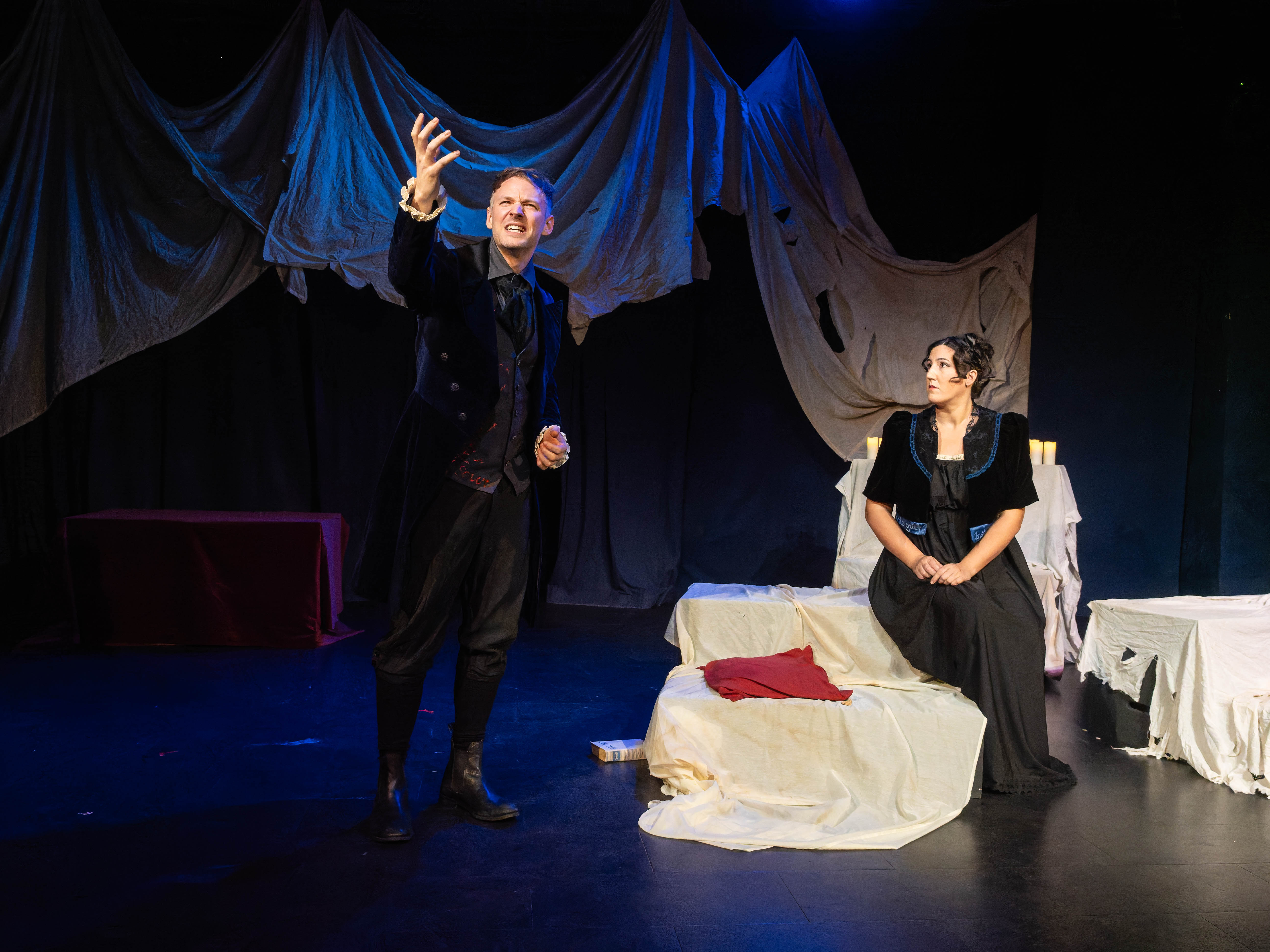
A few suspended sheets become the Swiss mountains. A puppet discovers birdsong and water. And Mary Shelley watches the creature born from her imagination with a tenderness that almost undid me. Open House Theatre’s new Frankenstein at Theater Spielraum is no ordinary production of this age-old tale.
I first encountered the production through my camera while photographing the dress rehearsal and was thoroughly impressed. Returning for the premiere, I could give it my undivided attention—and found myself completely absorbed, again. Helena Steele’s extraordinary adaptation, which she also directs, weaves Mary Shelley’s life together with her novel: the woman imagining a creature into existence, the scientist who brings him to life, and the being who must discover what sort of world he has entered.
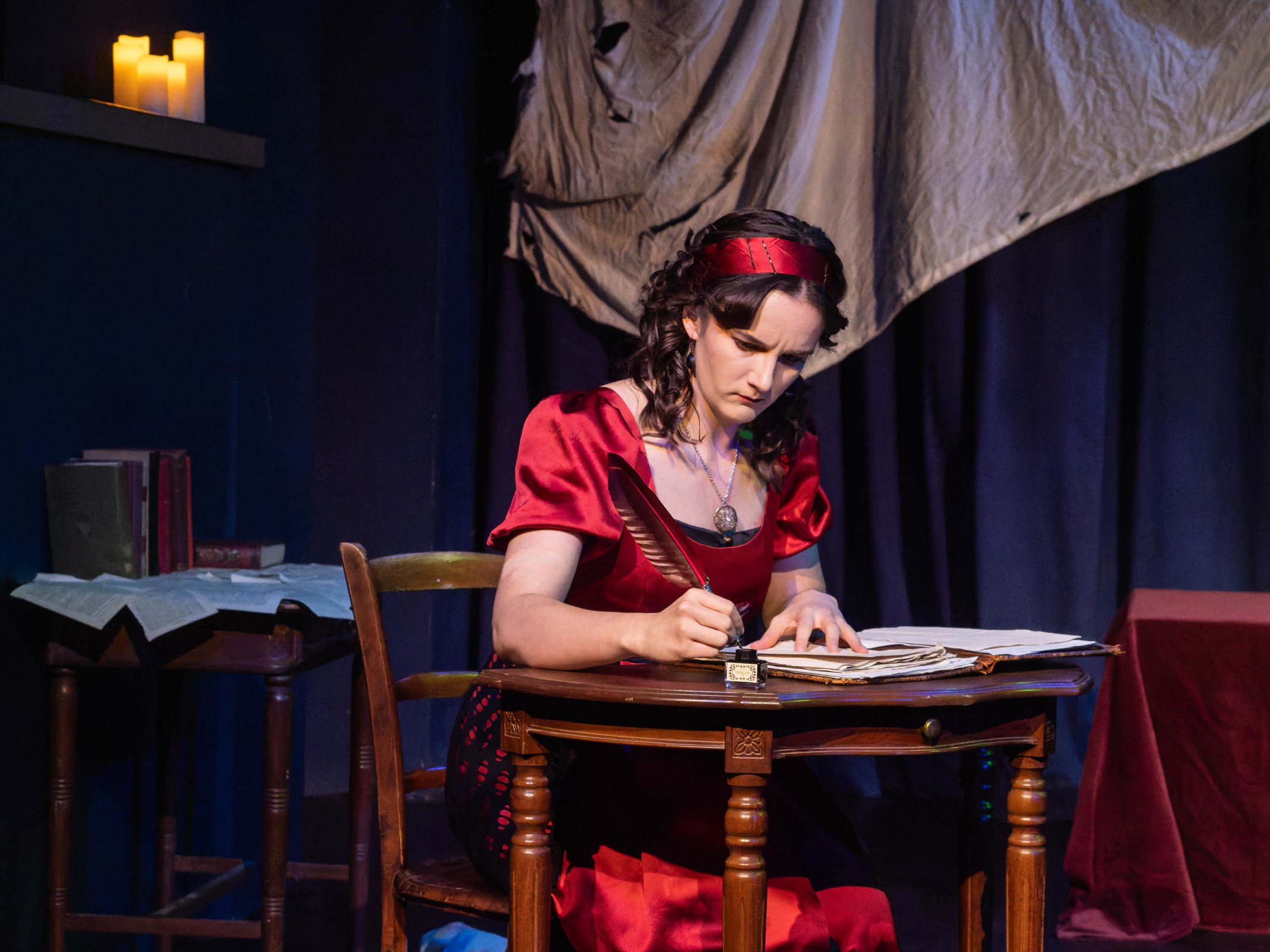
Mary becomes the teller of her own imagined story, while the people around her enter its fictional world. Her relationship with the poet Percy Bysshe Shelley, her stepsister Jane and Lord Byron unfolds alongside the tragedy of Victor Frankenstein and his creature. The movement between these worlds gives the fiction emotional weight, while Mary’s creation gives us another way to understand her.
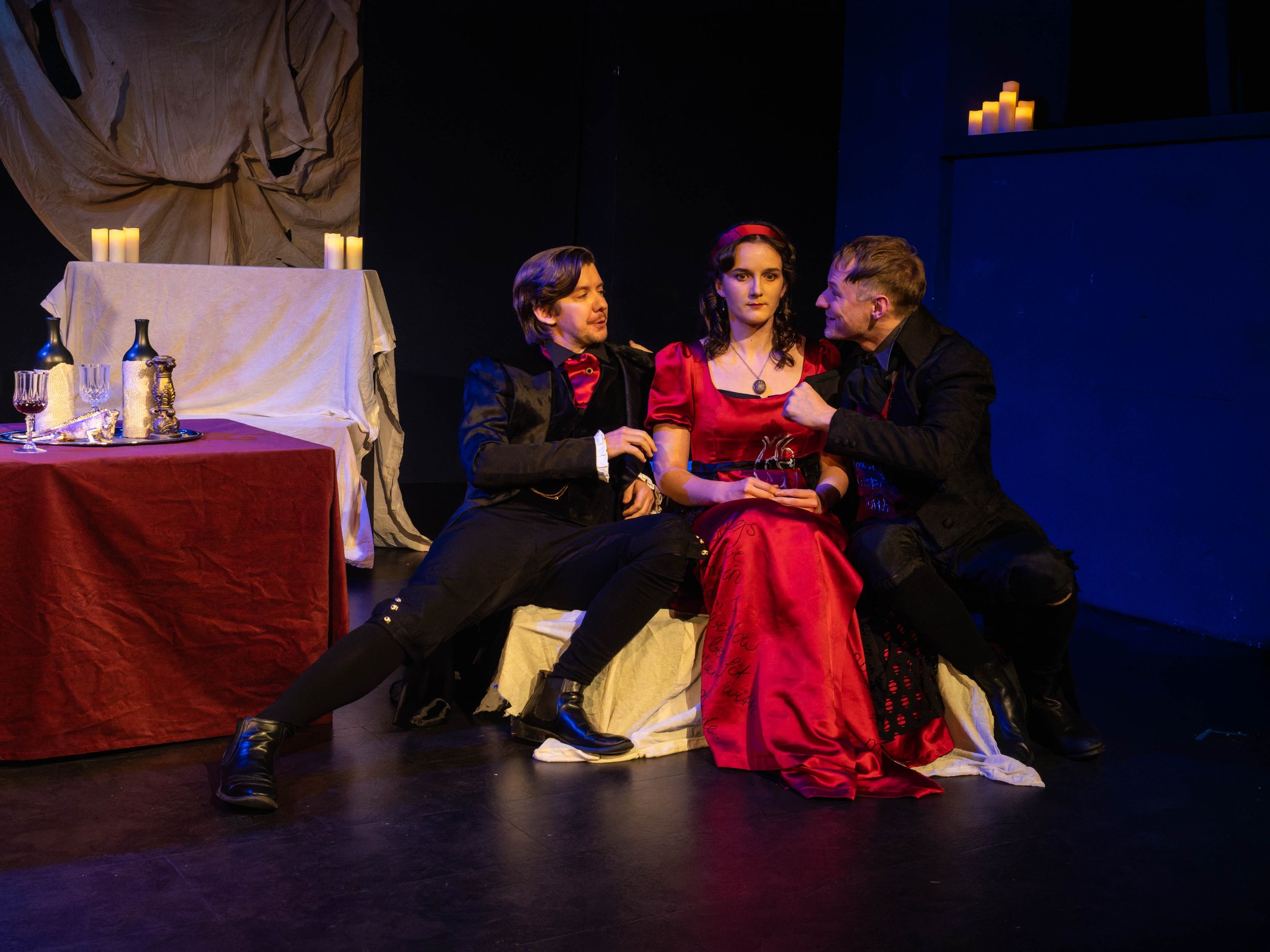
In her programme notes, Helena reflects on the relationship between a creator and their creation. What responsibility does a creator bear towards what they bring into the world? Can a creation ever acquire an identity independent of its maker? These questions extend beyond Victor Frankenstein and his creature to the relationship between an artist and their work, or a parent and their child. For Helena, Mary Shelley’s personal story is where these dimensions converge: the artist and her art, the mother and her child, their identities inextricably intertwined.
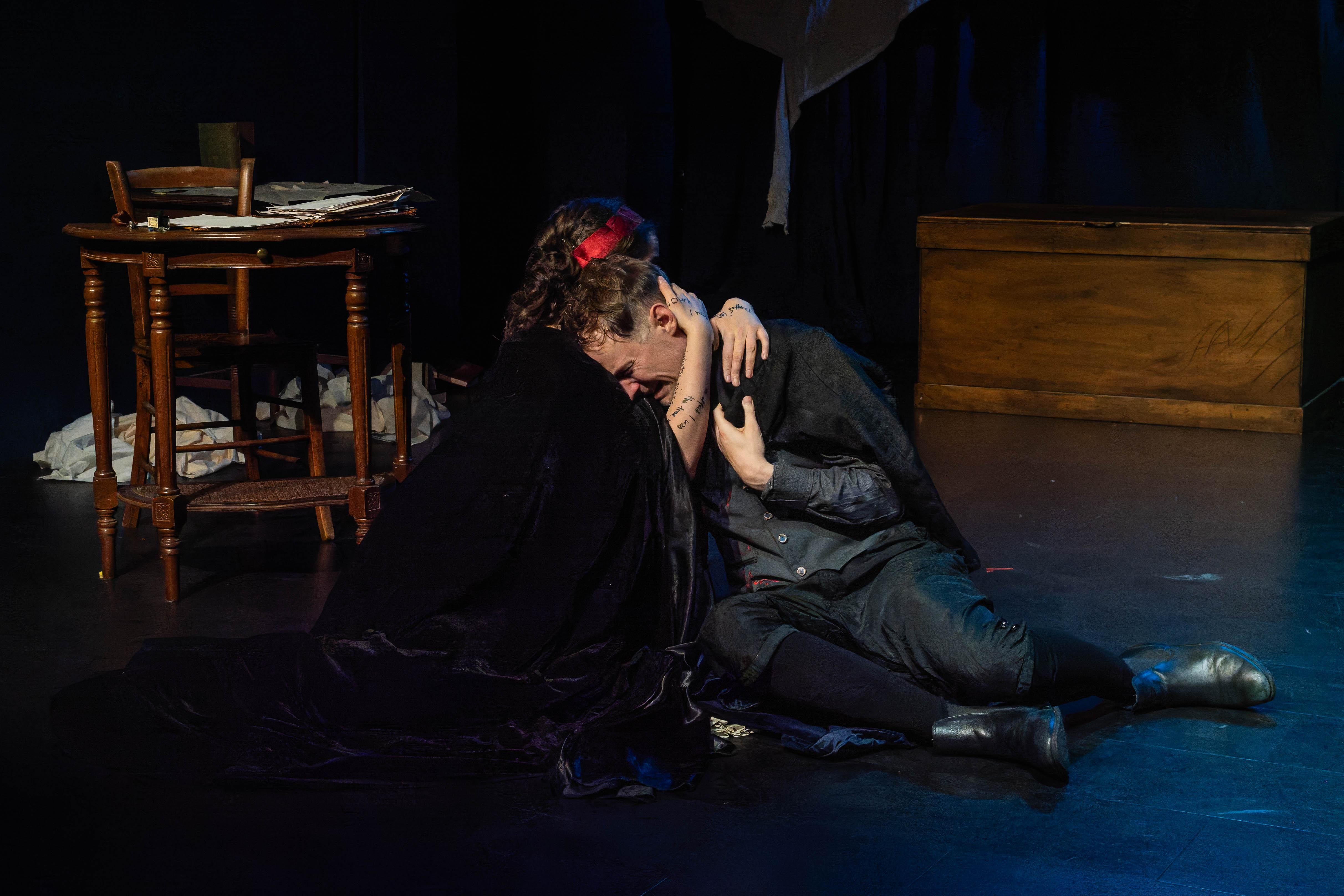
Mary’s grief gives this interpretation particular emotional force. Her first baby with Percy died in March 1815, more than a year before the summer at Lake Geneva in which Frankenstein began to take shape. The loss lends a painful resonance to a story about creating life, confronting death and bearing responsibility for what one has brought into existence. Mary is a fiercely independent young woman, determined to find her own place in the world. By bringing that spirit into the production, Helena allows us to see Frankenstein not only as Victor’s tragedy, but also as the extraordinary imaginative achievement of the woman who created him.
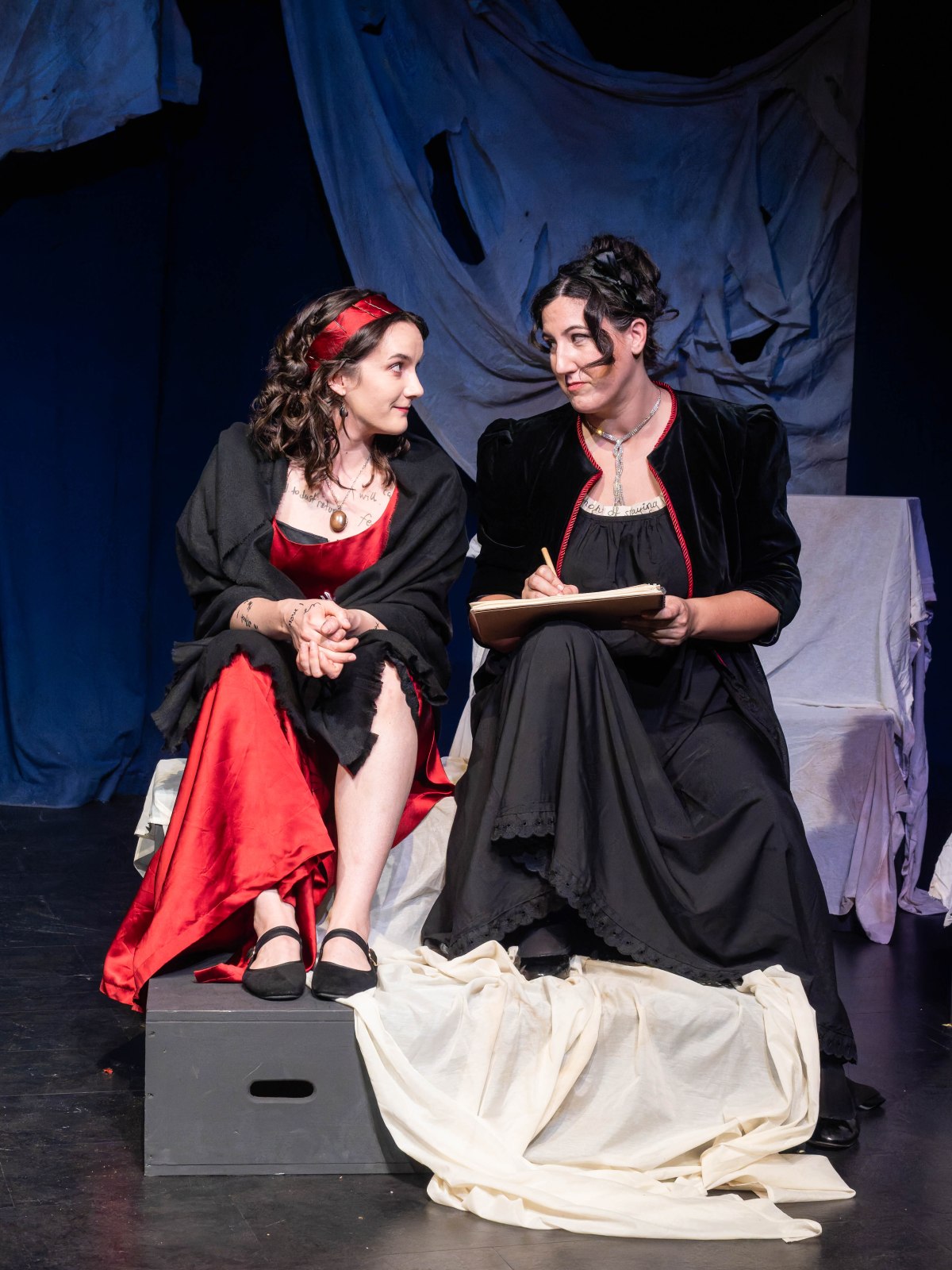
The production also explores the tensions within Mary’s intimate circle, dramatising an encounter between Percy and Jane and Byron’s advances towards Mary. While Byron hands out laudanum as though it were an essential courtesy of the house, Percy finds his grand ideas about freedom in love harder to embrace when confronted with their consequences.
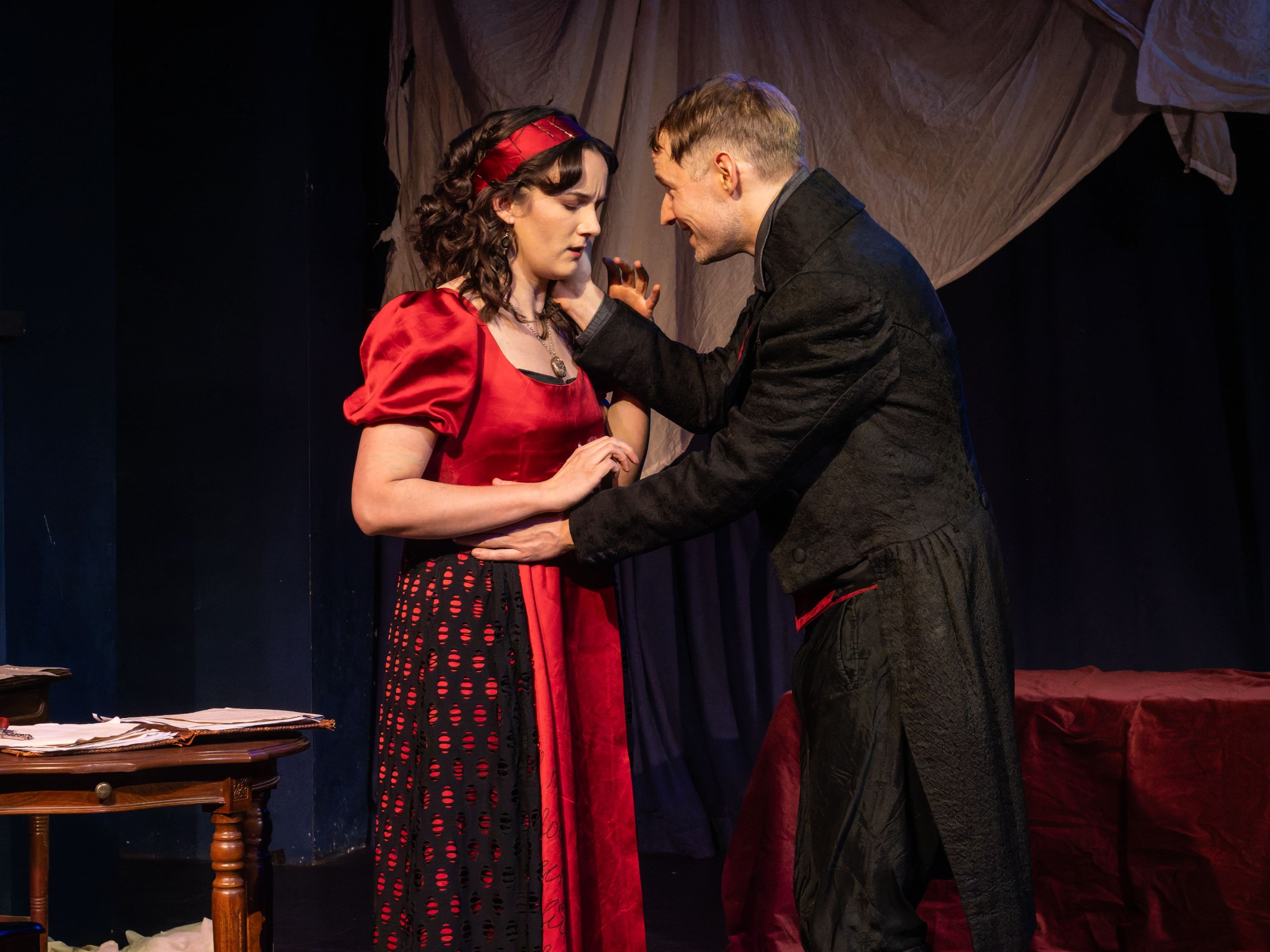
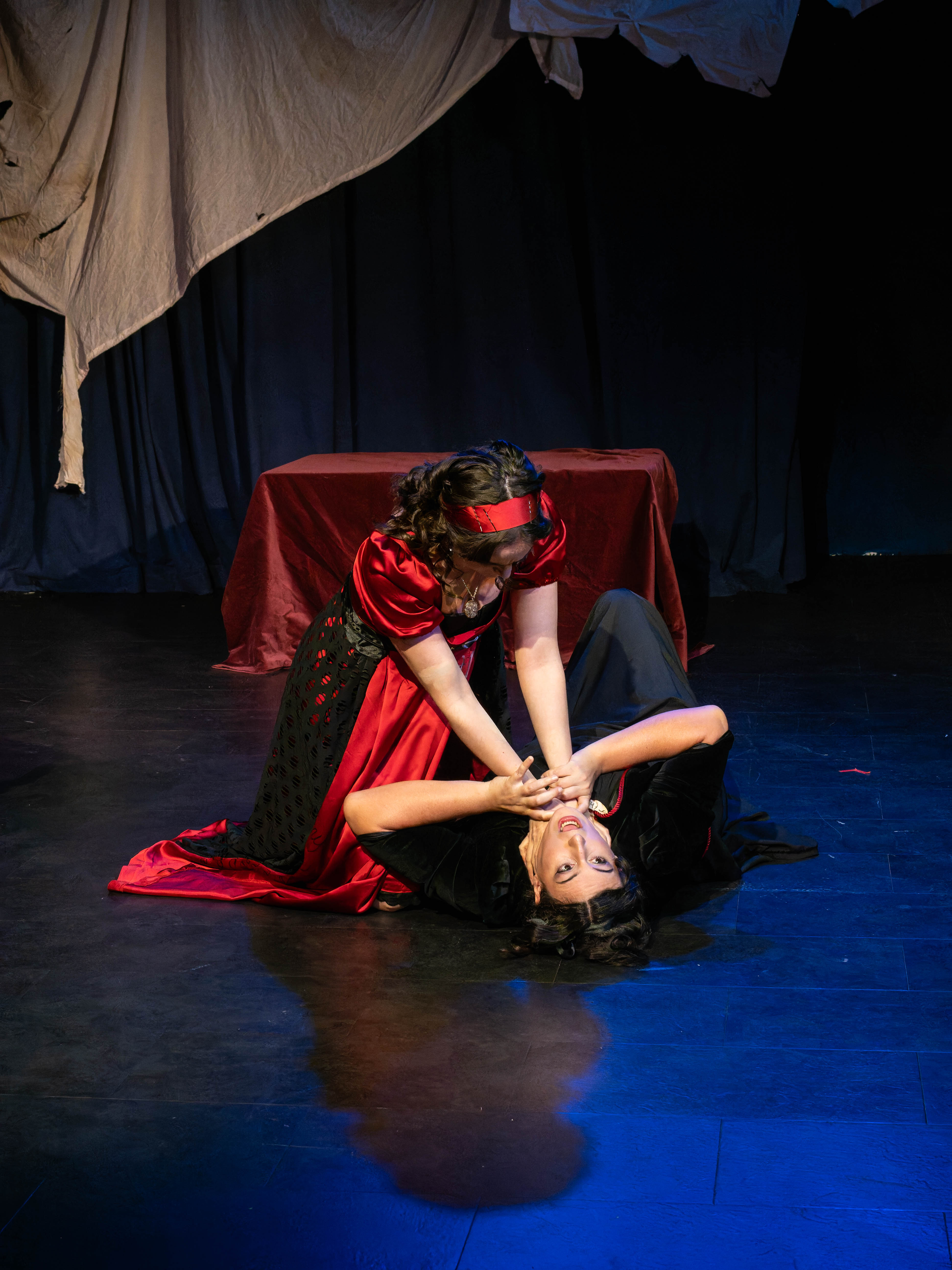
Emily Busvine plays Mary Shelley, with Tom Baumgartner-Middler taking on Victor Frankenstein, Percy and other roles. Nicola Segur-Cabanac plays Elizabeth, Jane and others, while Peter Steele combines Lord Byron with the puppetry of the creature. The doubling gives the production an intriguing structure: the author’s companions and her imagined characters inhabit the same small company.
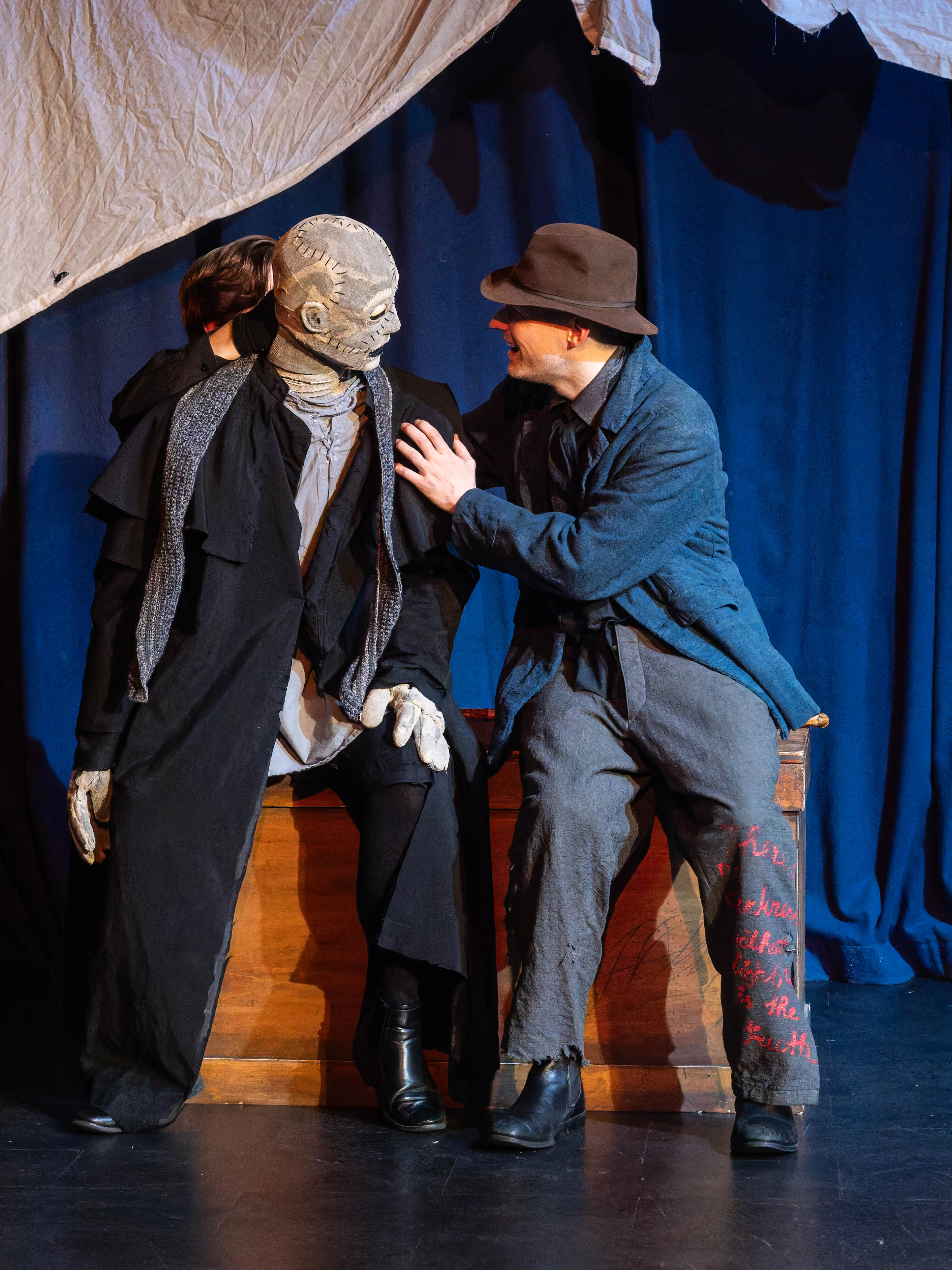
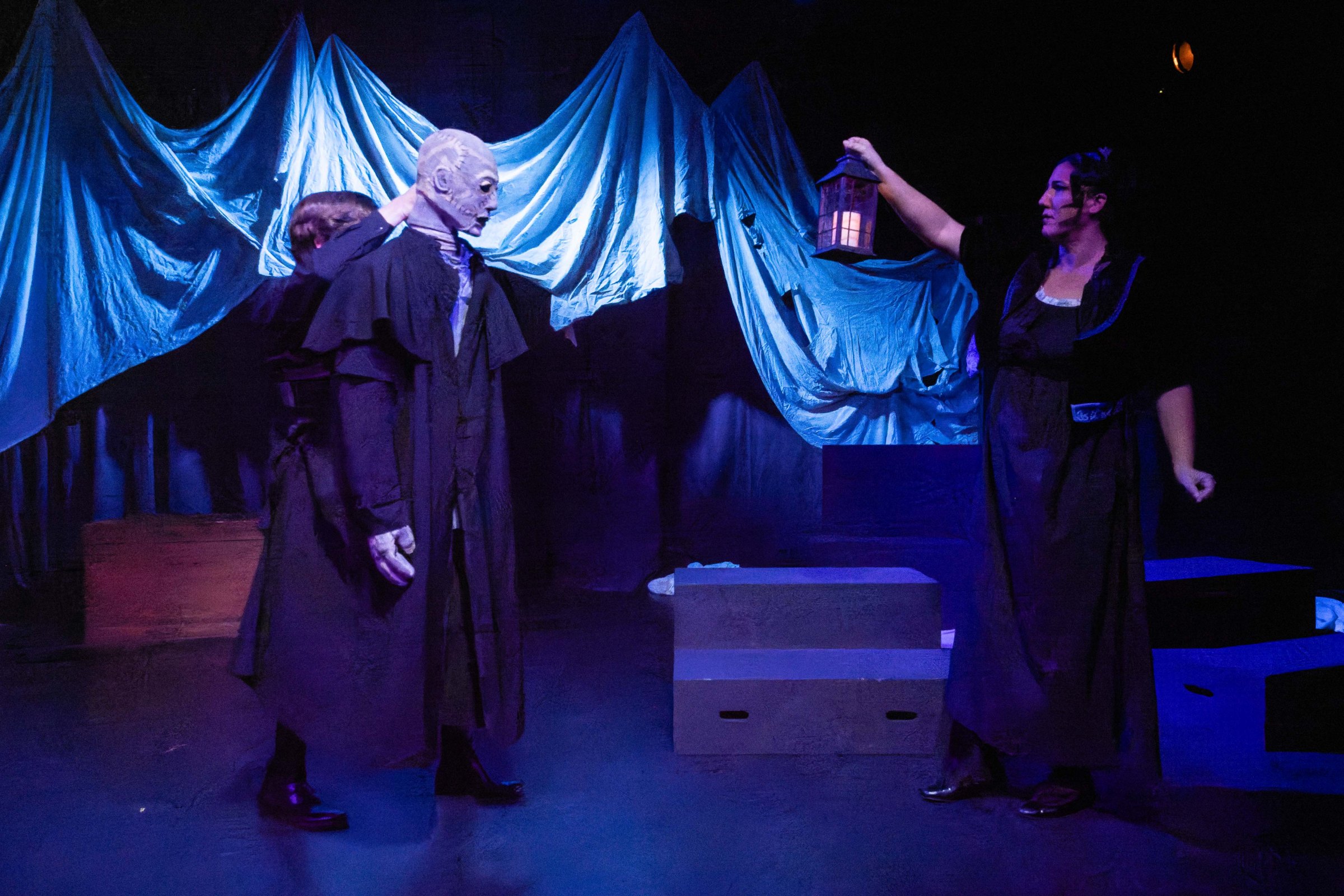
Steele’s puppetry is a particular highlight. The creature itself is the result of months of painstaking work by Peter Steele, who designed and built it from scratch. Starting with sketches and miniature models, he constructed a wooden skeleton, shaped its body from lightweight foam, and covered it with fabric before painting the final details. Ingenious mechanisms inside the head allow him to control the creature’s mouth and eyelids, giving it an astonishing range of expression. The puppet consists of the upper half of the body, while Steele’s own legs complete the figure.
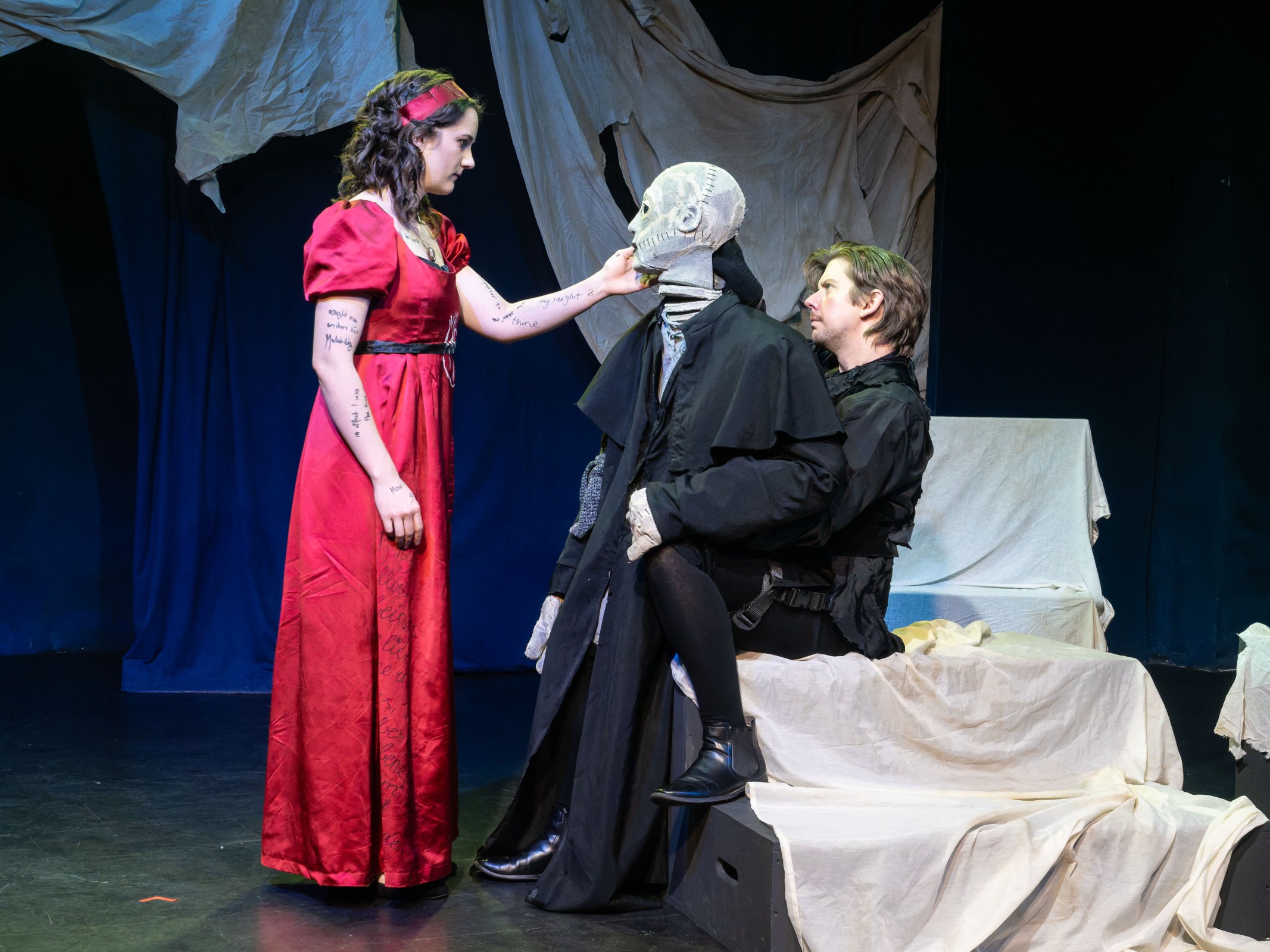
But the real magic happens in performance. Steele moves as one with his creation, his own face mirroring the expressions of the creature. We see both faces, fully aware that one belongs to a human being and the other to a puppet, yet somehow they become a single character. The distinction simply dissolves. For a story so concerned with the making of life, watching an inanimate object acquire such a convincing emotional presence is a wonderfully expressive theatrical choice.
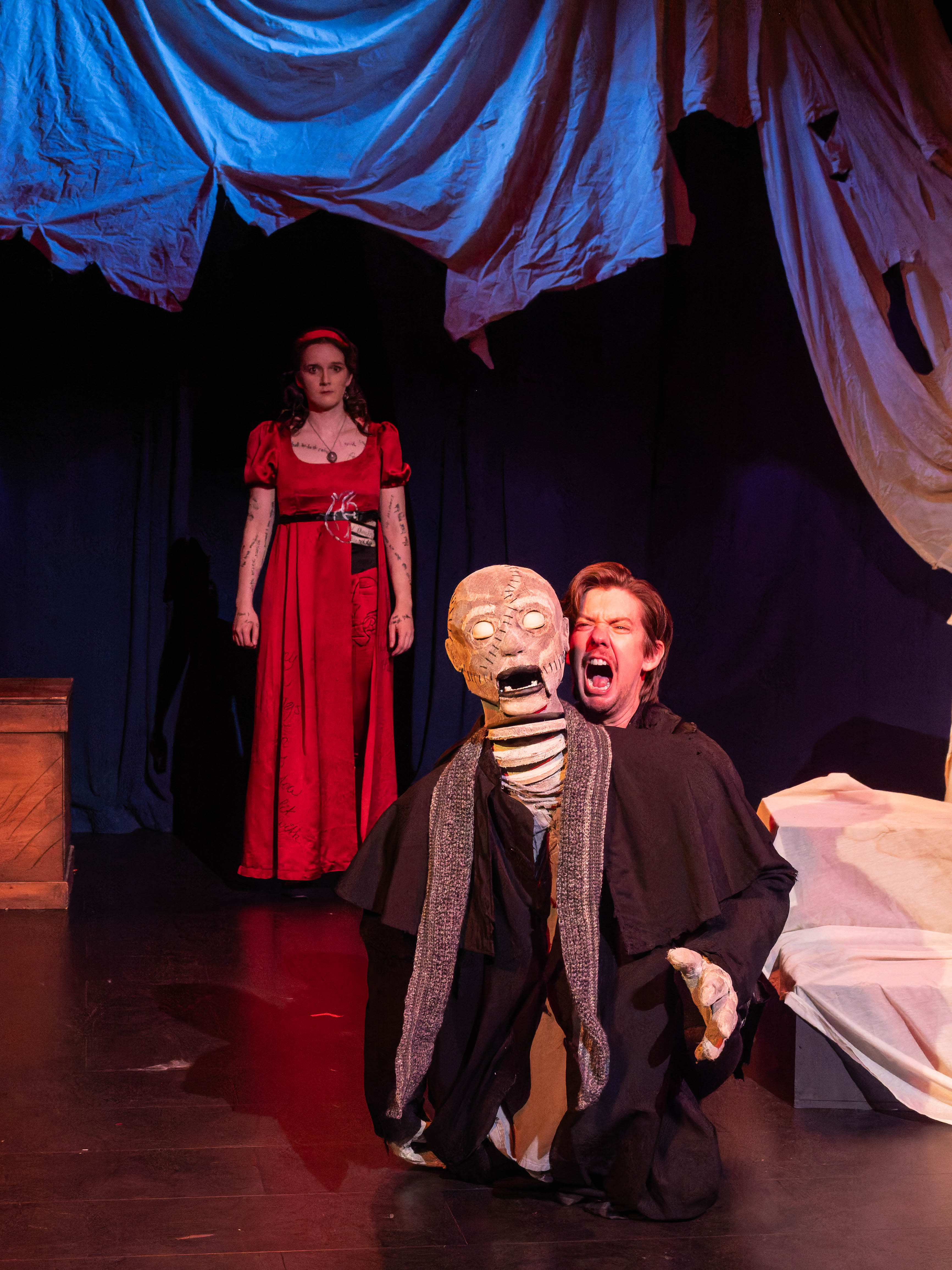
“I feel sometimes a half-formed creature. The power rests within me to become whole.”
(Open House Theatre production of Frankenstein, partly inspired by Mary Shelley’s diaries)
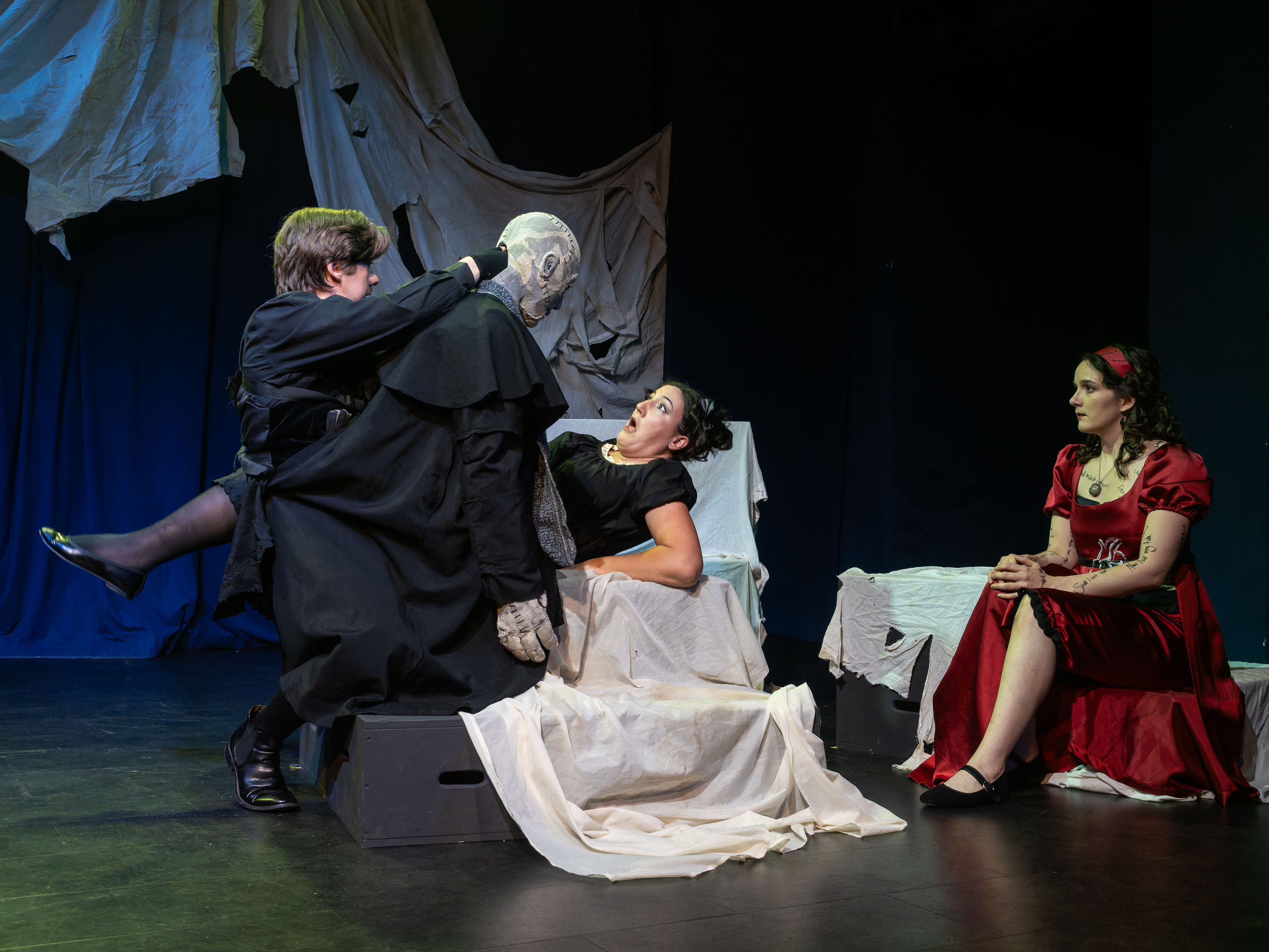
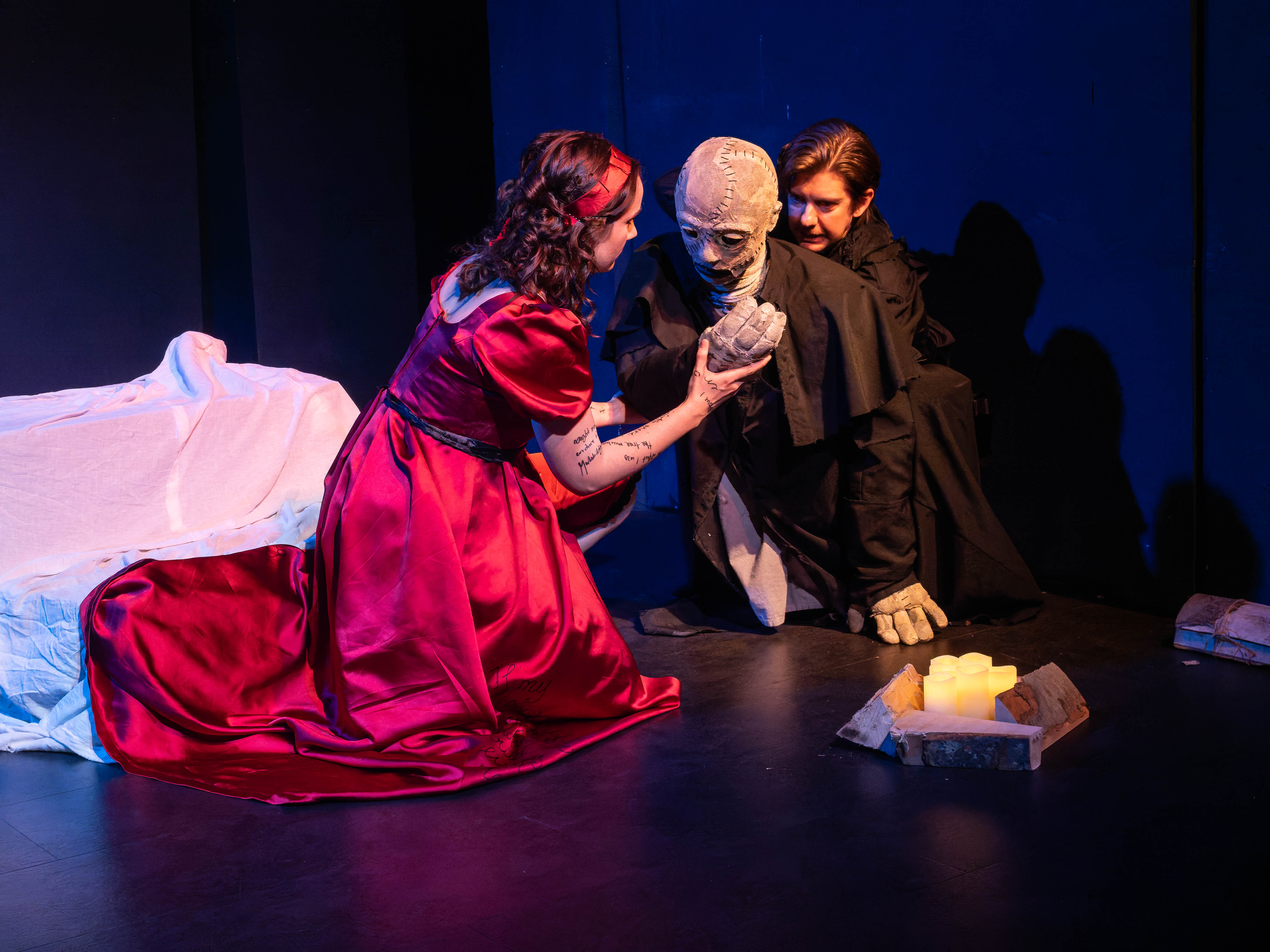
Some of the most affecting moments come when Mary joins Peter Steele in guiding the creature. She handles him with tenderness, and her sympathy is unmistakable. Here, the woman imagining the story also helps give its loneliest character life.
That tenderness feels faithful to the novel’s emotional core. The creature initially longs for affection and companionship, but repeated rejection, abandonment and cruelty turn that longing into rage. His eventual violence is his own, but the humans who recoil from his appearance have helped shape what he becomes. Watching Mary care for him makes that tragedy particularly poignant: she offers him the gentleness so often withheld within her story.
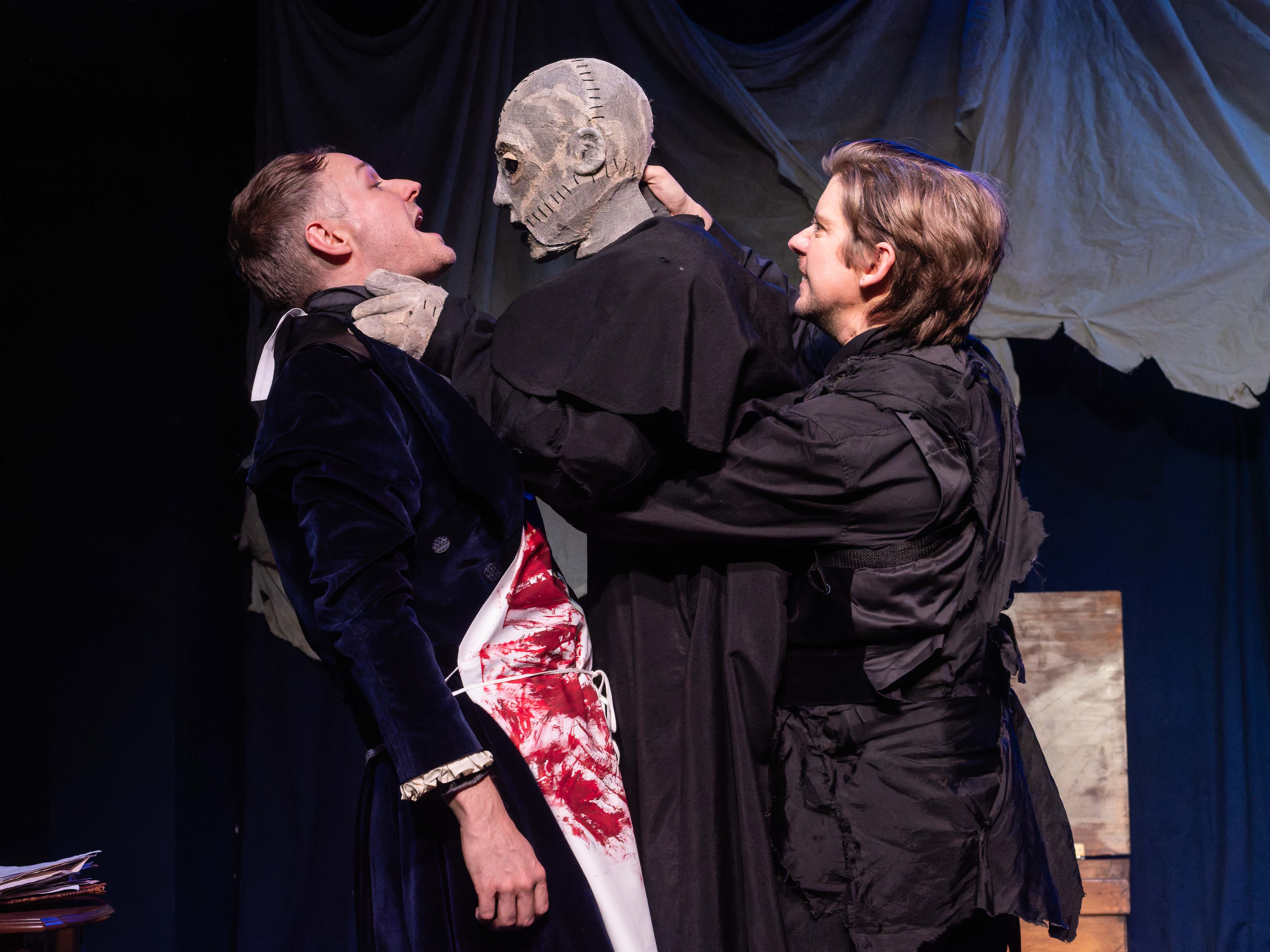
The staging is similarly resourceful. Sheets hung to suggest a Swiss mountainscape were among my favourite touches: simple materials, used with imagination, opening up a much larger world. The pleasure lies partly in seeing the means and still accepting the transformation. Those mountains need no geological credentials. Katharina Kappert’s costumes evoke the period while carrying literary quotations across their fabric, a playful reference to the writers at the heart of the story.
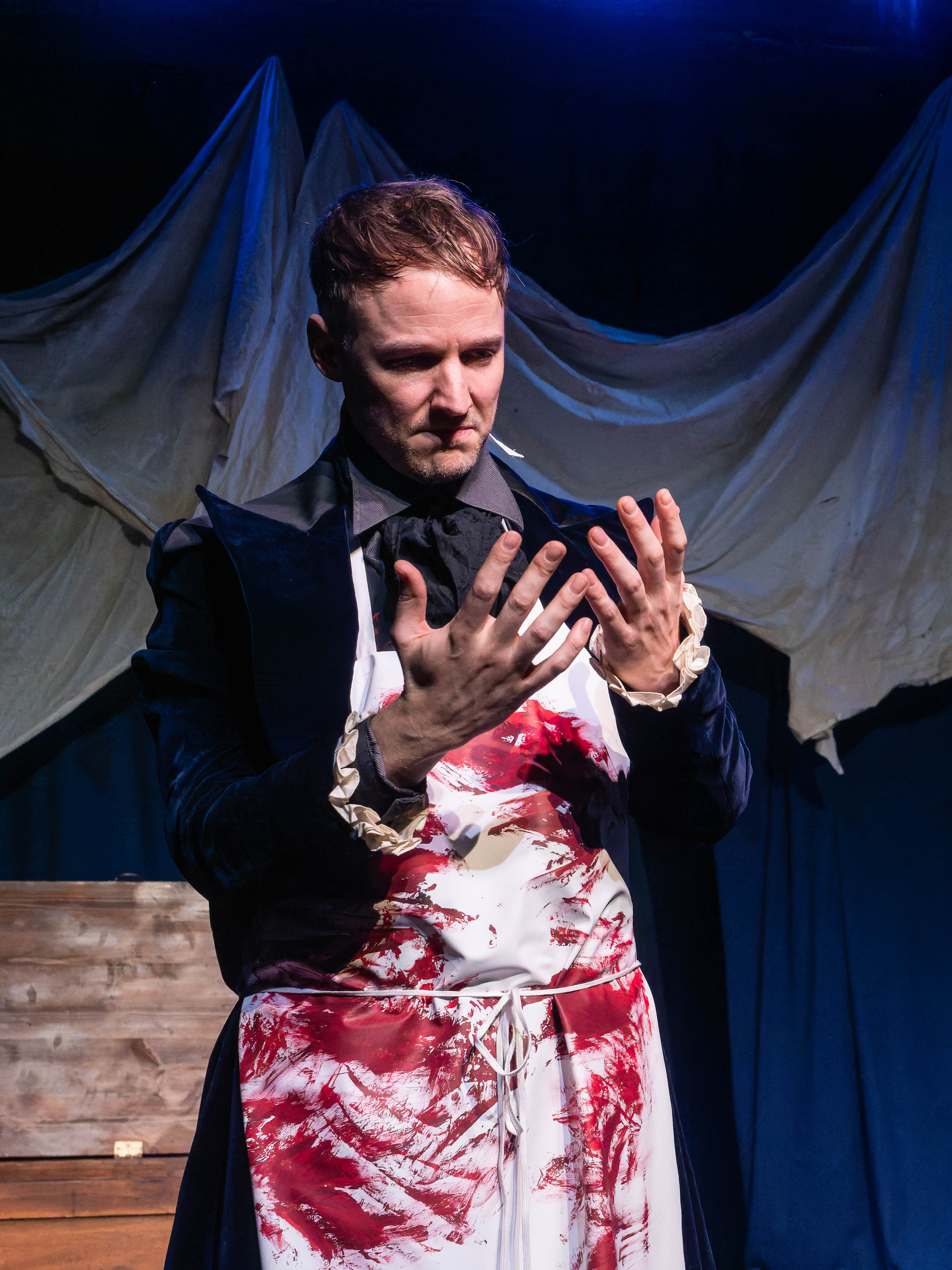
The play´s emotional impact goes much deeper. We see the puppet and feel the creature. There is spectacle here, but also an invitation to think about grief, responsibility and the consequences of bringing something into the world. What might have been a straightforward adaptation of a Gothic classic becomes something far more layered and emotionally resonant in Helena Steele´s hands.
Victor Frankenstein may be the creator within the novel. This production makes room for the woman who created them both.
Mary Shelley’s Frankenstein — Open House Theatre
13–28 November 2026, Theater Spielraum, Kaiserstraße 46, 1070 Vienna.
Performed in English.
Approximately 2½ hours, including an interval.
Production details and tickets
GERMAN SUMMARY
(Die Stücke werden auf Englisch gespielt.)
Die Frau hinter dem Monster
Mary Shelleys Frankenstein von Open House Theatre
In einer außergewöhnlichen Bühnenfassung von Mary Shelleys Roman verbindet Helena Steele den gothischen Klassiker mit dem Leben seiner Autorin. Mary erzählt und gestaltet ihre Geschichte selbst, während ihre Beziehungen zu Percy Shelley, Lord Byron und ihrer Stiefschwester Jane in die Handlung einfließen. Ihre Trauer um ihr verstorbenes Baby verleiht den Fragen nach Leben, Tod und der Verantwortung für ein geschaffenes Wesen besondere Eindringlichkeit.
Emily Busvine als Mary, Tom Baumgartner-Middler als Victor Frankenstein und Percy, Nicola Segur-Cabanac als Elizabeth und Jane sowie Peter Steele als Byron und Puppenspieler lassen diese beiden Welten ineinandergreifen. Besonders überwältigend ist Steeles Spiel mit der selbst entworfenen und gebauten Kreatur: Sein Körper und seine Mimik verschmelzen so vollkommen mit der Puppe, dass wir trotz zweier sichtbarer Gesichter ein einziges Wesen wahrnehmen.
Wie dieses Geschöpf Vogelgesang und Wasser entdeckt und von Mary liebevoll geführt wird, gehört zu den berührendsten Momenten. Seine anfängliche Zärtlichkeit macht die spätere Verwandlung durch Ablehnung und Grausamkeit umso schmerzhafter.
Mit einfachen Mitteln entstehen eindrucksvolle Bühnenwelten: Aufgehängte Tücher werden zur Schweizer Berglandschaft, literarische Zitate auf den Kostümen verweisen auf Marys Schriftstellerkreis. Eine fantasievolle, zutiefst bewegende Inszenierung von Open House Theatre, die neben Frankensteins Kreatur auch deren eigentliche Schöpferin ins Zentrum rückt.
Bis 28. November 2026 im Theater Spielraum, auf Englisch.
DRESS REHEARSAL PHOTOS © KARIN SVADLENAK

