Some Secrets on Photography
Diesmal geht es wieder um Fotografie – aber nicht so, wie man sie erwartet. Im Francisco Carolinum in Linz läuft aktuell die von der Fotografin Ruth Horak kuratierte Ausstellung „Some Secrets on Photography. What you did not know about photography“. Der Titel verspricht Wissen. Die Ausstellung liefert etwas anderes. Als Absolventin der Prager Fotoschule Österreich dachte ich, ich wüsste, worum es geht. Tat ich nicht.
Der Titel „Was Sie noch nicht über die Fotografie wussten“ im Francisco Carolinum in Linz lässt einen erst einmal in eine ziemlich klare Richtung denken. Man erwartet Einblicke, vielleicht Technik, vielleicht Geschichte, vielleicht witzige Fakten. Schon nach wenigen Minuten wird klar, dass es in dieser Ausstellung kaum um das klassische Verständnis von Fotografie geht. Stattdessen verschiebt sich der Fokus radikal.
Es geht um Prozesse. Um Abläufe. Um das, was passiert, bevor und nachdem ein Bild entsteht, oder auch was man kreativ mit diesen Prozessen, oder mit den fertigen Fotos, machen kann. Fotografie wird nicht als Endergebnis gezeigt, sondern als etwas, das sich in den Händen der Kunstschaffenden verändern kann, überträgt, auflöst und neu zusammensetzt.
Man bewegt sich weniger durch Bilder als durch Ideen. Durch Systeme, Wiederholungen, Material. Das kann irritieren, vor allem wenn man mit einer anderen Erwartung hineingeht. Weil hier Dinge sichtbar werden, die im eigenen Arbeiten oft im Hintergrund bleiben. Prozesse, die ich nütze, ohne sie wirklich zu hinterfragen.
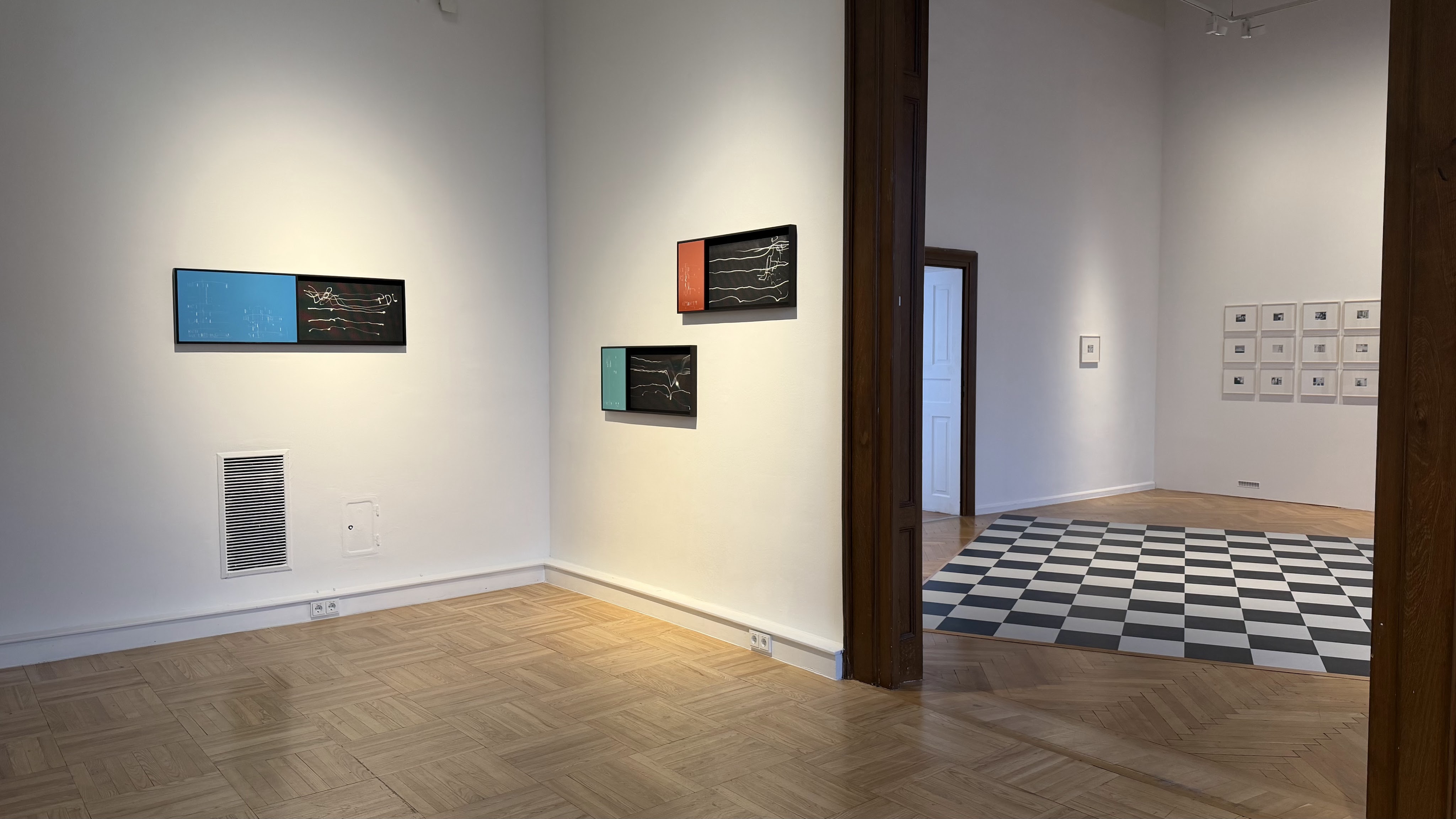
Isabelle le Minhs Arbeiten, zum Beispiel, drehen sich um Bewegung, Übersetzung und Struktur. In „Cabrioles et contre temps“ wird der fotografische Moment fast nebensächlich. Der Körper und die Bewegung bekannter Fotografen werden zum Ausgangspunkt, wie sie sich beim Fotografieren bewegen wird analysiert, und dann in ein System übertragen. So werden die Bewegungsmuster wiederum als abstraktes Bild dargestellt.
Oder man stelle sich vor: Eine Tonne Fotos! Sebastian Riemers Arbeit hat mich besonders fasziniert. Er fragt “Kann man analoge Fotos löschen?” Wie sich herausstellt, kann man. Riemer setzt an einer radikal materiellen Stelle an. Für seine Arbeit hat er alte Fotografien nicht betrachtet, sondern verwertet. Im wörtlichen Sinn. Er hat sie chemisch behandelt, zerstört, verarbeitet – und daraus Silber zurückgewonnen.
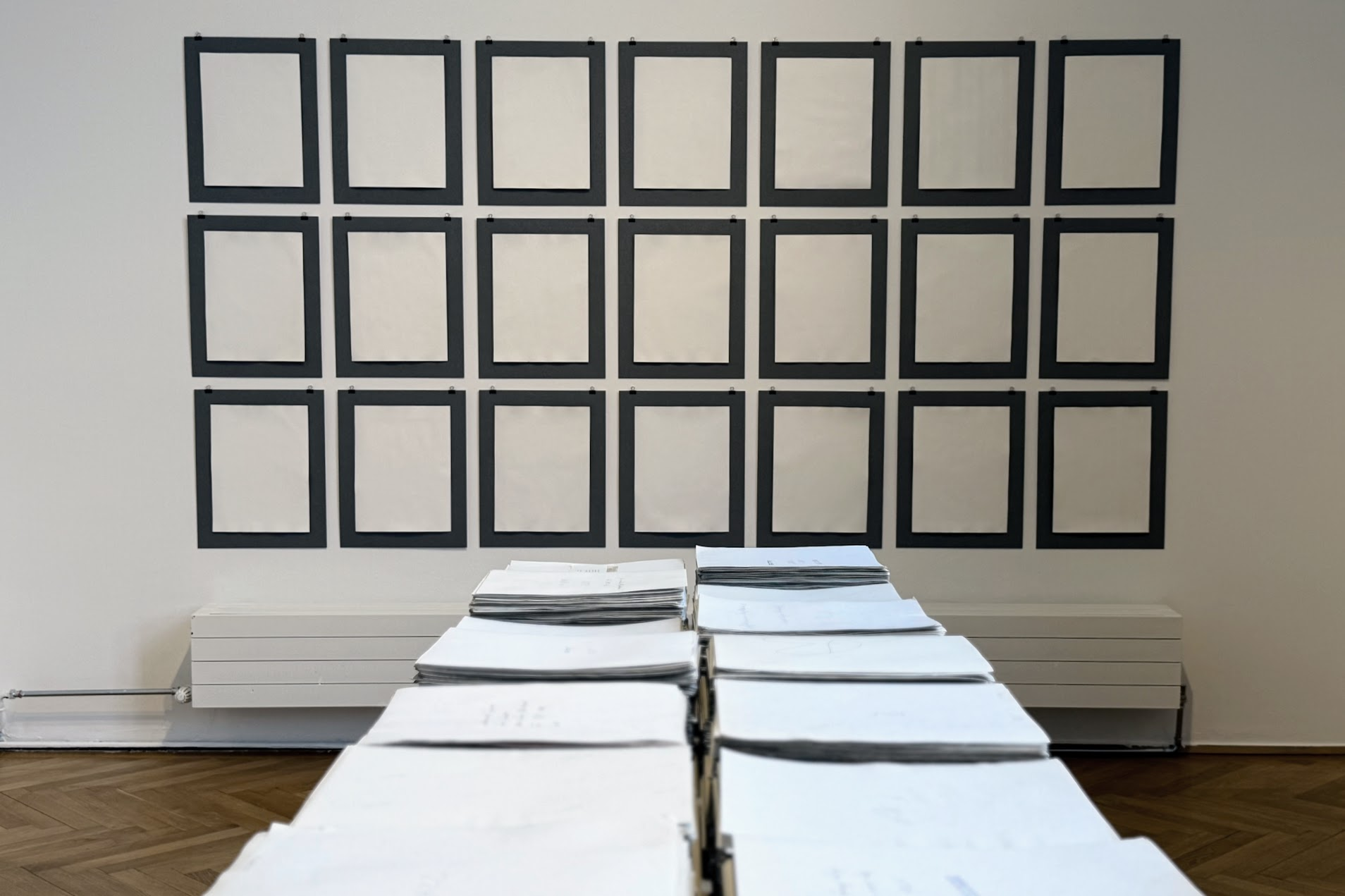
Was übrig bleibt, ist nicht das Bild, sondern sein Rohstoff. Das Material, aus dem (analoge) Fotografie überhaupt erst entsteht. Damit dreht er den üblichen Blick komplett um. Es geht nicht mehr darum, was ein Bild zeigt oder bedeutet. Sondern darum, was es ist. Und was passiert, wenn man es bis auf seine physische Substanz reduziert. Das ist kein nostalgischer Blick auf analoge Fotografie. Eher eine ziemlich nüchterne, fast schon brutale Geste. Das Bild verschwindet. Das Silber bleibt.
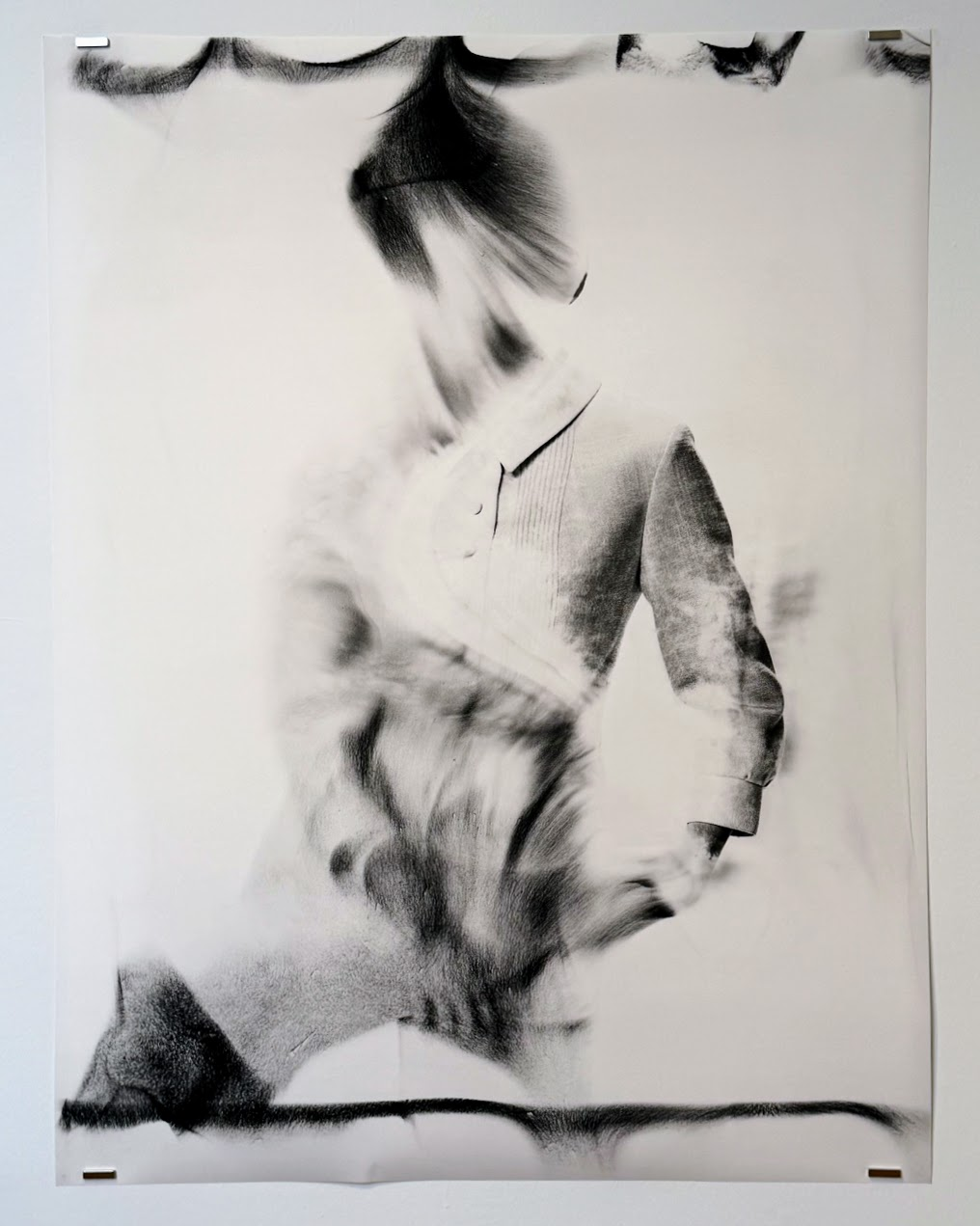

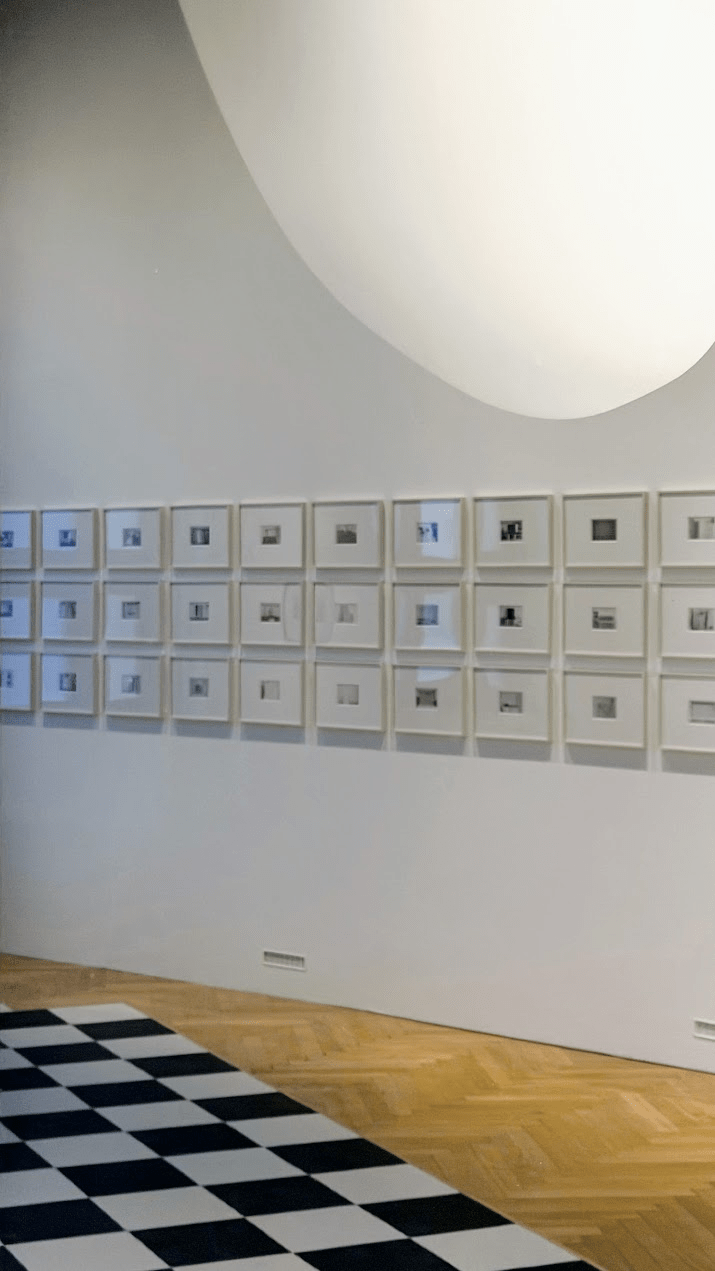
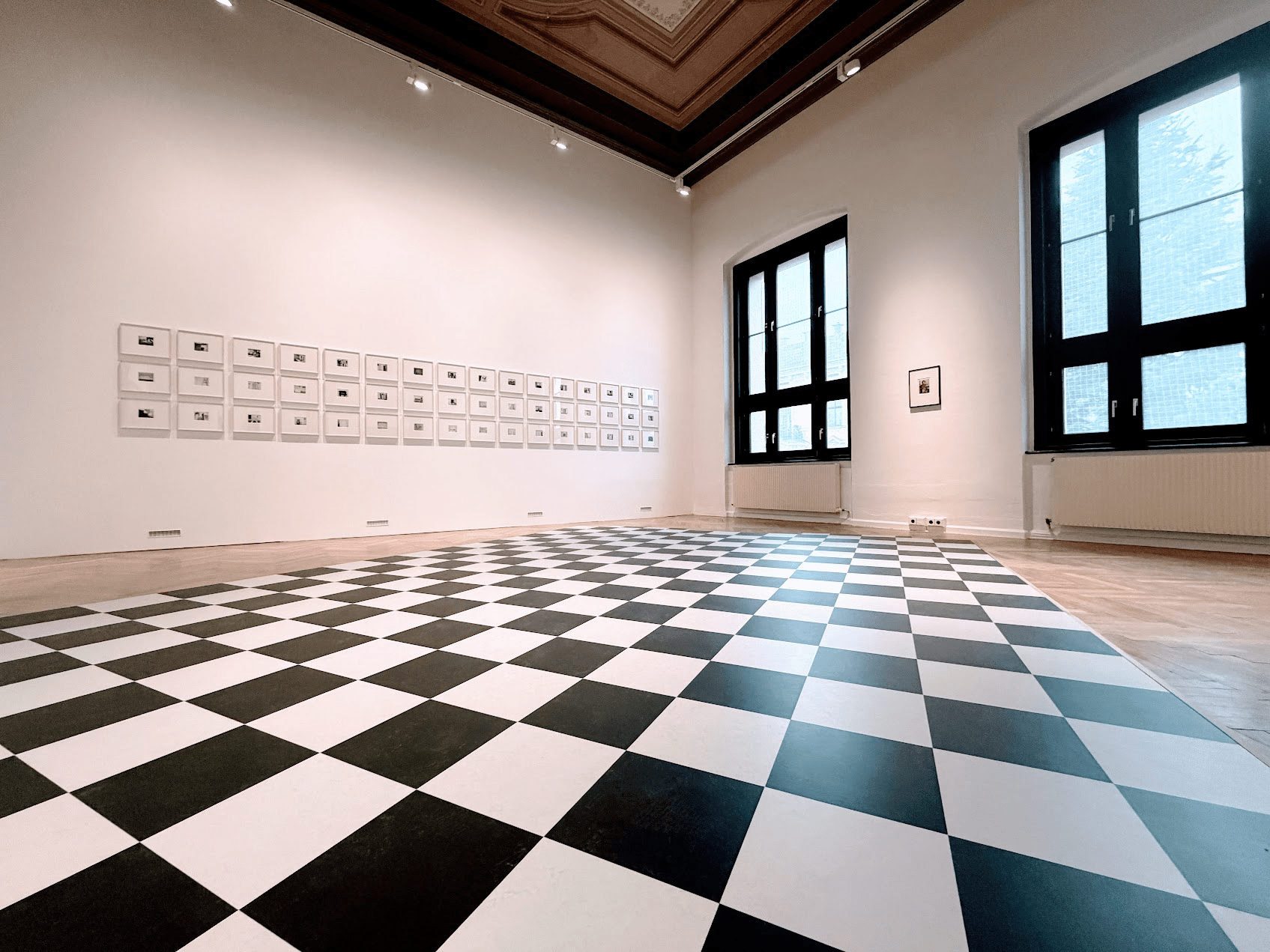
In Gregor Schmolls Arbeit “Das Atelier betreten” (Entering the Studio) hingegen geht es um einen Raum, das Atelier von Marcel Duchamps Atelier in New York, rekonstruiert aus alten Fotografien. Er betreibt ein komplexes Spiel mit Realität und Abbild. In Schmolls Bildern erscheint das Atelier als etwas, das einst existierte, aber nur durch fotografische Dokumente zugänglich ist. Dabei wird deutlich: Fotografie hält nicht einfach fest, was war. Sie zeigt eine Auswahl. Einen Ausschnitt. Eine Entscheidung. Zwischen dem, was tatsächlich existierte, und dem, was fotografisch überliefert wurde, entsteht eine Unschärfe. Die Grenze zwischen Realität und Darstellung beginnt zu verschwimmen. Fotografie ist nie neutral. Fotograf:innen bestimmen beim Komponieren ihrer Bilder immer auch, was sichtbar wird – und was nicht.
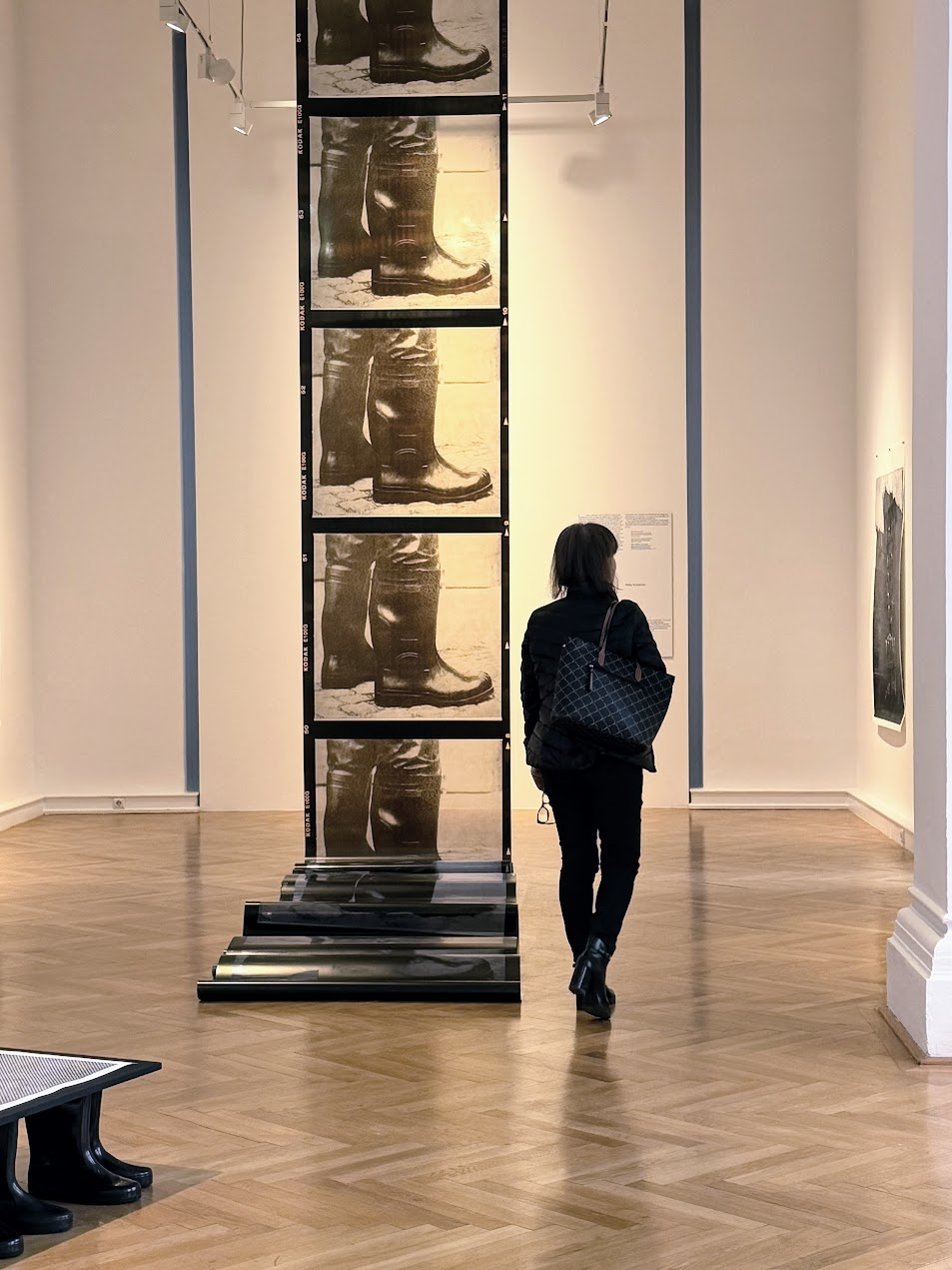
Peter Schreiners Serie Latente Lektionen basiert auf Bildsequenzen aus einer Feuerwehrzeitschrift zwischen 1930 und 1980. Ursprünglich dienten diese Fotografien der Dokumentation – sie sollten Abläufe erklären, Situationen klar machen, Orientierung geben. Diese Funktion hebt Schreiner auf, indem er mit Vergrößerungen von Negativen und Reproduktionen arbeitet. Es entstehen Bilder von Bildern, die durch mehrere Ebenen gegangen sind und dabei ihre ursprüngliche Lesbarkeit verlieren.
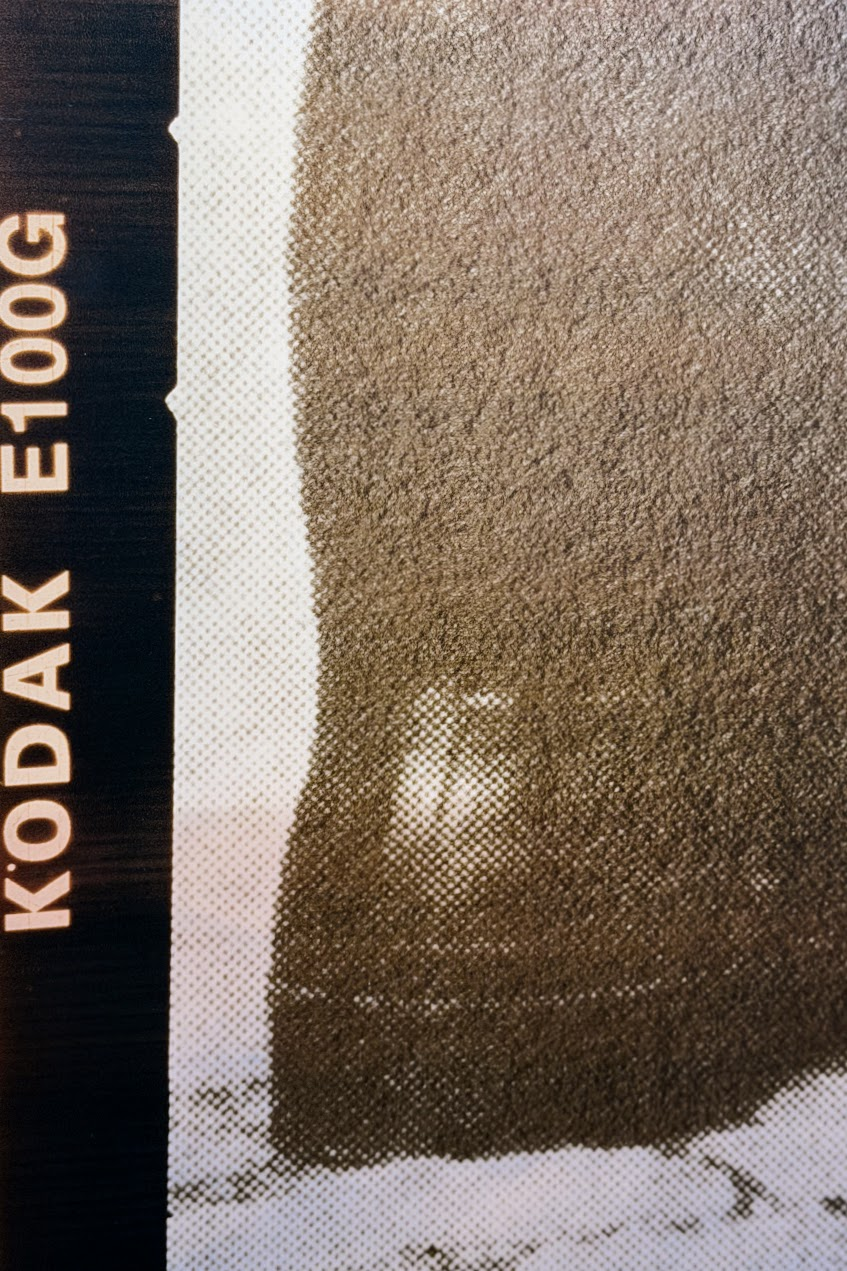
Was übrig bleibt, sind keine eindeutigen Motive mehr, sondern Strukturen, Raster und Flecken. Je näher man an die Bilder herangeht, desto unklarer werden sie. Gleichzeitig bleibt eine Ahnung ihrer Herkunft bestehen – man spürt, dass sie einmal konkrete Situationen gezeigt haben. Doch diese Bedeutung ist nicht mehr zugänglich. Aus Dokumentation werden Fragmente, aus Bildern offene Fragen.
Diese Ausstellung richtet sich nicht an ein Publikum, das einfach nur „schöne“ oder interessante Bilder sehen möchte. Sie verlangt ein gewisses Interesse an Fotografie selbst – an ihren Bedingungen, ihren Materialien, ihren Brüchen.
Wer Fotografie vor allem als fertiges Bild versteht, wird hier wenig finden. Wer sich jedoch für das interessiert, was davor, dahinter und dazwischen passiert, wird überrascht werden.
Es ist keine Ausstellung, die sich sofort erschließt. Aber eine, die erstaunt.
Between Image and Process
Some Secrets on Photography
This time, it’s about photography again – but not in the way one might expect. At the Francisco Carolinum in Linz, the exhibition “Some Secrets on Photography. What You Didn’t Know About Photography”, curated by photographer Ruth Horak, is currently on. The title promises knowledge. The exhibition delivers something else. As a graduate of the Prague School of Photography Austria, I thought I knew what to expect. I didn’t.
The title initially points in a fairly clear direction. One expects insights, perhaps technique, perhaps history, maybe even some curious facts. But within minutes it becomes clear that this exhibition has very little to do with a conventional understanding of photography. Instead, the focus shifts quite radically.
It’s about processes. About sequences. About what happens before and after an image is made – and what can be done creatively with these processes or with the finished photographs themselves. Photography is not presented as a final result, but as something that can be transformed, transferred, dissolved, and reassembled in the hands of the artists.
You move less through images than through ideas. Through systems, repetitions, material. This can be unsettling, especially if you enter with different expectations. Because here, aspects become visible that often remain in the background of one’s own practice – processes I use without really questioning them.
Isabelle le Minh’s work, for example, revolves around movement, translation, and structure. In “Cabrioles et contre temps”, the photographic moment becomes almost secondary. The body and the movements of well-known photographers serve as a starting point: how they move while photographing is analyzed and translated into a system. These movement patterns are then visualized as abstract images.
Or imagine this: one ton of photographs. Sebastian Riemer’s work fascinated me in particular. He asks: can analog photographs be erased? As it turns out, they can. Riemer approaches photography at a radically material level. For his work, he did not look at old photographs – he processed them. Literally. He treated them chemically, destroyed them, transformed them – and extracted silver from them. What remains is not the image, but its raw material. The substance from which (analog) photography is made in the first place. In doing so, he completely reverses the usual perspective. It is no longer about what an image shows or means, but about what it is – and what happens when it is reduced to its physical substance. This is not a nostalgic reflection on analog photography. Rather, it is a sober, almost brutal gesture. The image disappears. The silver remains.
In contrast, Gregor Schmoll’s work focuses on a space: a studio reconstructed from historical photographs of Marcel Duchamp’s New York atelier. He creates a complex interplay between reality and representation. In Schmoll’s images, the studio appears as something that once existed but is only accessible through photographic documentation. It becomes clear that photography does not simply record what was. It shows a selection. A fragment. A decision. Between what actually existed and what has been photographically preserved, a certain ambiguity emerges. The boundary between reality and representation begins to blur. Photography is never neutral. When composing an image, photographers always determine what becomes visible – and what does not.
Peter Schreiner’s series Latent Lessons is based on image sequences from a fire brigade journal between 1930 and 1980. Originally, these photographs served documentation purposes – they were meant to explain processes, clarify situations, provide orientation. Schreiner removes this function by working with enlargements of negatives and reproductions. What emerges are images of images that have passed through multiple layers, gradually losing their original legibility. What remains are no longer clear motifs, but structures, grids, and stains. The closer you move towards the images, the less clear they become. At the same time, a trace of their origin persists – you sense that they once depicted concrete situations. But that meaning is no longer accessible. Documentation turns into fragments, images into open questions.
This exhibition is not aimed at an audience simply looking for “beautiful” or interesting images. It requires a certain interest in photography itself – in its conditions, its materials, its fractures. If you primarily understand photography as a finished image, you will find little here. But if you are interested in what happens before, behind, and in between, you will be surprised.
It is not an exhibition that reveals itself immediately. But one that astonishes.
The exhibition can be visited in Linz at Francisco Carolinum until 12 July 2026.
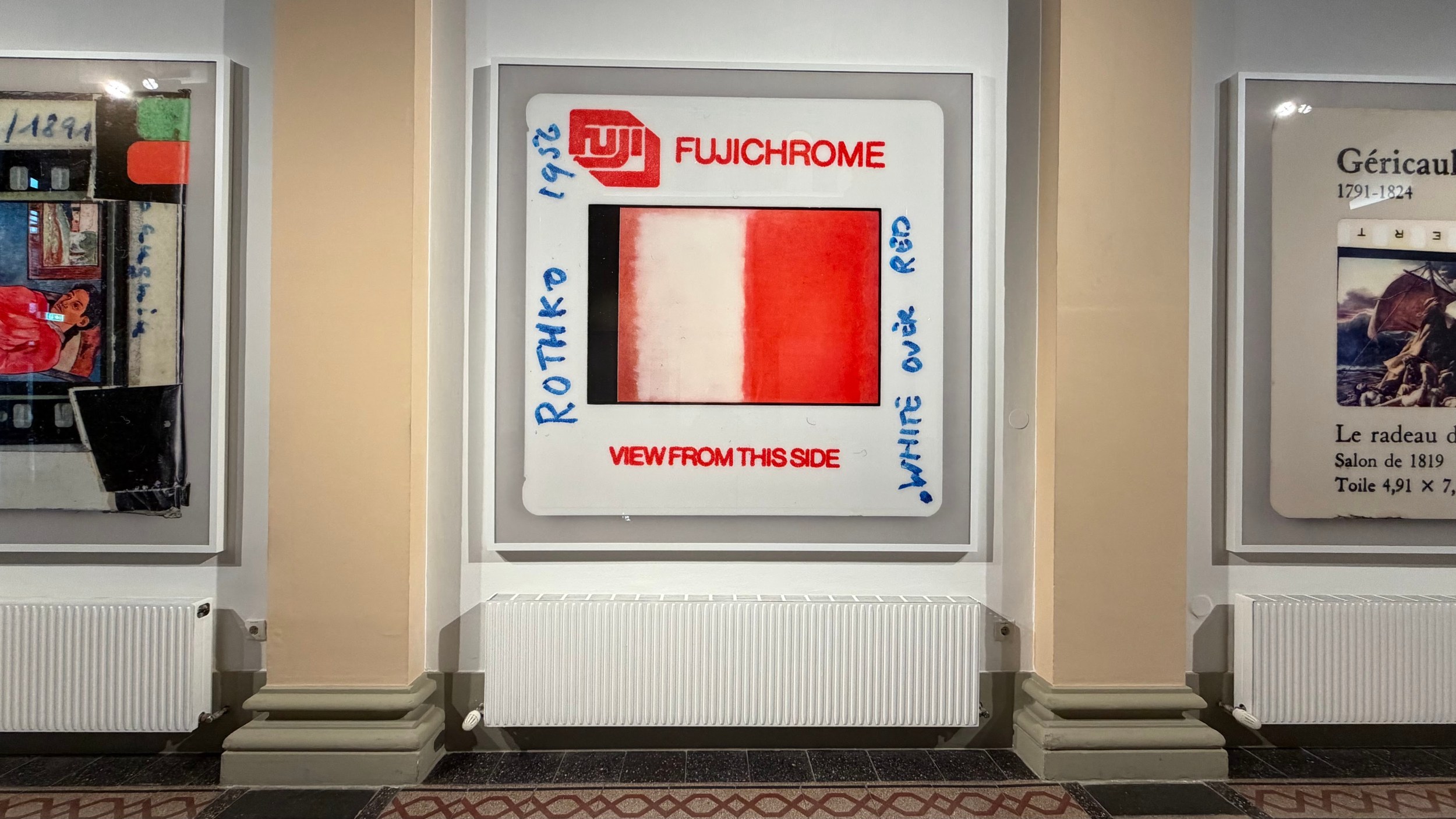
EXHIBITION PHOTOS © KARIN SVADLENAK
 ViennaCultgram