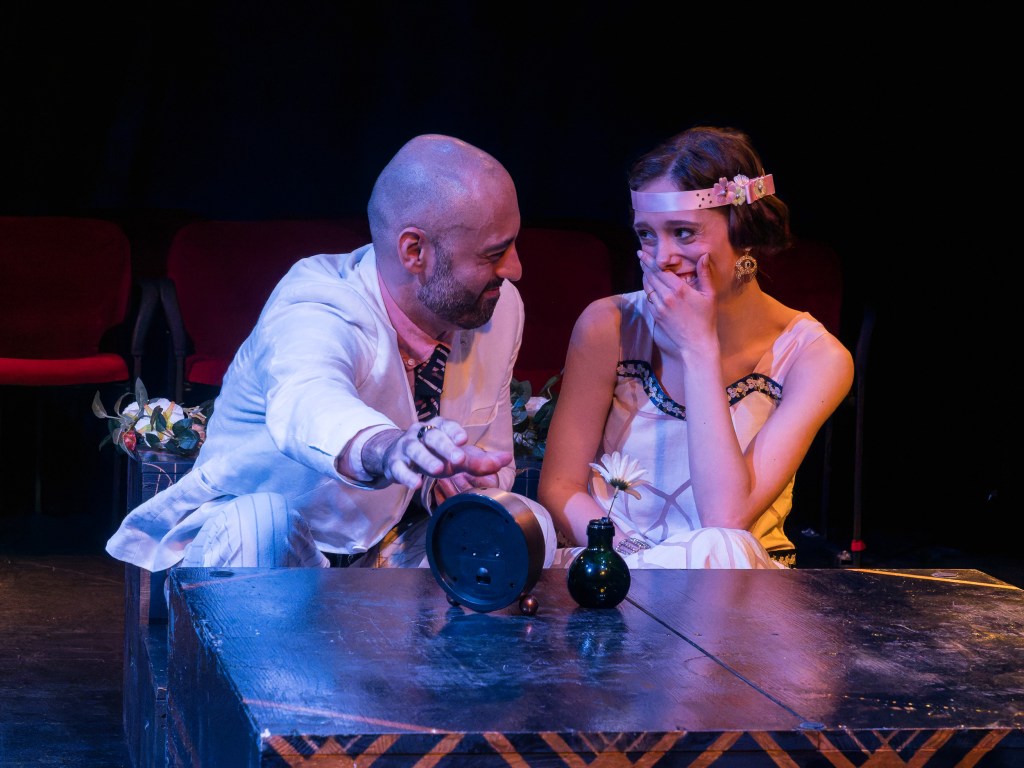
Some stories refuse to stay politely in the past. The Great Gatsby is one of them, still circling around questions of longing, illusion, and the quiet damage people leave behind. Vienna’s current staging by Open House Theatre at Theater Spielraum doesn’t aim for lush reconstruction, but it doesn’t abandon the period either. It finds a middle ground that feels deliberate rather than compromised.
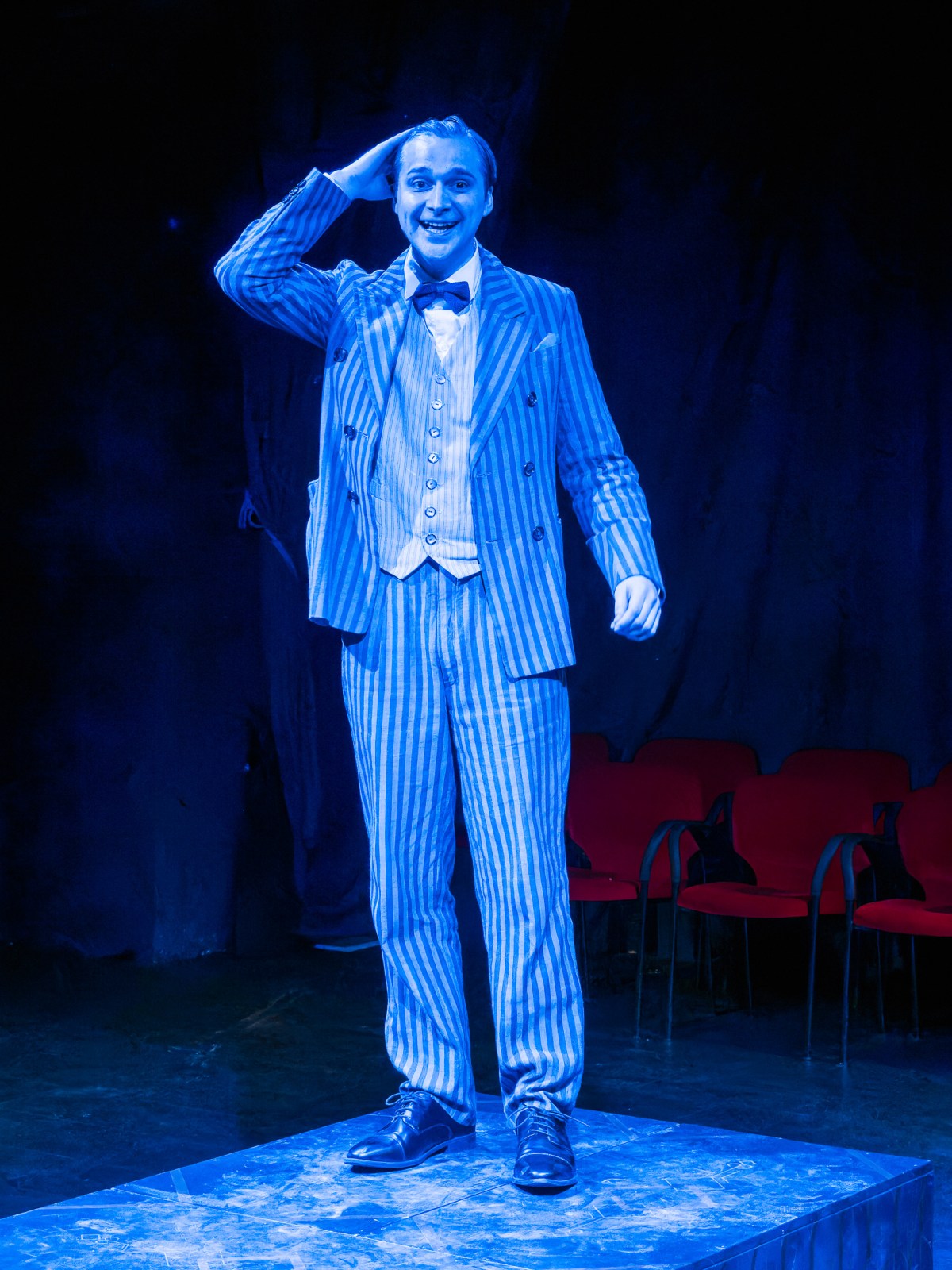
At the center stands Sam Kozeluh as Nick Carraway, carrying the narrative with remarkable control. He delivers Fitzgerald’s language with admirable precision. The adaptation is, inevitably, condensed. Entire layers of the novel are compressed, but the core remains intact. What survives is the emotional trajectory, the slow accumulation of desire, denial, and disillusionment. Having recently re-read the book, I was aware of the missing bits in this adaptation, but did not miss them. Fitzgerald´s lines land cleanly, and the restraint of this abridged stage version gives the text weight.
I have read the novel twice. The first time in secondary school, when Gatsby felt like a tragic hero and I probably cried for him, because at that age longing still passes for something noble. The second time recently, to get back into the world before seeing the play, and it lands differently. Less romance, more understanding of the quiet destruction the characters wreak on themselves and one another.
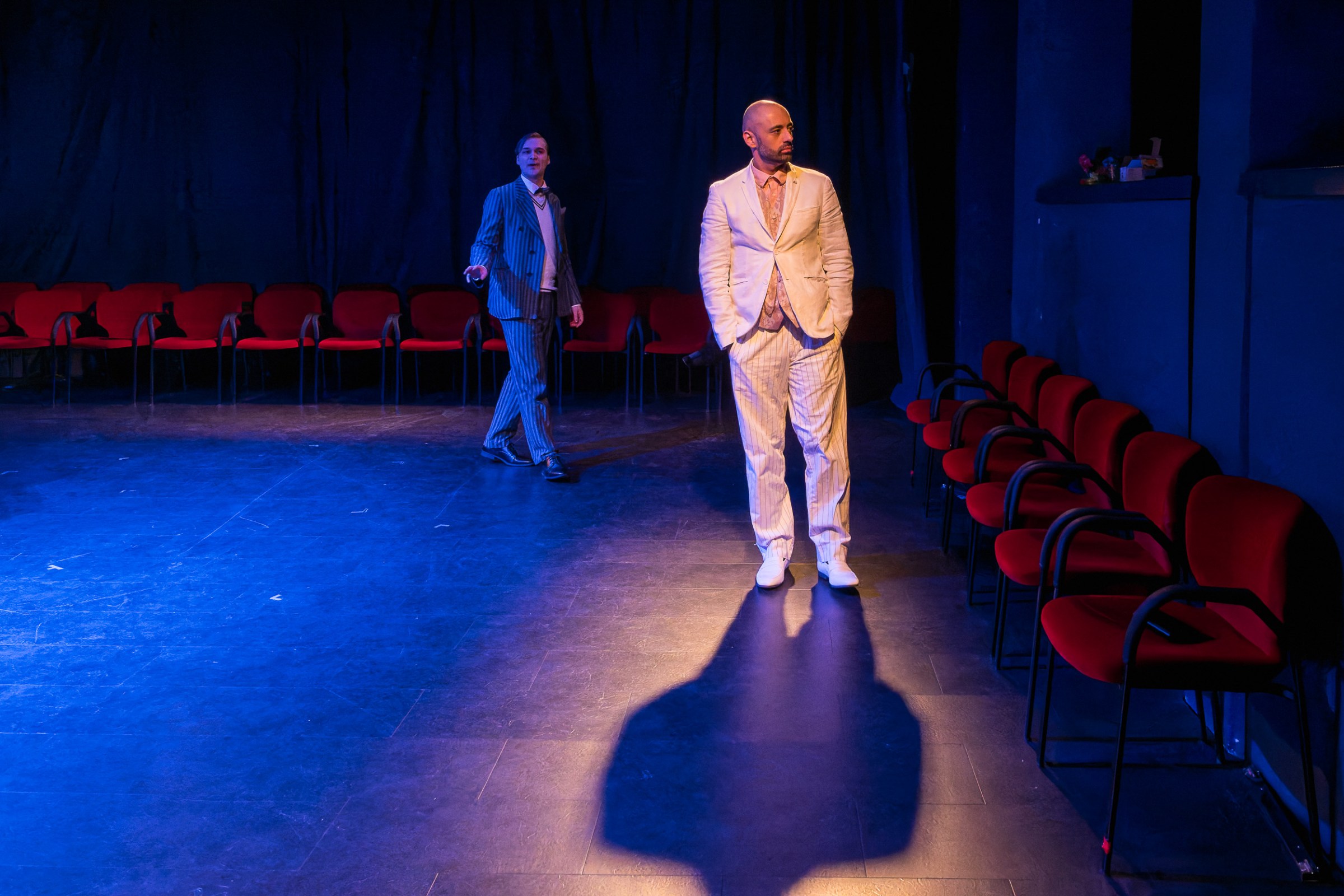
In the Open House Theatre production, the audience partly surrounds the stage, which changes the dynamics of the performance. There is no safe direction to play to, no fixed front. The actors have to keep the space in motion, turning, shifting, redistributing attention. It forces a kind of alertness that suits the material, because nothing in Gatsby’s world is ever stable for long anyway.
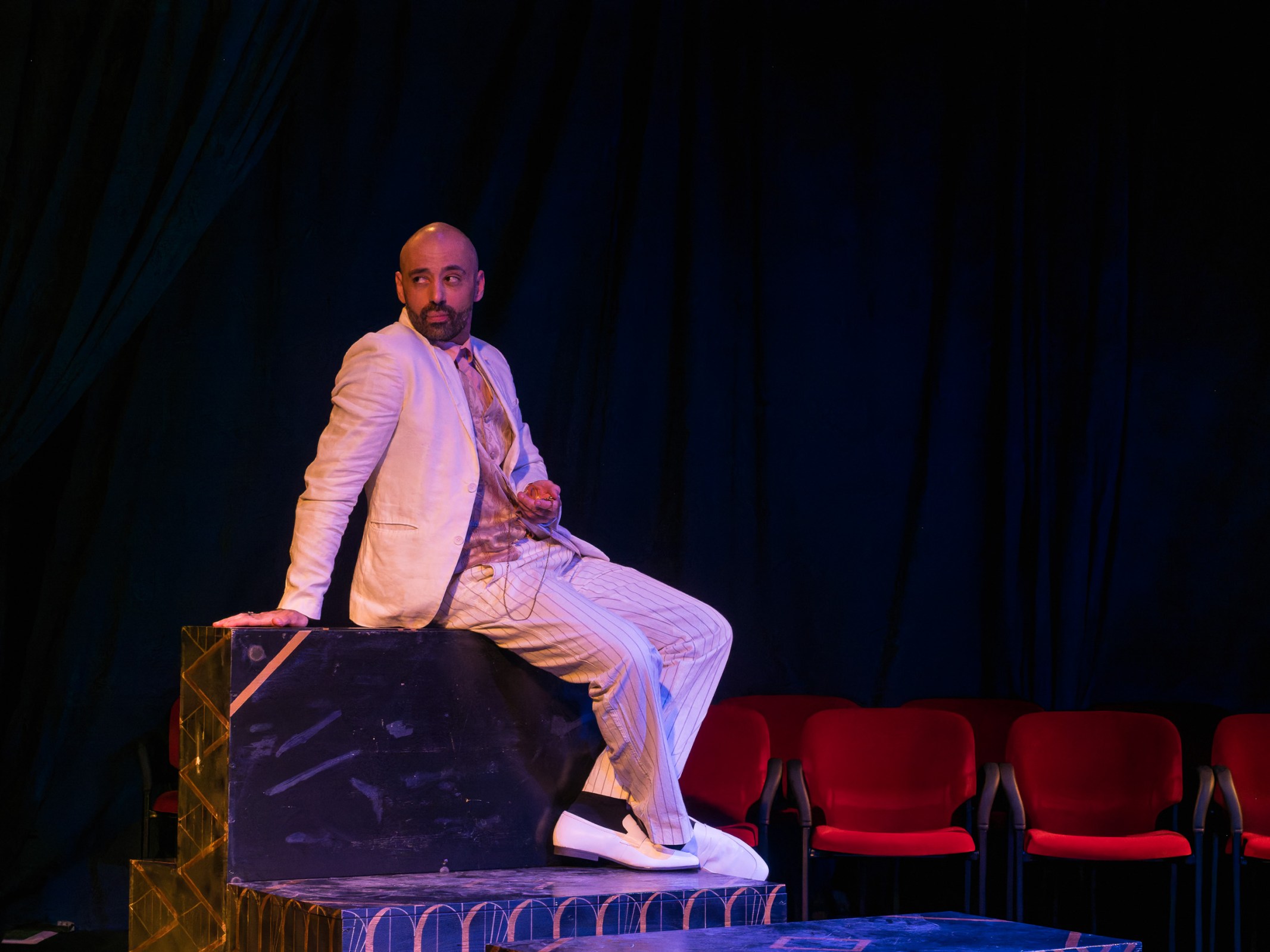
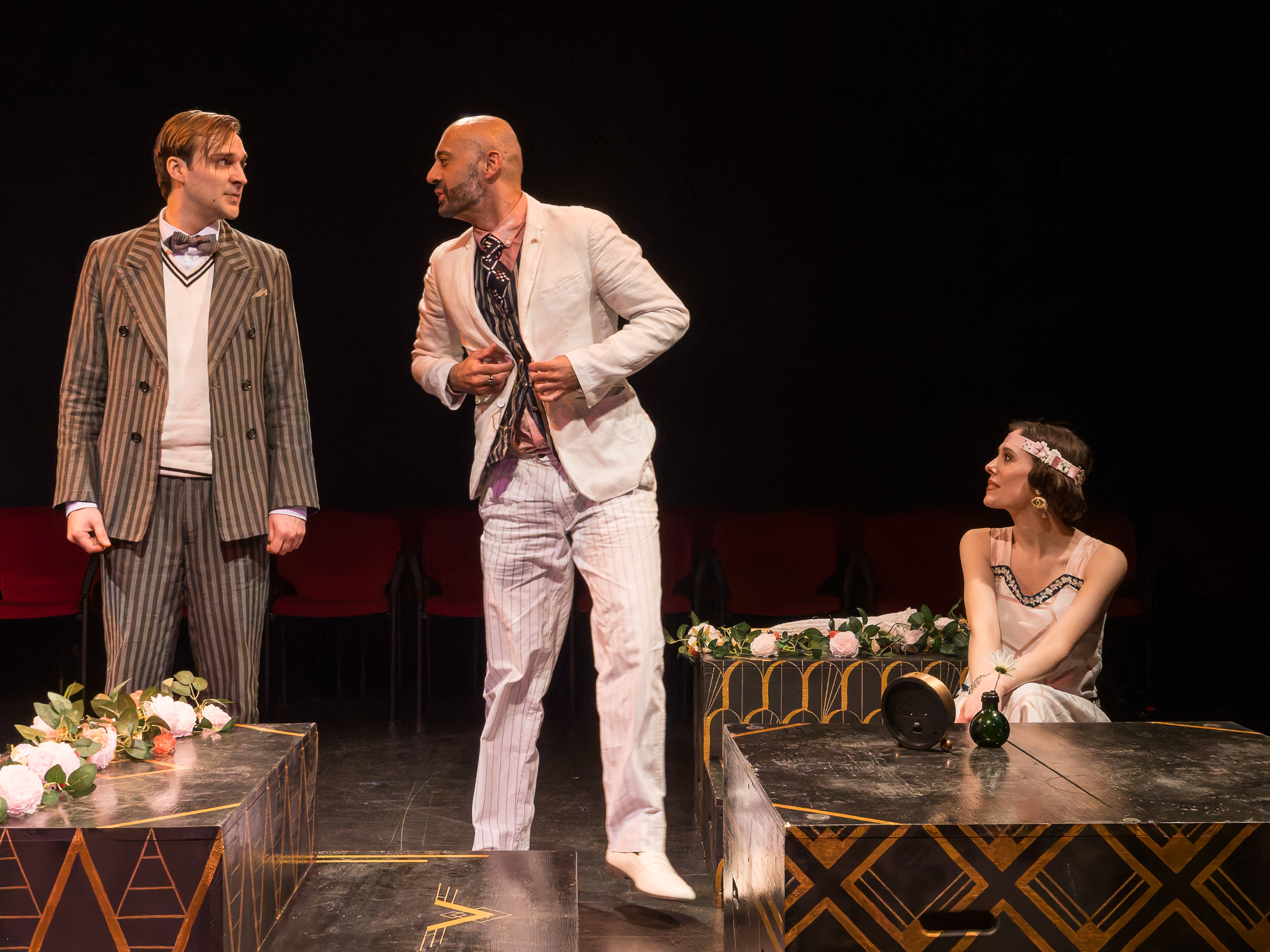
Gatsby is played by Daniel Aurora as an earnest, almost painfully hopeful man, driven less by confidence than by belief. Louise Prack’s Daisy feels unsteady in a more troubling way, caught between charm and emotional vacancy, while Emily Fisher brings a restless, watchful energy to Jordan. Tom Middler’s Tom radiates cold entitlement rather than mere arrogance, and Tess Hermann is quietly devastating as Myrtle, drawn into a world whose glitter ultimately destroys her. Emily Busvine’s Catherine adds a quietly opportunistic note, a character who helps sustain the façade while never quite belonging to it.
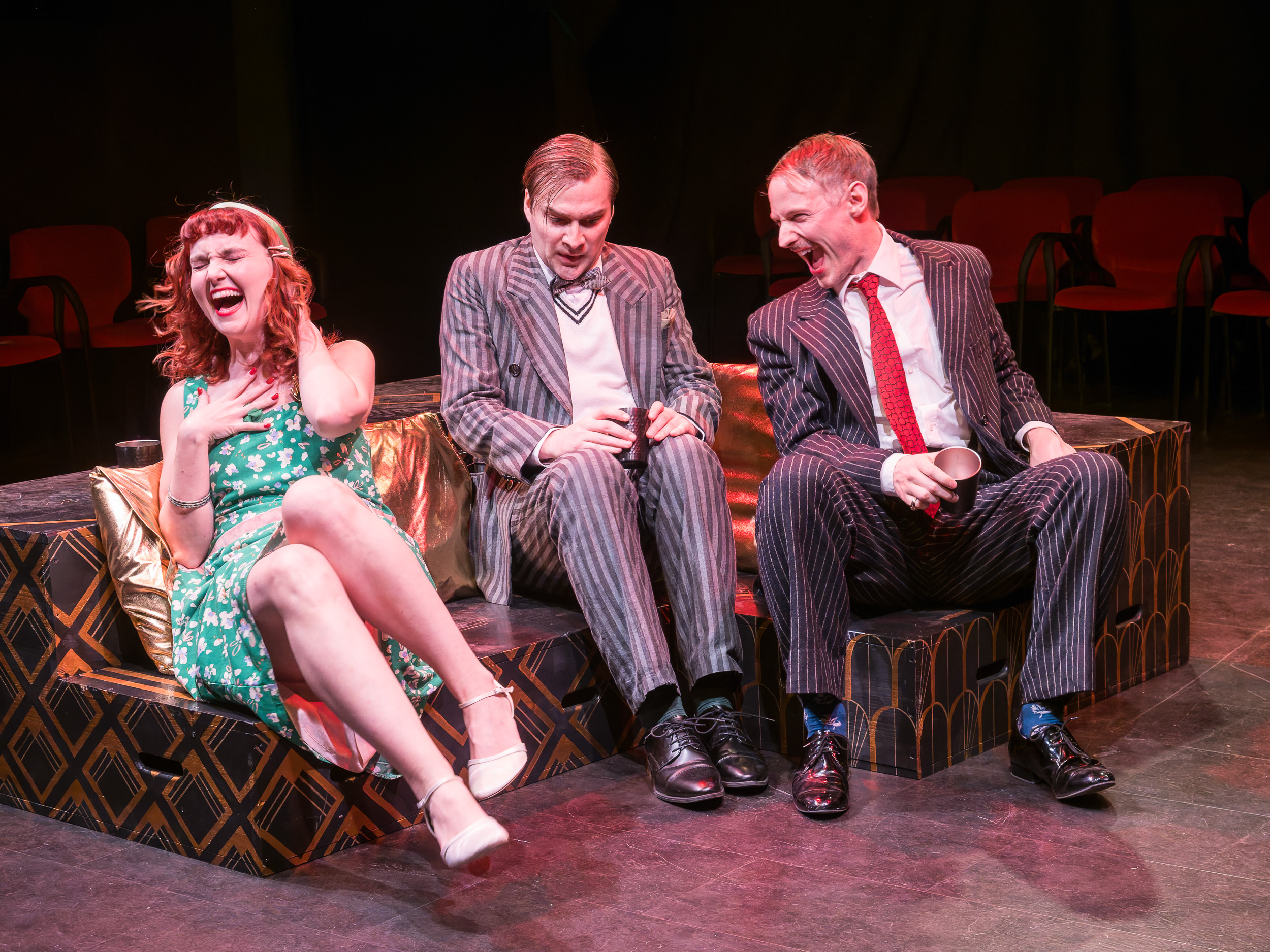
There are moments, especially in the ballroom scenes, where the production leans into the visual language of the 1920s. You get a glimpse of that glittering surface. But it is built on a deliberately minimal set: movable boxes painted with Art Deco motifs, constantly rearranged to suggest different locations and props. The transformation happens through movement and suggestion, which keeps the focus on the people rather than the furniture.
There is also a subtle but effective use of puppetry for minor characters, carried out by students from BSA, the Bilingual Acting Academy. It adds another creative layer without crowding the stage, allowing fleeting figures to appear and disappear with a certain lightness.
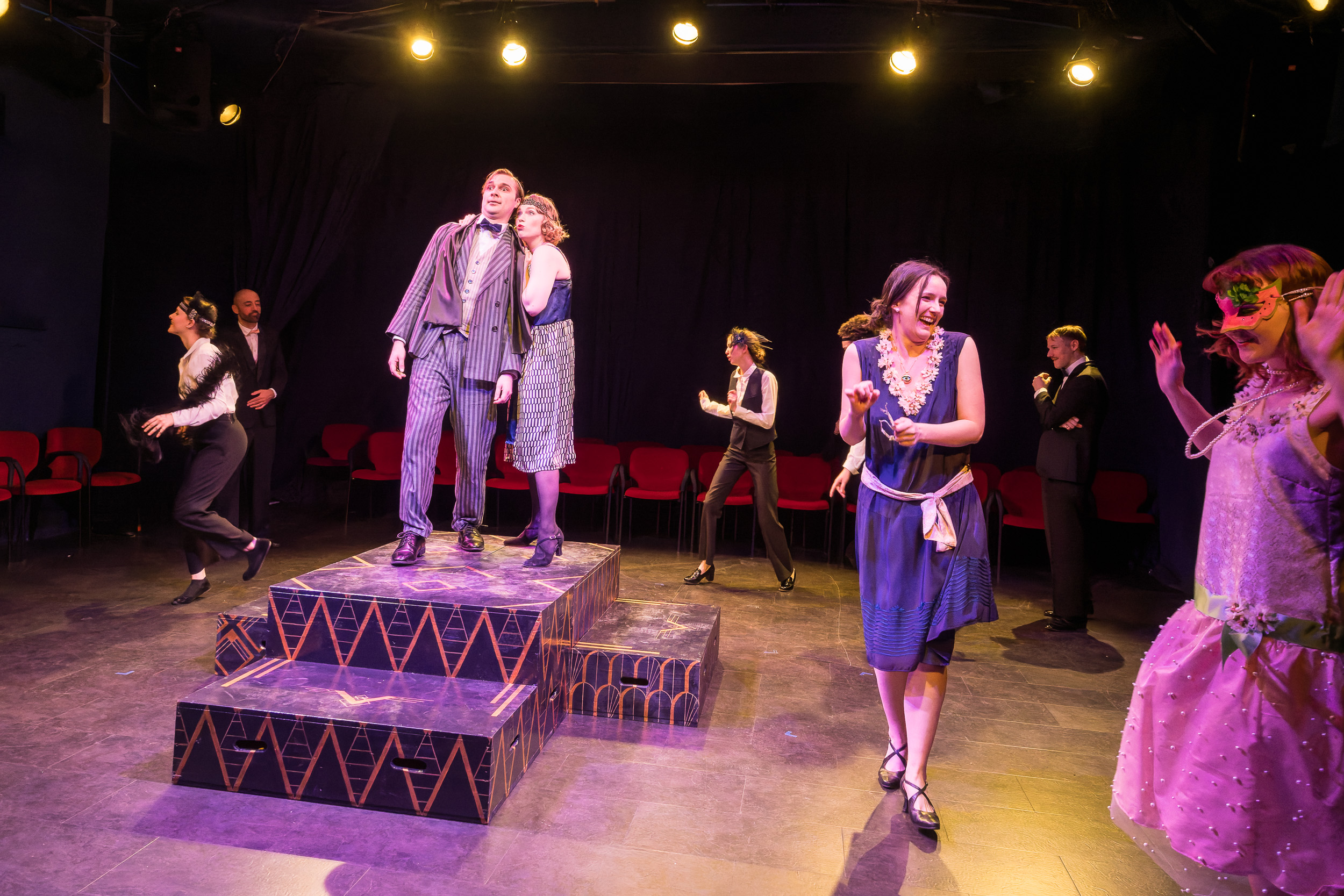
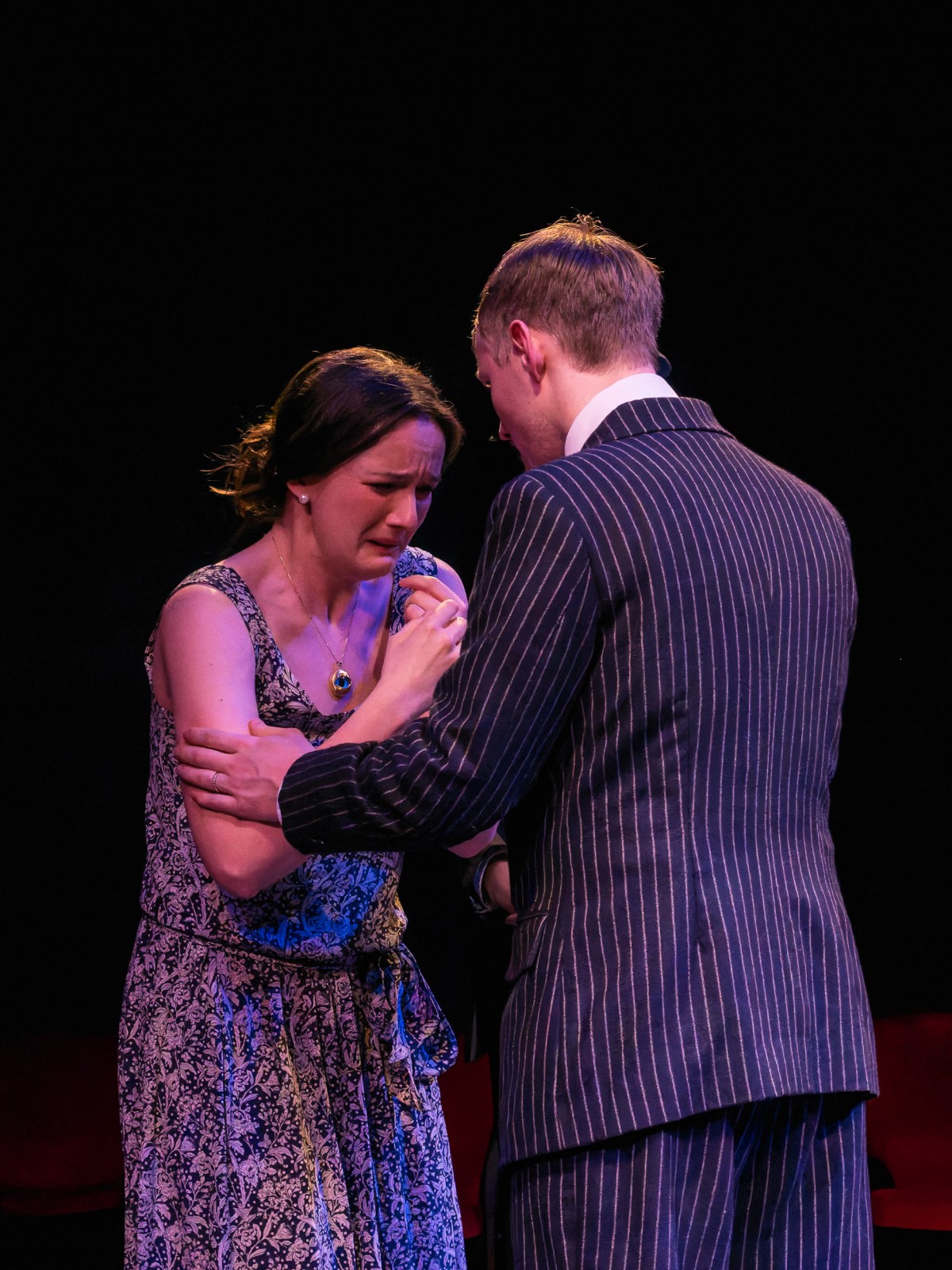
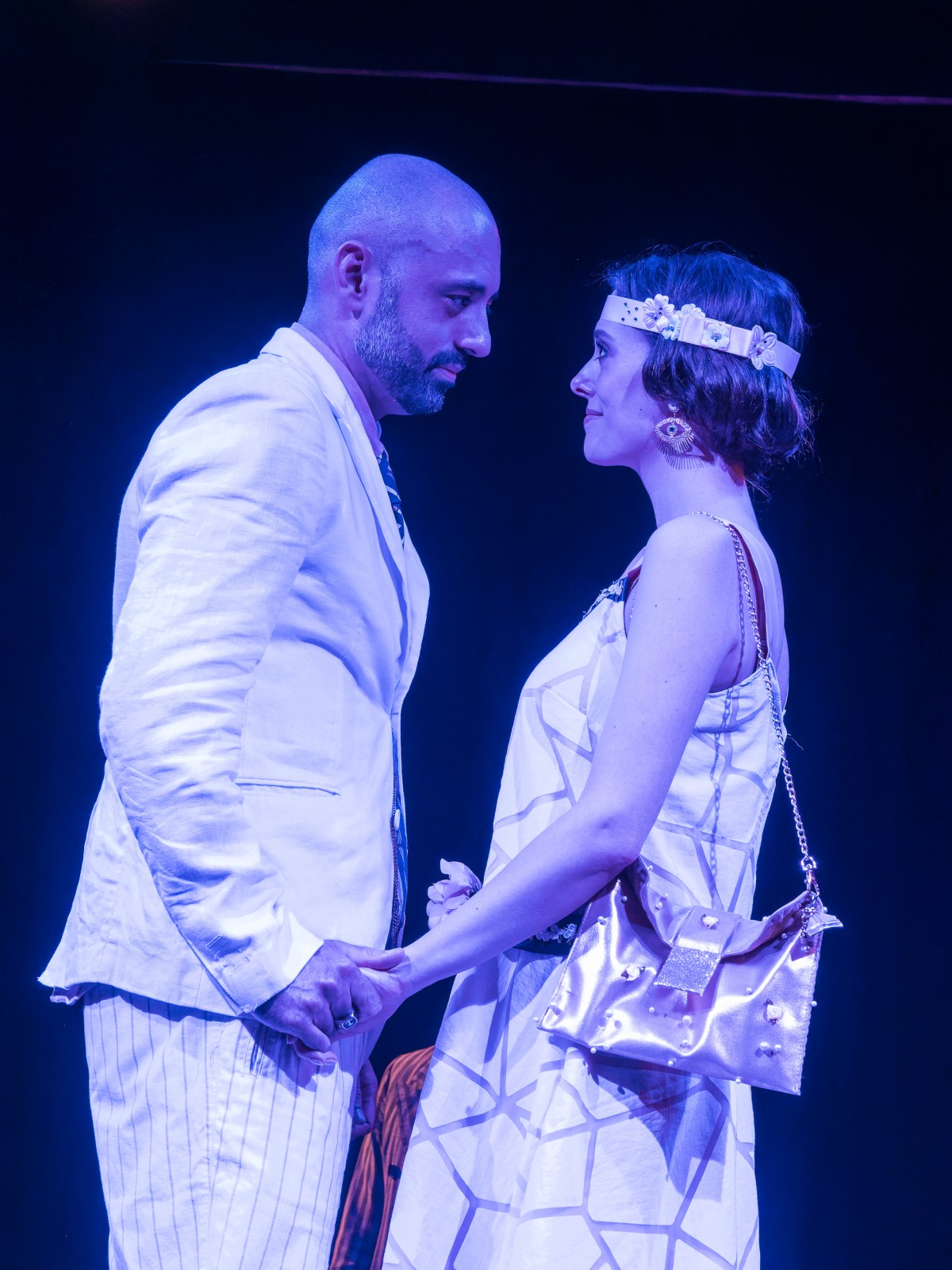
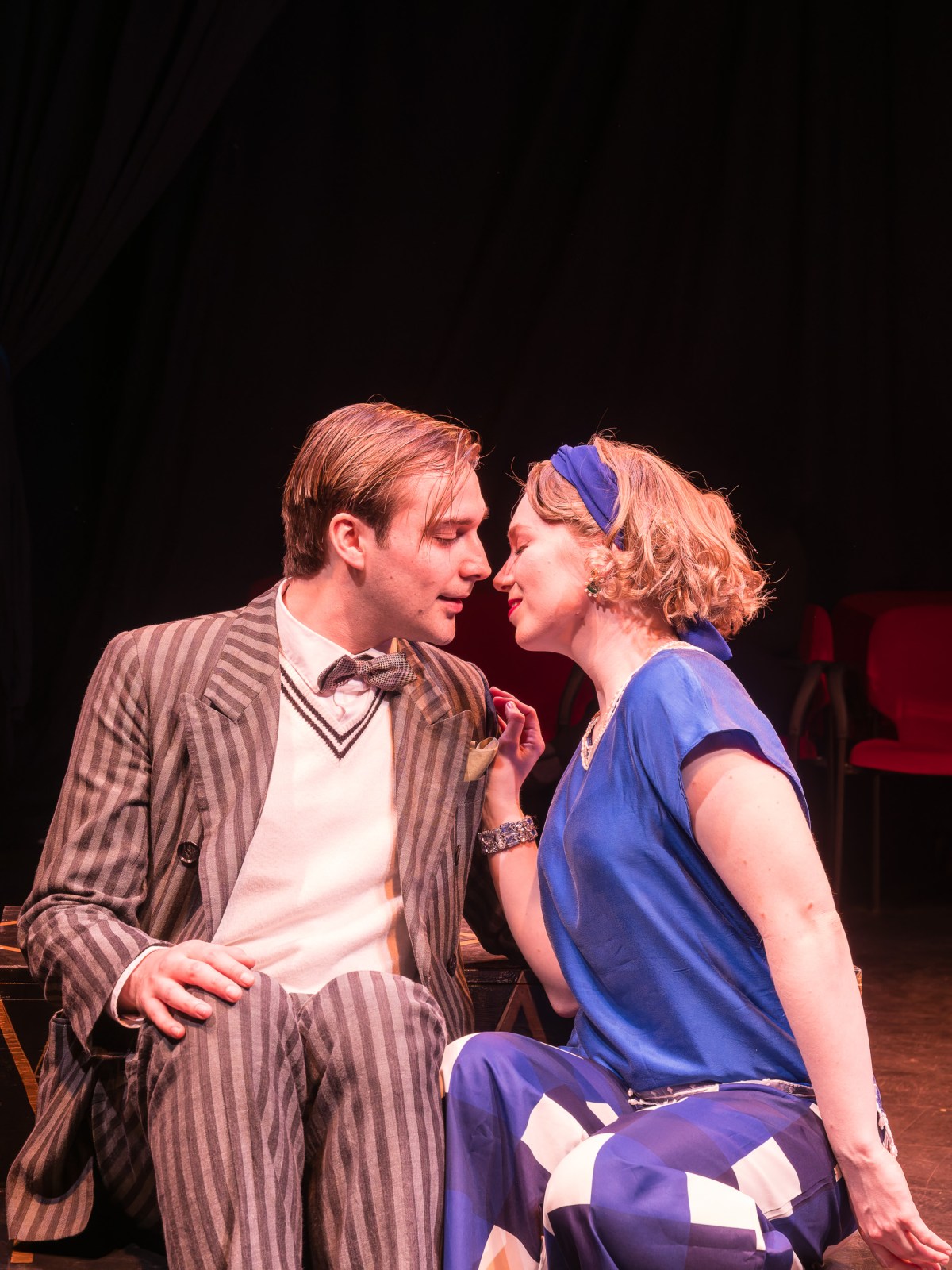
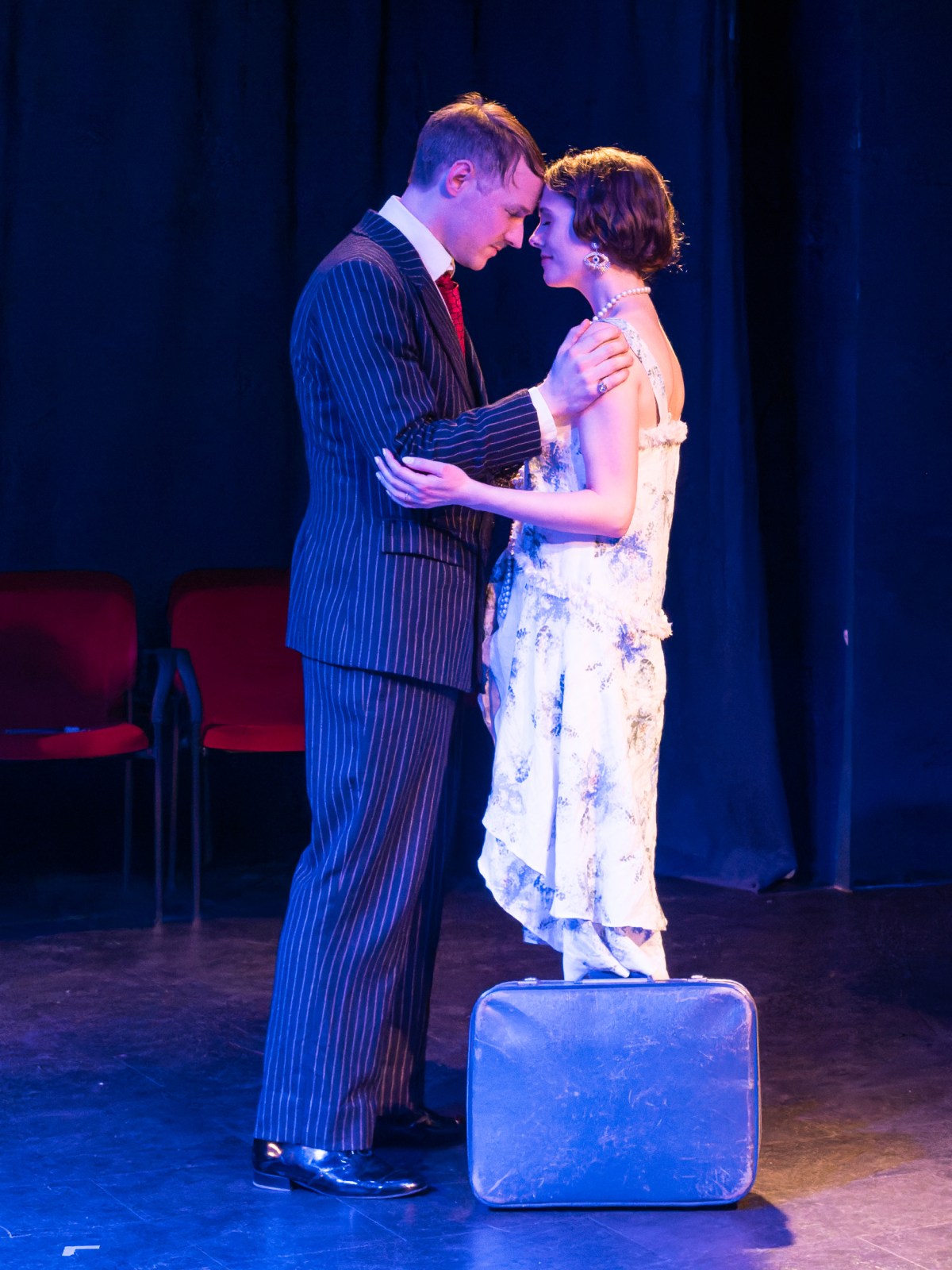
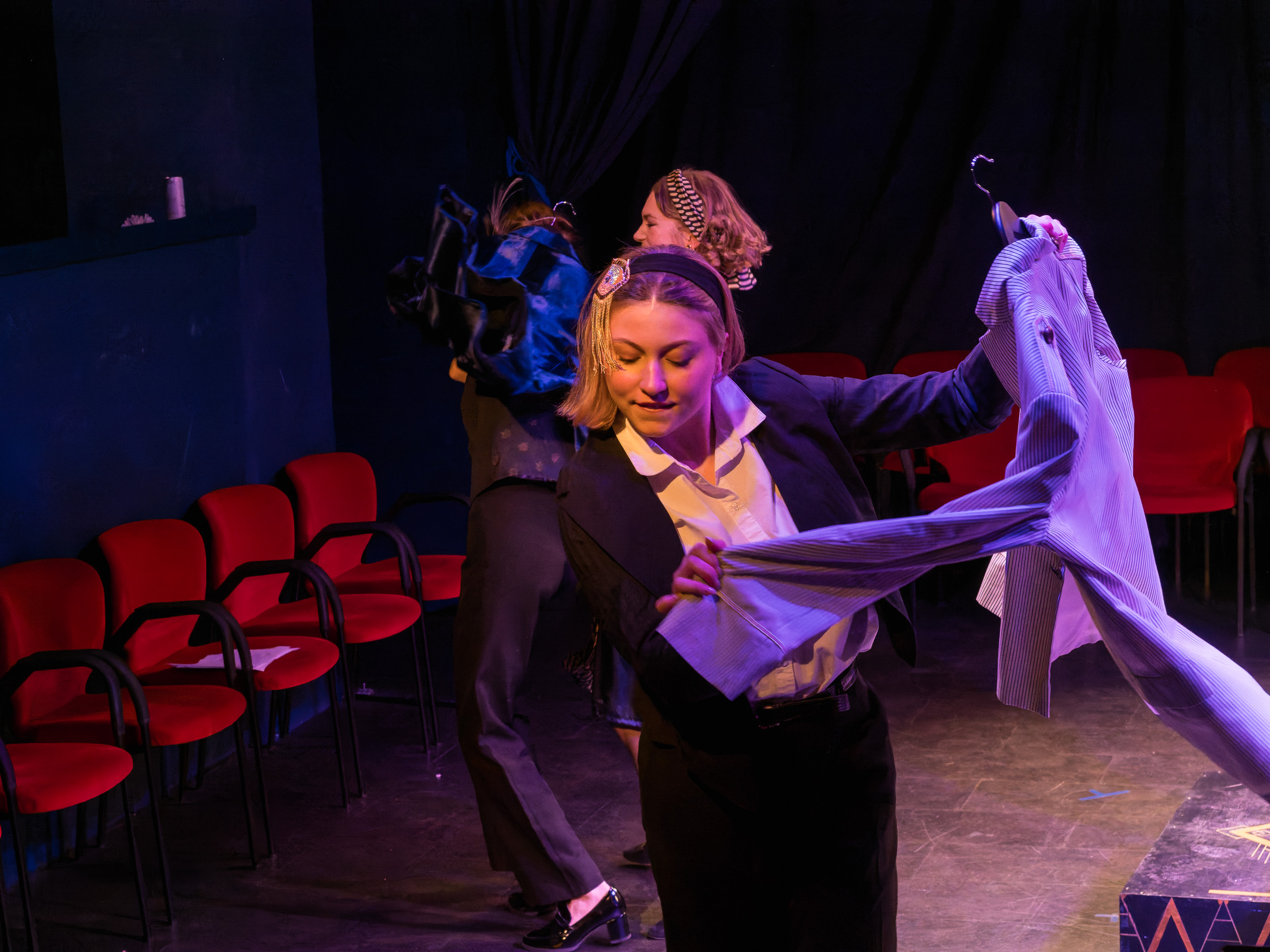
Light is used with intention. Shifts between present, past, and imagined moments are marked through changes in lighting, guiding the audience without insisting on interpretation.
One striking choice comes at the end. Gatsby does not simply vanish after his death. He remains on stage, seated within the set, his body becoming a kind of quiet afterimage, as if the illusion refuses to dissolve, lit by the steadily blinking green light he has been reaching toward all along. It is a restrained gesture, and precisely because of that, it lingers.
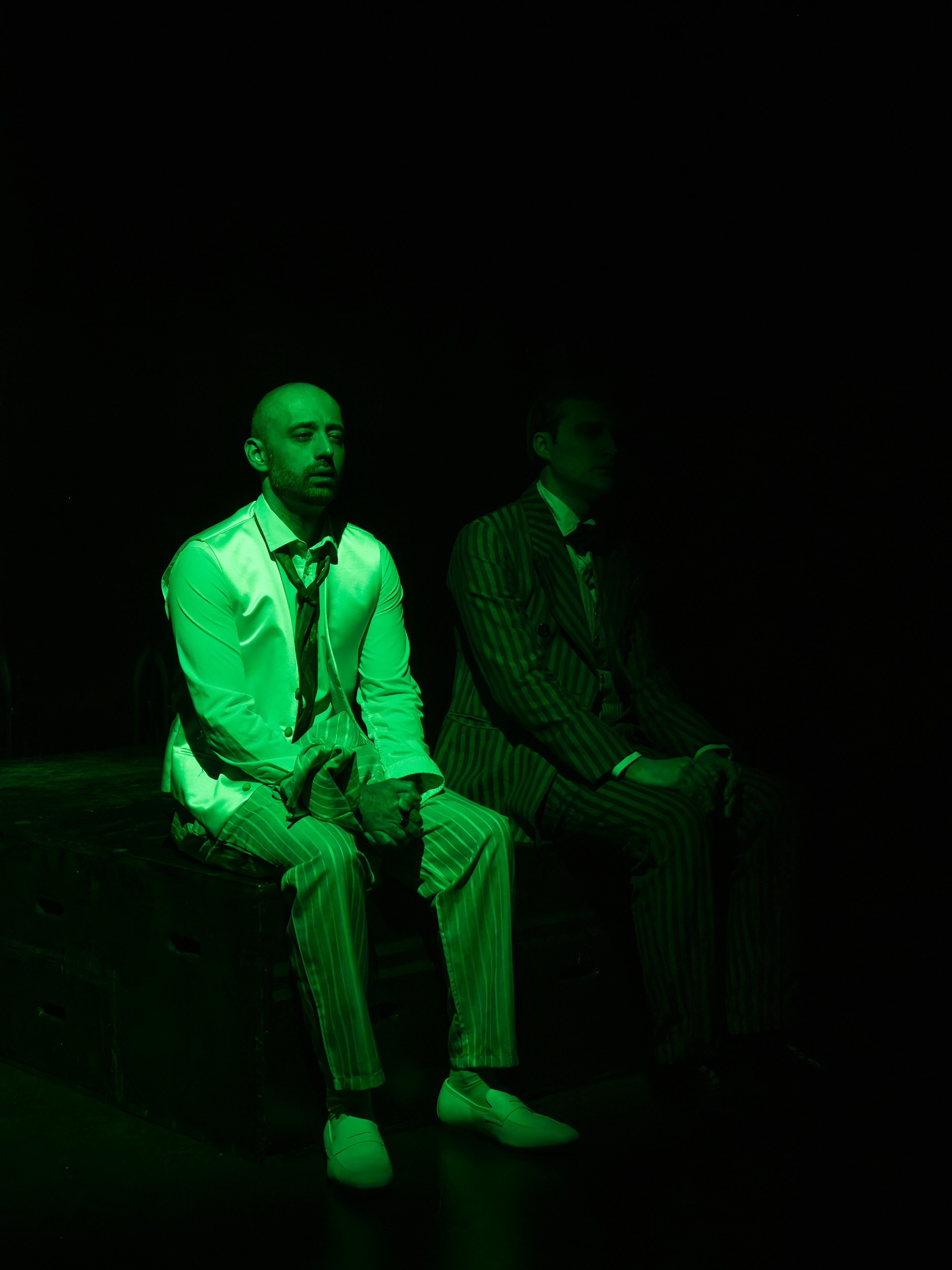
“They were careless people, Tom and Daisy – they smashed up things and creatures and then retreated back into their money or their vast carelessness or whatever it was that kept them together, and let other people clean up the mess they had made.”
― F. Scott Fitzgerald, The Great Gatsby
And then there is that line toward the end of the novel, the one that refuses to lose its sting. Careless people who break things and retreat back into their money, or their vast carelessness, leaving others to clean up the damage. This production does not underline it, but it doesn’t need to. It is already there, in the way bodies move through the space, in the way connections form and dissolve, and in the quiet aftermath that remains once the glitter fades.
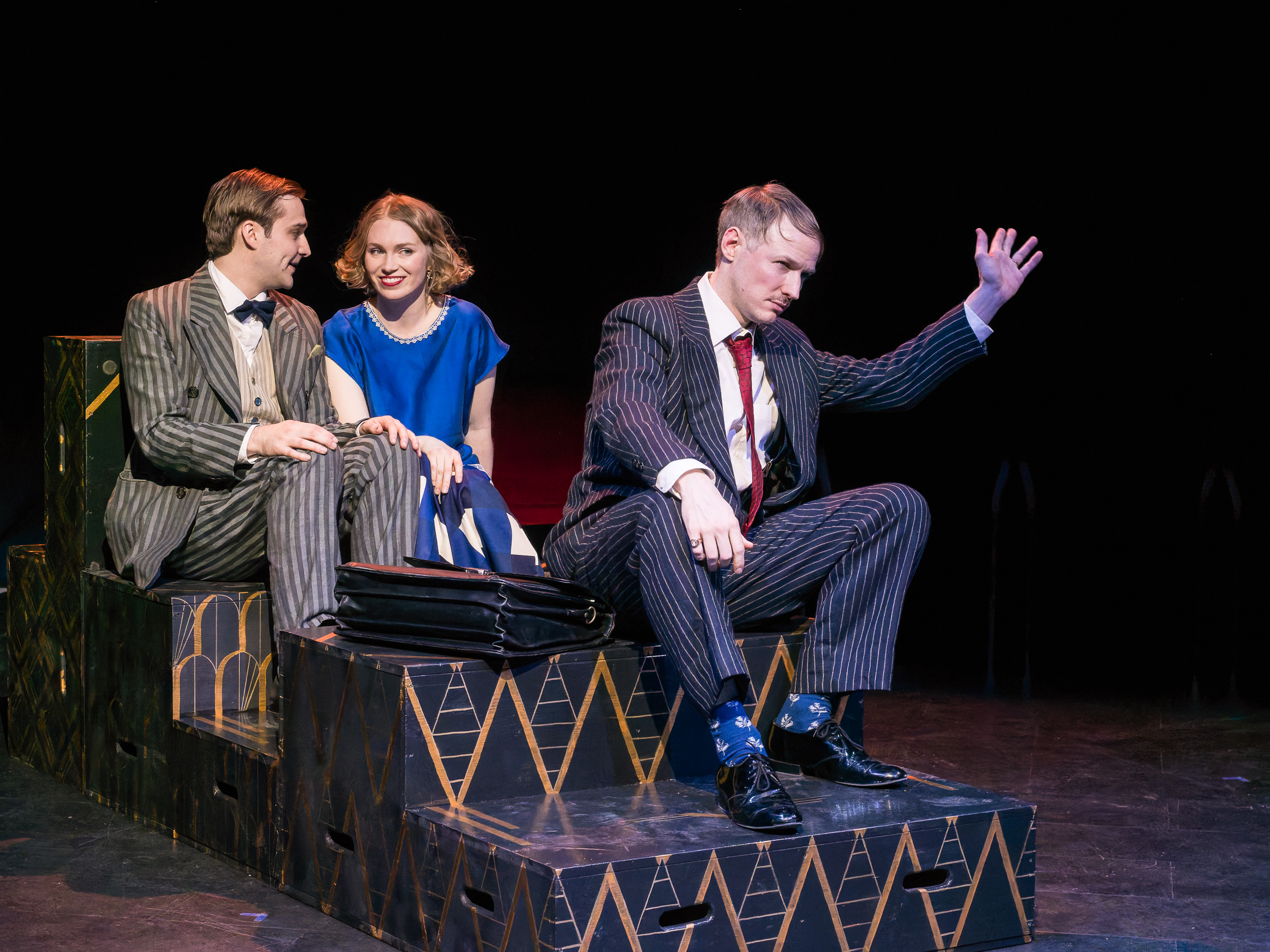
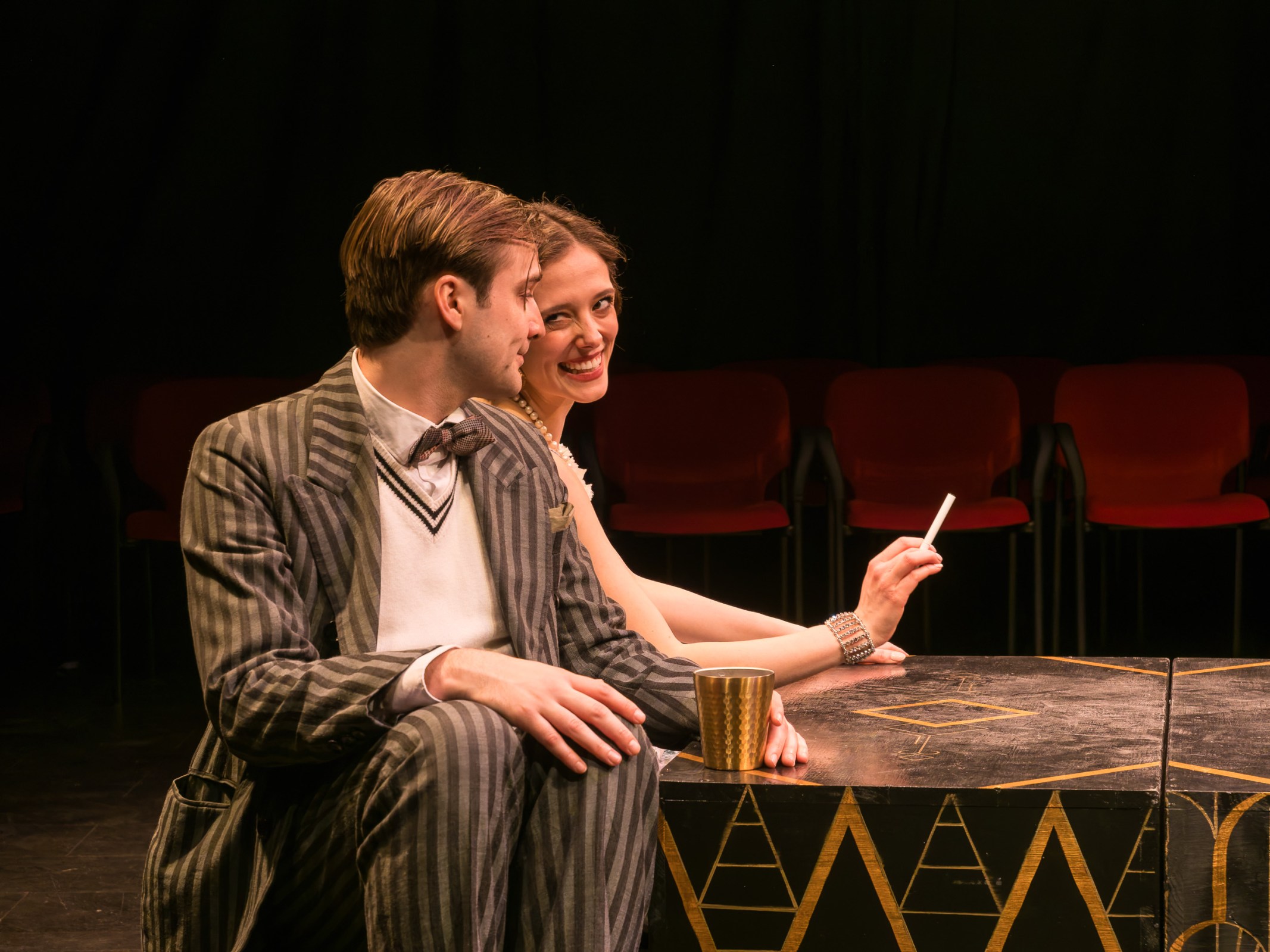
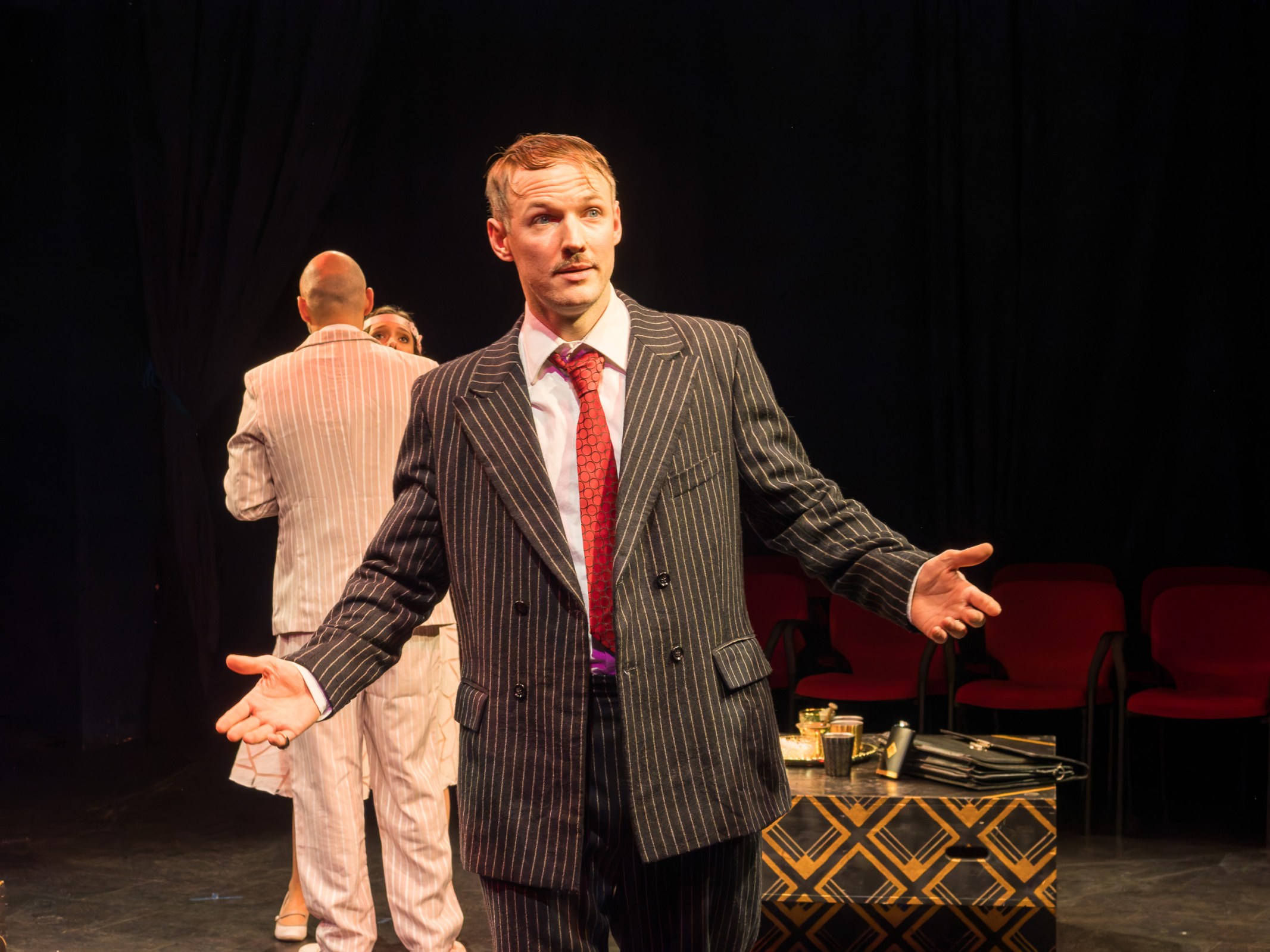
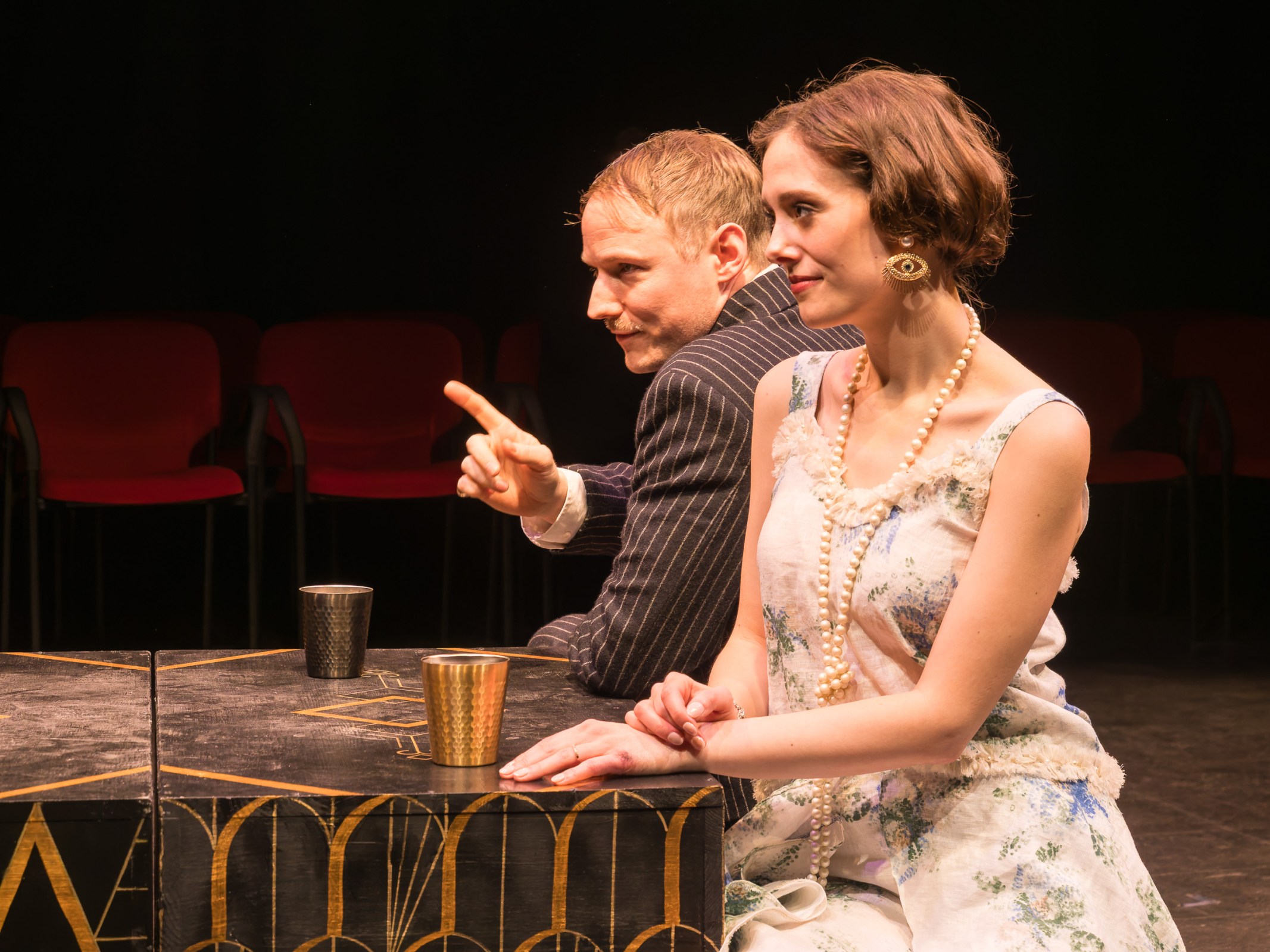
Performances of The Great Gatsby by Open House Theatre Vienna are currently on at Theater Spielraum (Kaiserstraße 46, 1070 Vienna), only until 27 March, so hurry!
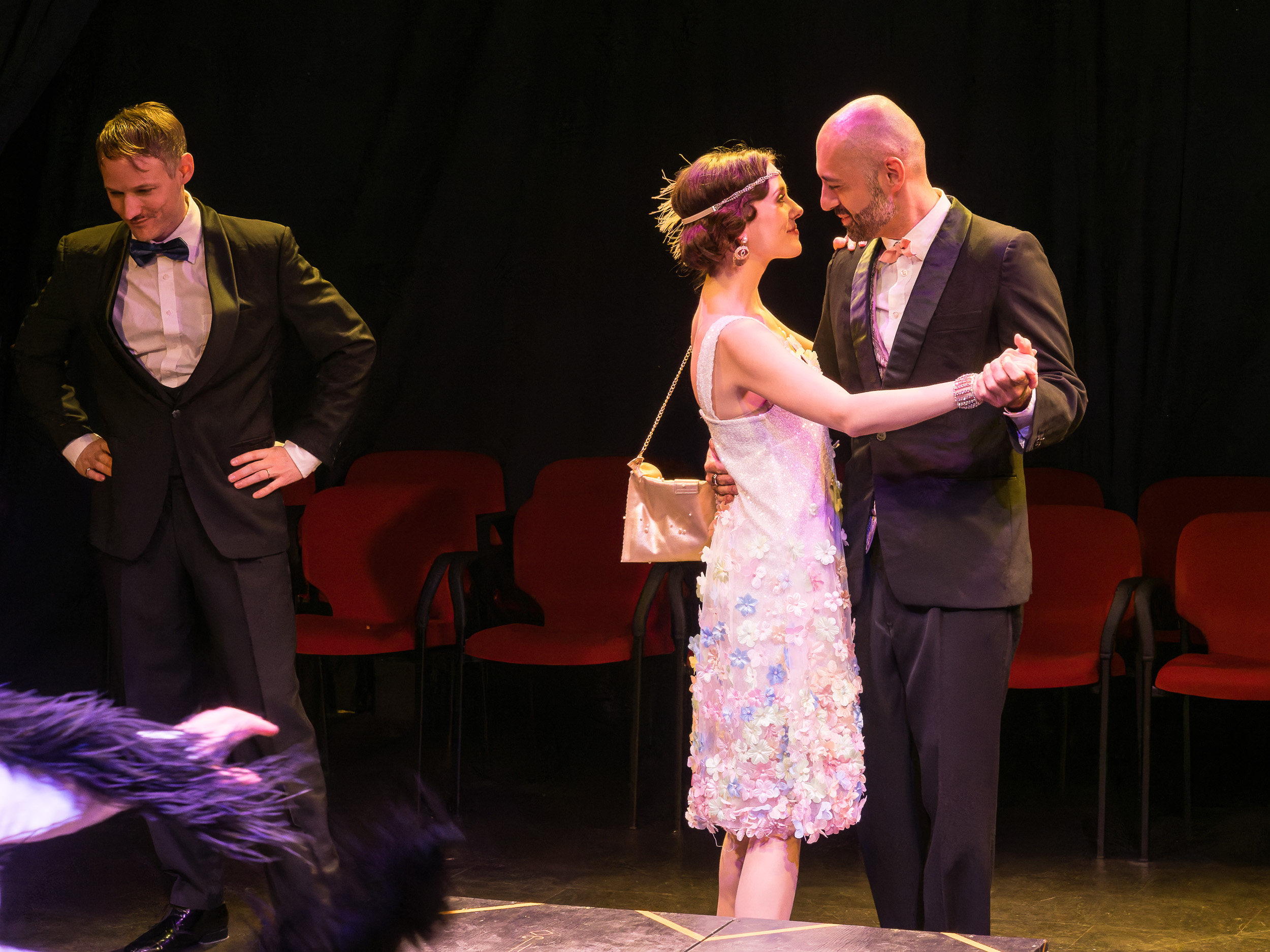
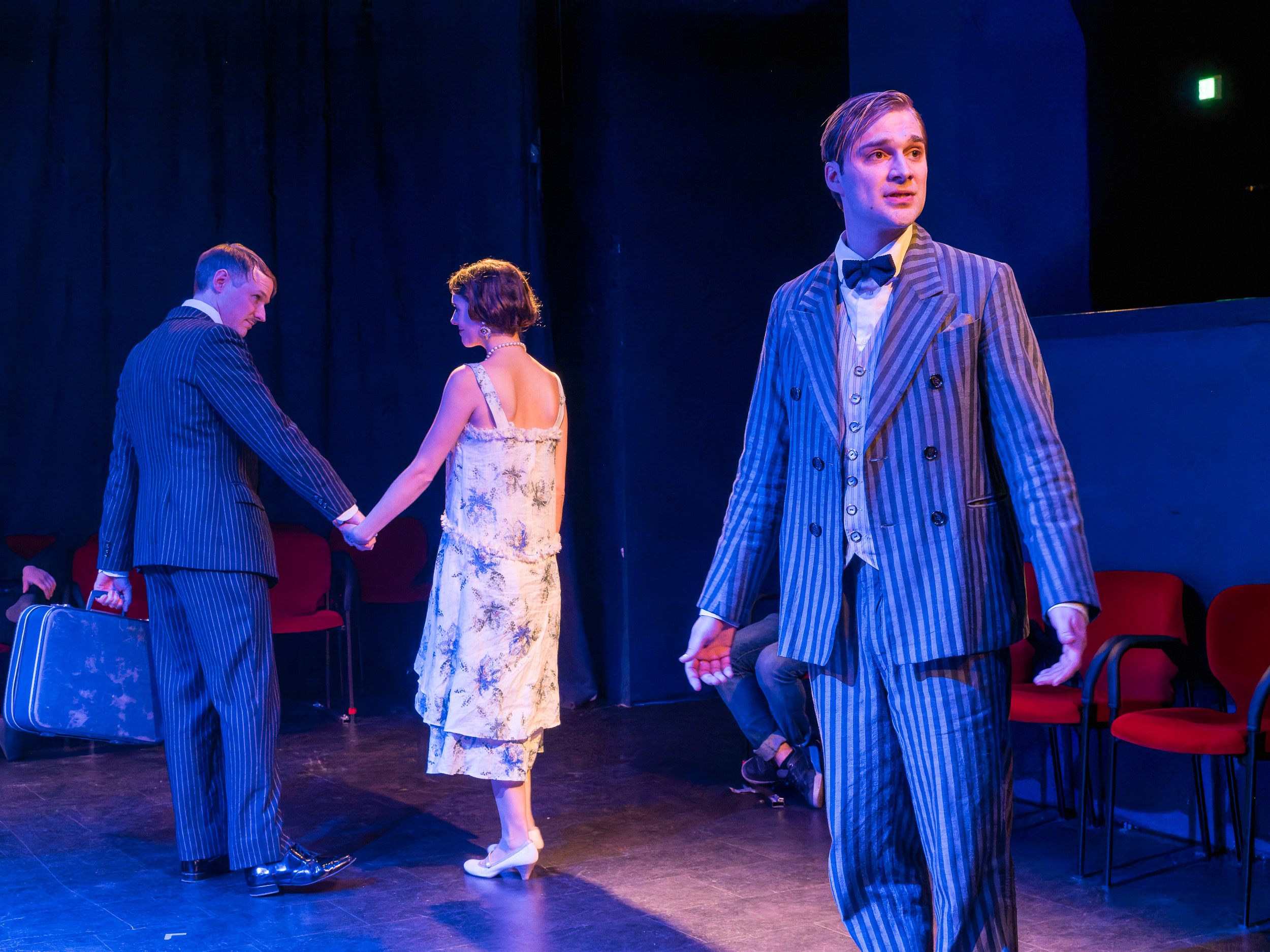
Die Inszenierung von The Great Gatsby durch Open House Theatre im Theater Spielraum zeigt eine reduzierte, aber präzise durchdachte Version des Stoffes. Statt opulenter Ausstattung setzt die Produktion auf ein minimalistisches Bühnenbild mit beweglichen Art-Déco-Elementen und nutzt Licht gezielt, um zwischen Zeiten und Ebenen zu wechseln.
Durch die umlaufende Publikumsanordnung entsteht eine besondere Dynamik: Die Schauspieler müssen den Raum ständig neu bespielen, was der Inszenierung eine hohe Präsenz und Unmittelbarkeit verleiht. Im Zentrum steht Sam Kozeluh als Nick Carraway, der den Text mit großer Klarheit trägt und der gekürzten Fassung Gewicht verleiht.
Die Figuren werden differenziert gezeichnet: Gatsby erscheint als hoffnungsvoll Getriebener, Daisy als ambivalent und emotional leer, Tom als Verkörperung von kalter Selbstverständlichkeit, und Myrtle als tragische Figur, die an der Verlockung des Reichtums zerbricht. Ergänzt wird das Ensemble durch den subtilen Einsatz von Puppenspiel für Nebenfiguren.
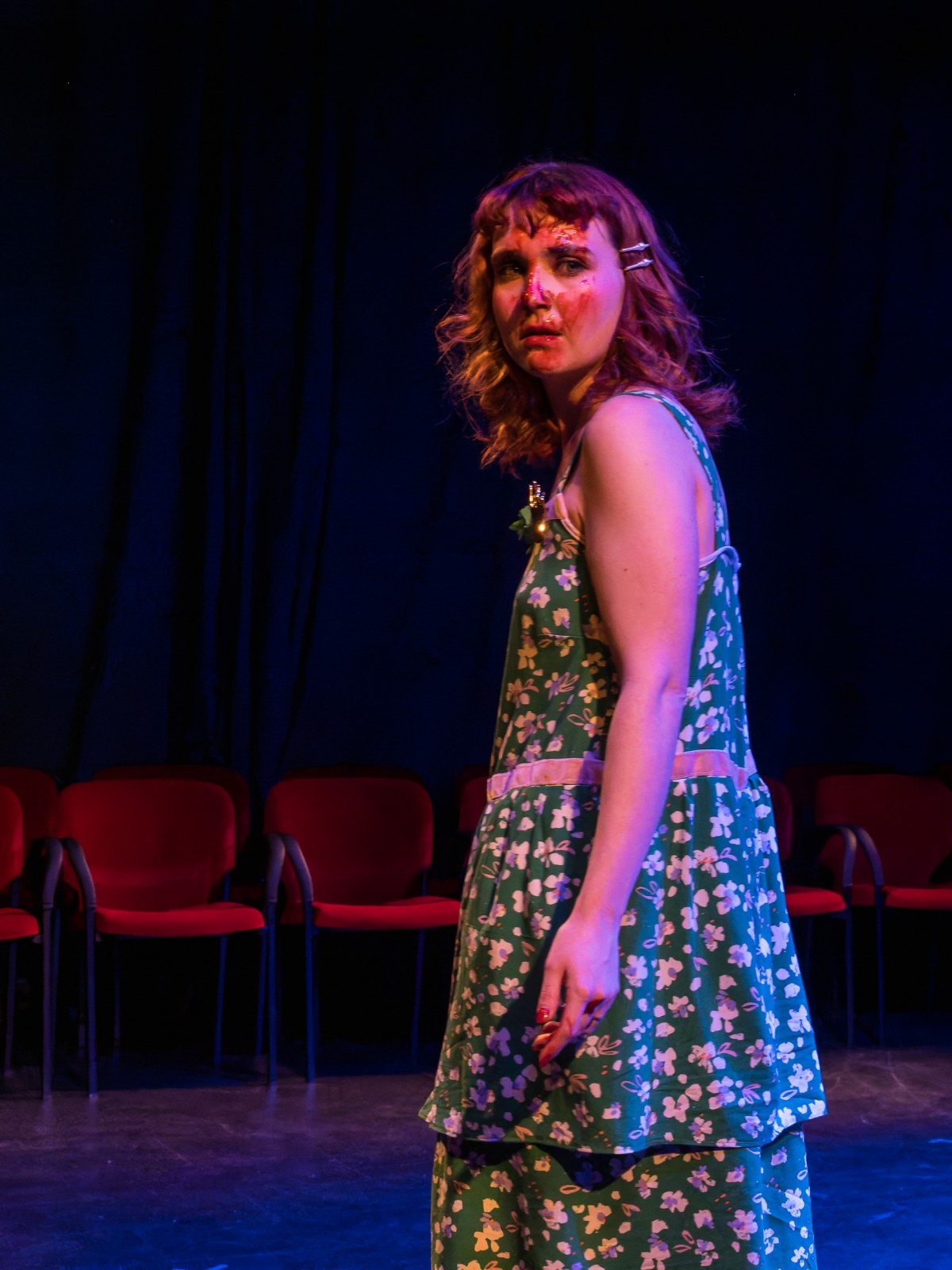
Besonders eindrücklich ist das Schlussbild, in dem Gatsby nach seinem Tod auf der Bühne bleibt, als leise Nachwirkung seiner eigenen Illusion, begleitet vom grünen Licht als Symbol seiner unerreichbaren Sehnsucht.
Insgesamt macht die Inszenierung die zentralen Themen des Romans sichtbar: Illusion, Begehren und die Rücksichtslosigkeit einer Welt, in der manche zerstören und sich dann einfach zurückziehen, während andere die Folgen tragen.
Aufführungen finden in englischer Sprache statt!
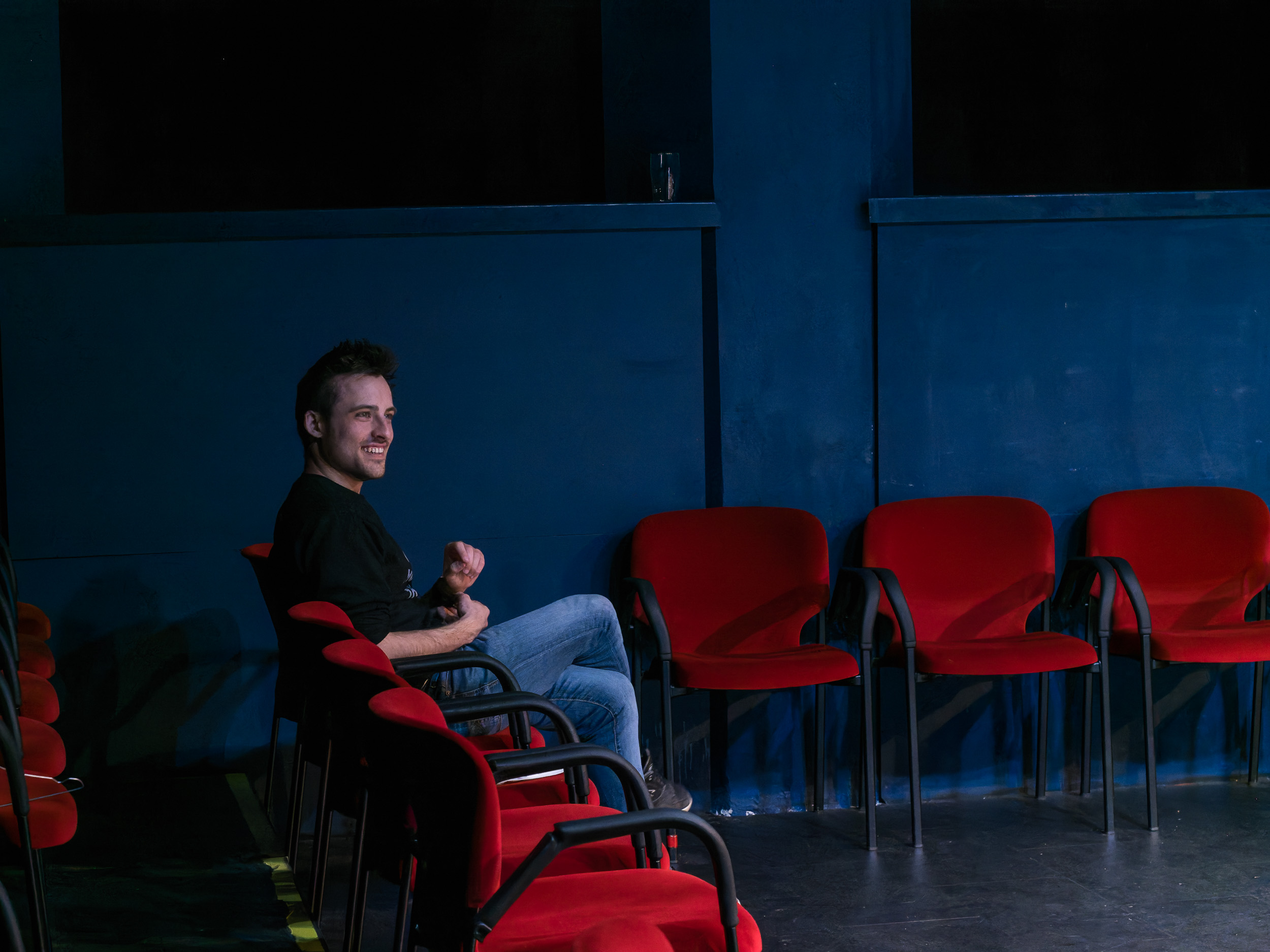
All rehearsal photos on Viennacultgram.com are my own.
I photographed a final rehearsal last week, a pleasure in itself. Being able to move freely through the space, to observe from different angles, and to speak with the actors in between scenes offers access not just to the performance, but to the atmosphere that surrounds it.
See more of my theatre photography here.
 ViennaCultgram