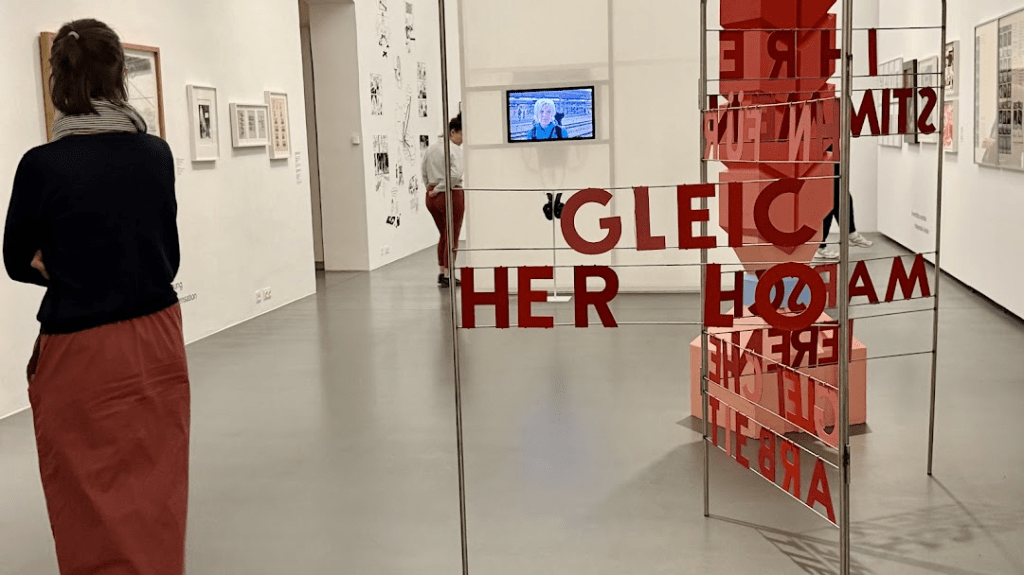
„Alles in Arbeit“ im Dom Museum Wien
(Scroll down for the English text.)
Es gibt Ausstellungen, die einem gefallen. Und es gibt Ausstellungen, die einen ein bisschen aus dem Gleichgewicht bringen. „Alles in Arbeit“ im Dom Museum Wien gehört eindeutig zur zweiten Kategorie.
Ich habe die Ausstellung letzte Woche im Rahmen einer Führung mit IGersAustria besucht, eine dieser seltenen Gelegenheiten, bei denen man nicht nur betrachtet, sondern auch versteht, was hinter den Werken steckt. Und schnell wird klar: Hier geht es nicht um Arbeit im klassischen Sinn. Nicht nur um Jobs, Einkommen oder Karriere. Es geht um etwas Grundsätzlicheres. Um Wert. Um Sichtbarkeit. Um Macht.
Kuratiert von Johanna Schwanberg gemeinsam mit Vanessa Joan Müller wirkt die Ausstellung nicht wie ein sauber durchkomponierter Überblick, sondern eher wie ein gedanklicher Parcours. Man bewegt sich zwischen alten und neuen Arbeiten, zwischen Malerei, Fotografie, Skulptur und Video, und merkt: Hier geht es nicht darum, Arbeit zu definieren, sondern sie auseinanderzunehmen. Mal wirkt sie sinnstiftend, mal absurd, mal schlicht unfair. Und dieses Hin und Her macht die Ausstellung spannend.
Was besonders auffällt, ist die Vielstimmigkeit. Es gibt nicht die eine Perspektive. Stattdessen begegnet man unterschiedlichen Zugängen, die sich teilweise widersprechen, ergänzen oder auch bewusst reiben. Arbeit erscheint mal als sinnstiftend, mal als entfremdend, mal als unsichtbar und systematisch unterbewertet.
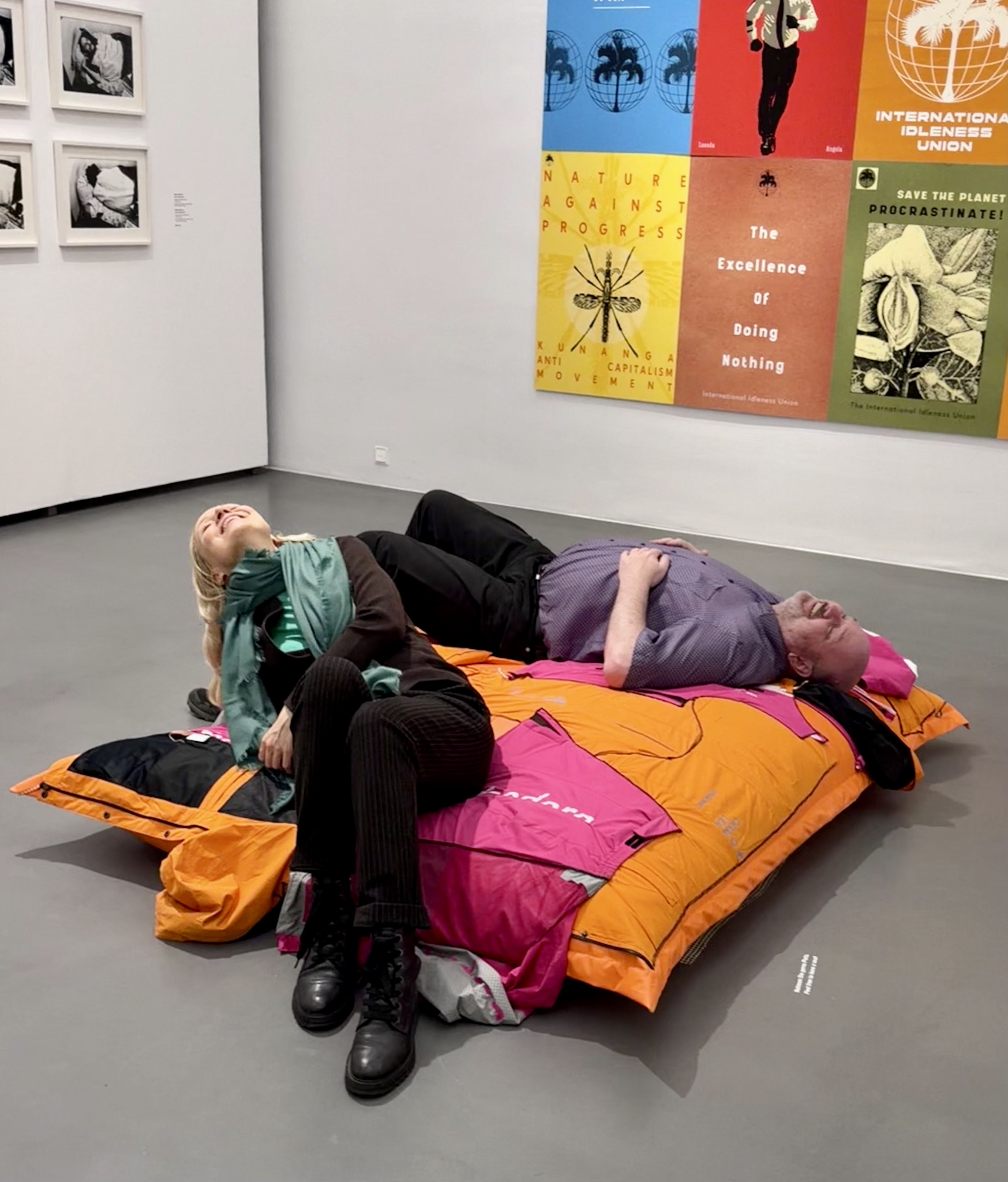
Ein Werk, das mich besonders getroffen hat, war die Installation aus Jacken von Fahrradboten, die ihren Job aufgegeben haben. Auf den ersten Blick wirkt das Objekt fast einladend, wie eine Art Sitz- oder Liegefläche. Man kann sich darauf niederlassen, ausruhen, kurz abschalten. Doch genau darin liegt die Irritation. Diese Jacken stehen für Menschen, die oft unter prekären Bedingungen arbeiten, schlecht bezahlt, körperlich stark belastet und meist ohne echte Absicherung. Menschen, deren Arbeit wir selbst ganz selbstverständlich in Anspruch nehmen, wenn wir Essen bestellen, weil es gerade bequem ist. Und so bekommt dieses scheinbar gemütliche Objekt eine Schwere.
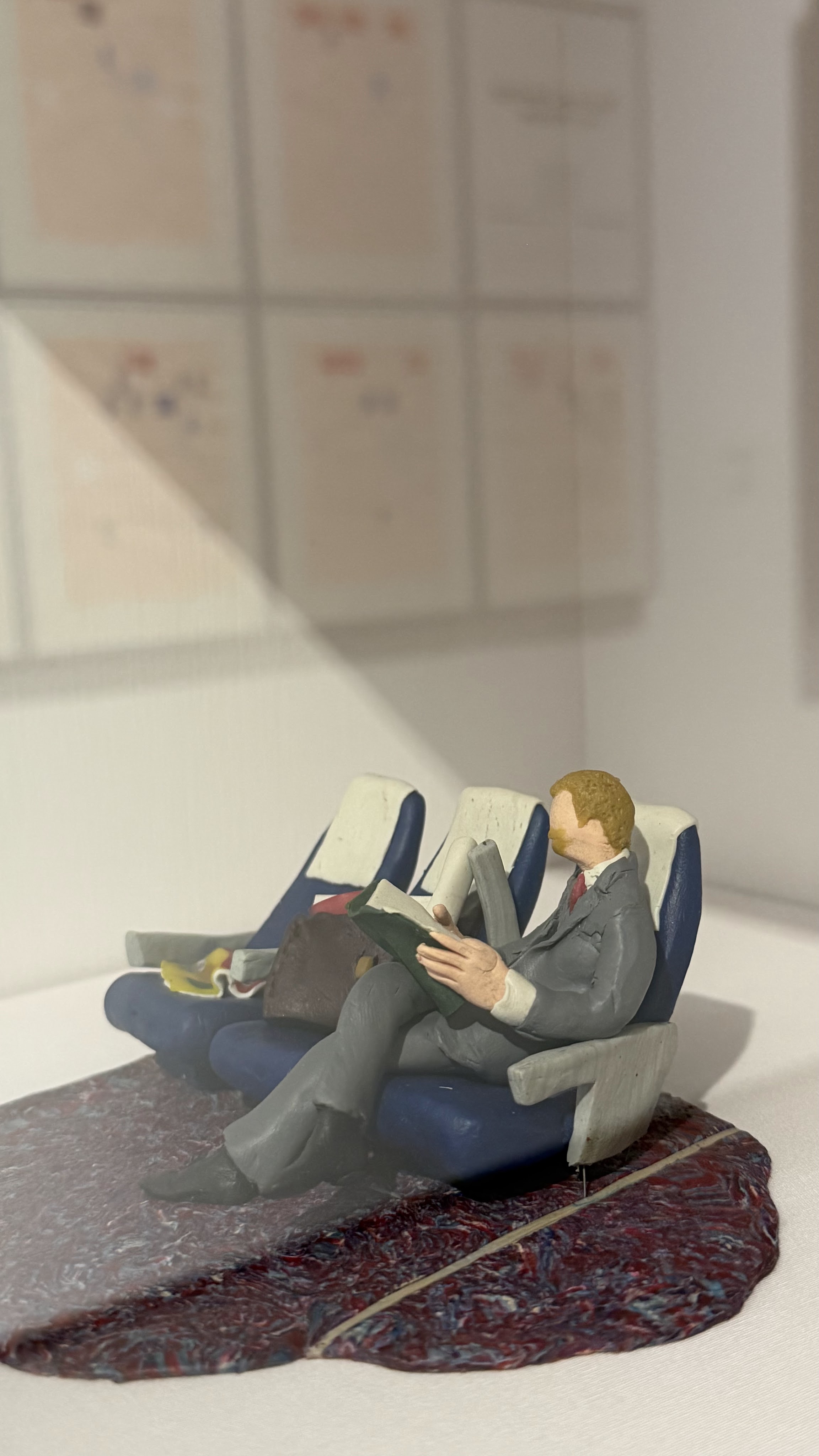
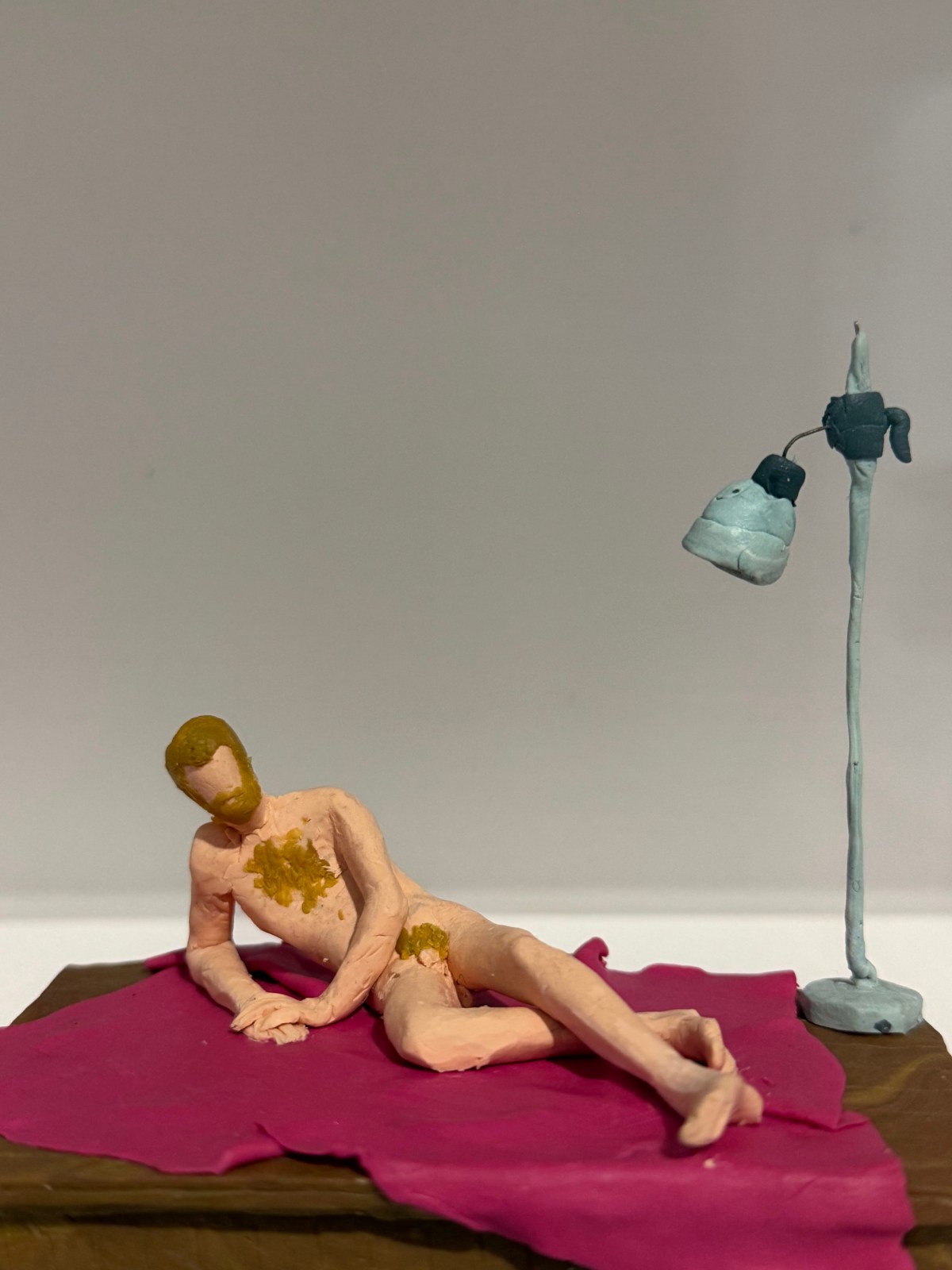
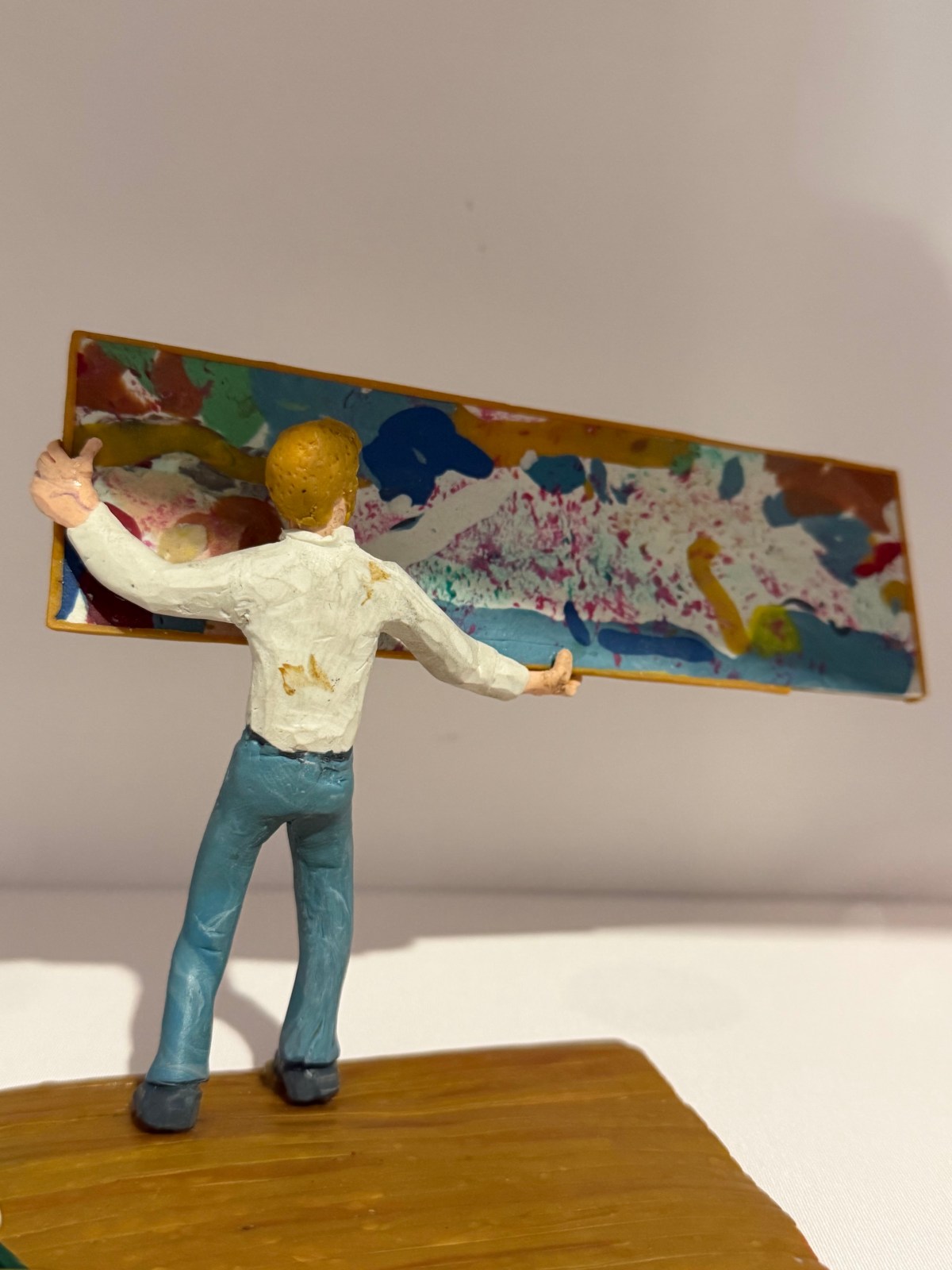
Witzig fand ich die kleinen Figuren aus Knetmasse von Robert Adrian X. Sie wirken humorvoll, zeigen unterschiedliche Tätigkeiten, mit denen der Künstler seinen Lebensunterhalt bestritten hat. Und doch steckt darin eine Ehrlichkeit über die Realität von Arbeit: dass sie oft fragmentiert ist, improvisiert, nicht linear. Eine der Figuren, ein liegender männlicher Akt, wirkt lustig, fast absurd, und ist gleichzeitig ein Kommentar darauf, dass auch der eigene Körper Teil von Arbeit sein kann.
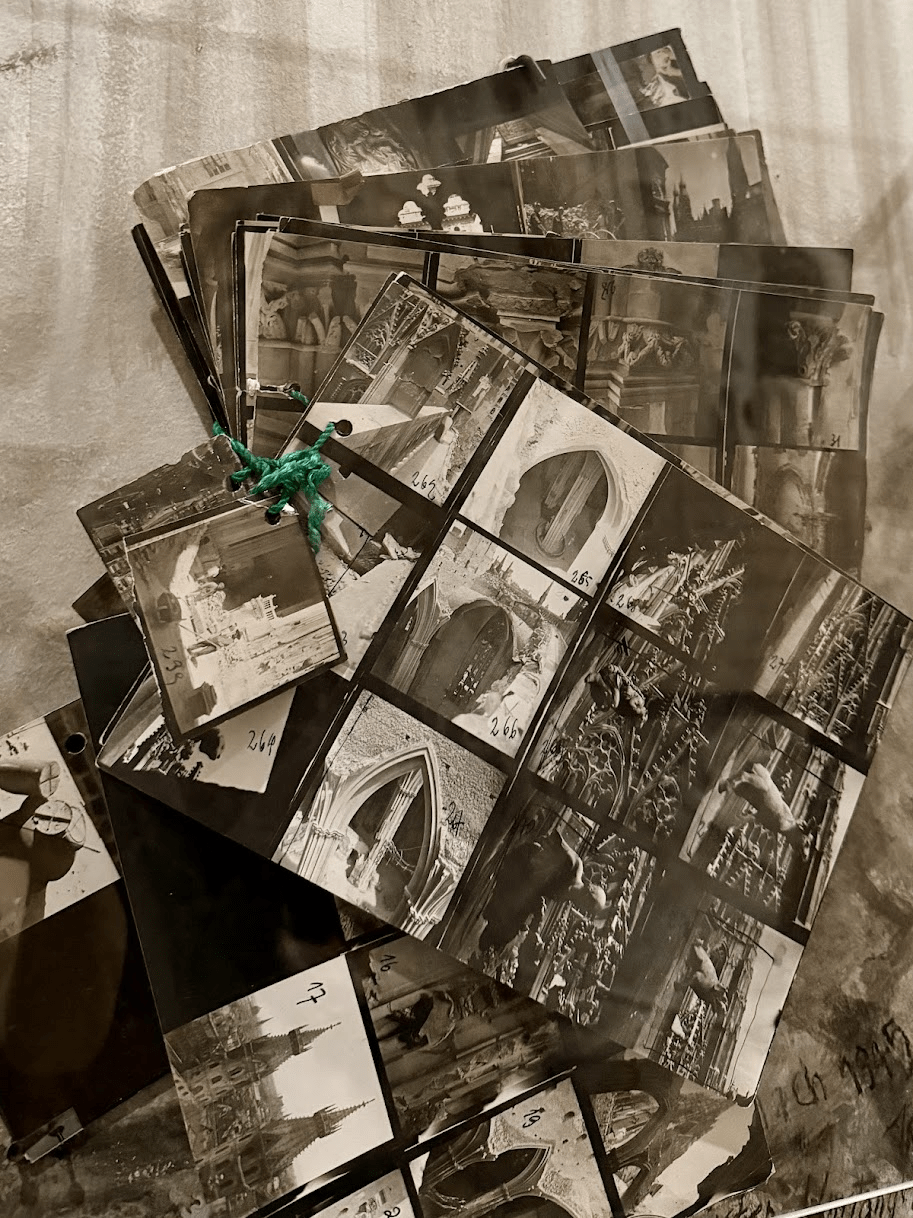
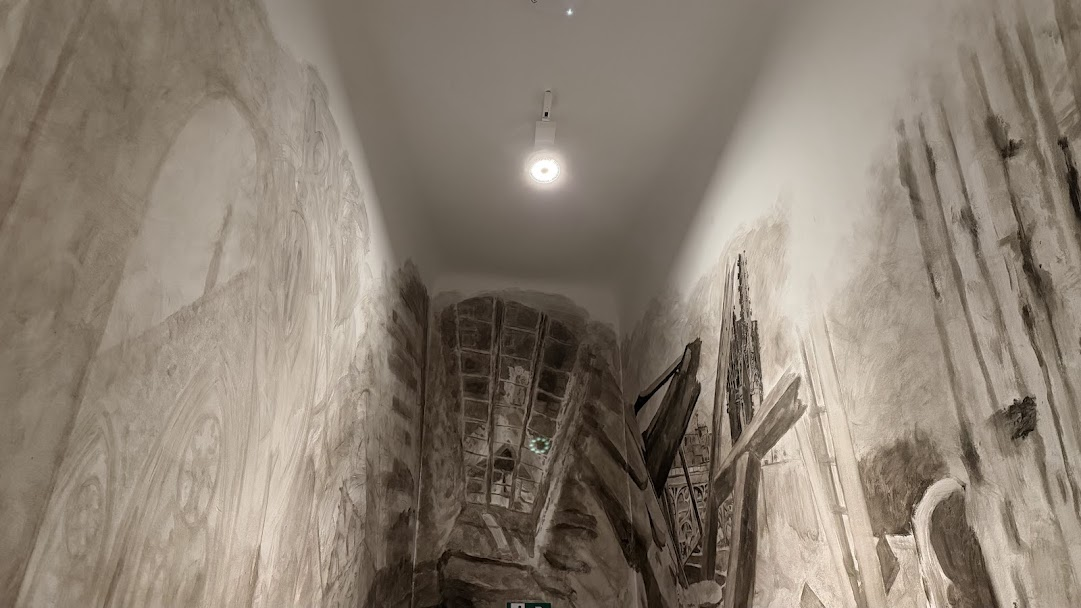
Ein weiterer Moment, der hängen bleibt, sind die historischen Fotografien zum Wiederaufbau des Stephansdoms. Bündelweise, archivartig präsentiert, zeigen sie nicht nur Architektur, sondern Arbeit im ursprünglichsten Sinn: körperlich, kollektiv, notwendig. Der Dom, im Zweiten Weltkrieg schwer beschädigt, wird hier nicht als fertiges Wahrzeichen gezeigt, sondern als Baustelle, als Prozess. Stein für Stein, Handgriff für Handgriff. Und aus dem Fenster im Raum kann man die ikonische Kathedrale sehen wie sie heute in all ihrer Pracht da steht.
Im Kontext der Ausstellung bekommt das eine zusätzliche Bedeutung. „In Arbeit“ ist hier nicht nur ein Titel, sondern eine Haltung. Nichts ist abgeschlossen, weder ein Gebäude noch ein System noch unsere Vorstellung davon, was Arbeit eigentlich ist. Der Wiederaufbau wird so fast zu einem stillen Gegenbild zu den heutigen, oft unsichtbaren Arbeitsrealitäten. Damals sichtbar, schwer, gemeinschaftlich. Heute häufig fragmentiert, digital, ausgelagert.
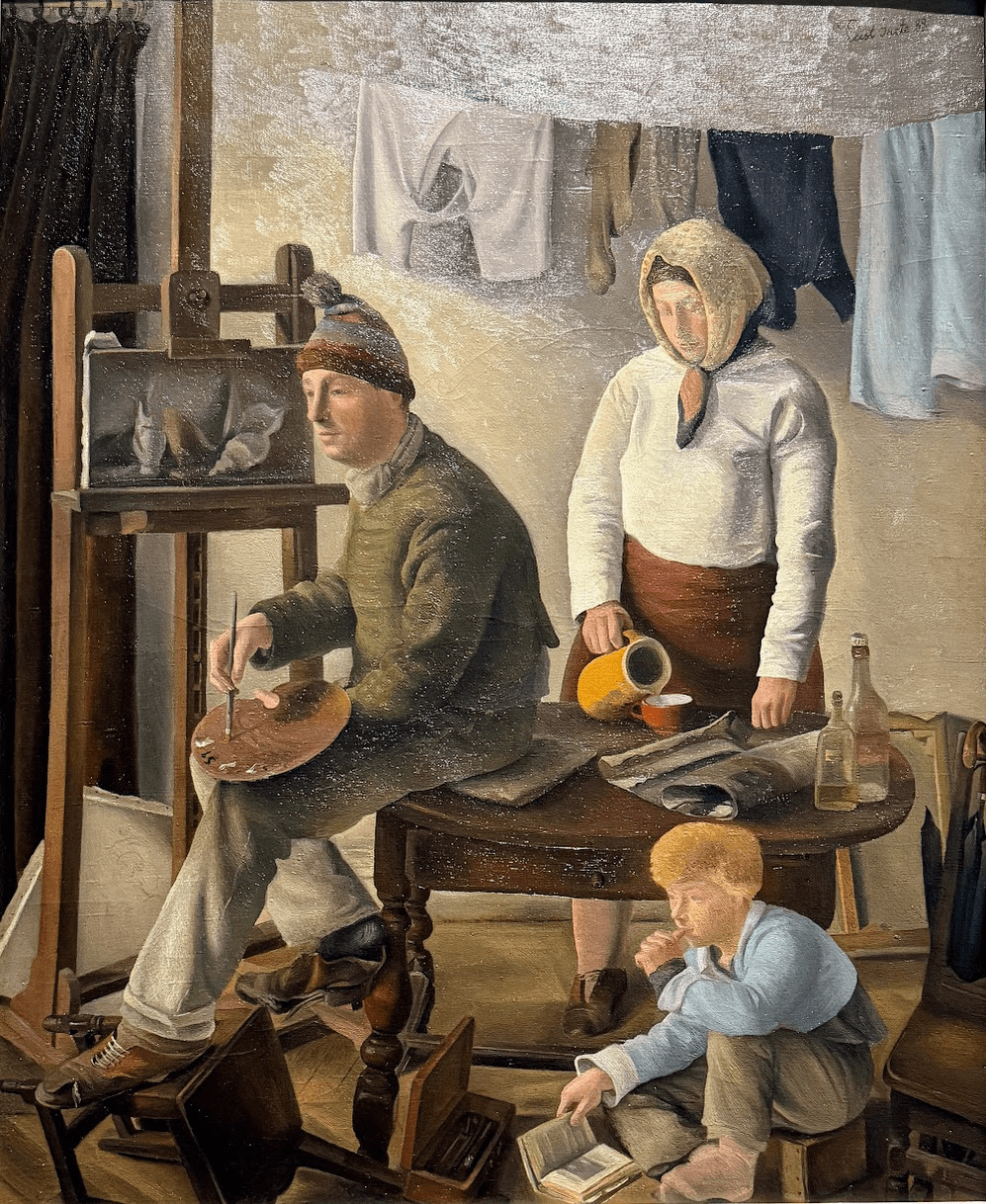
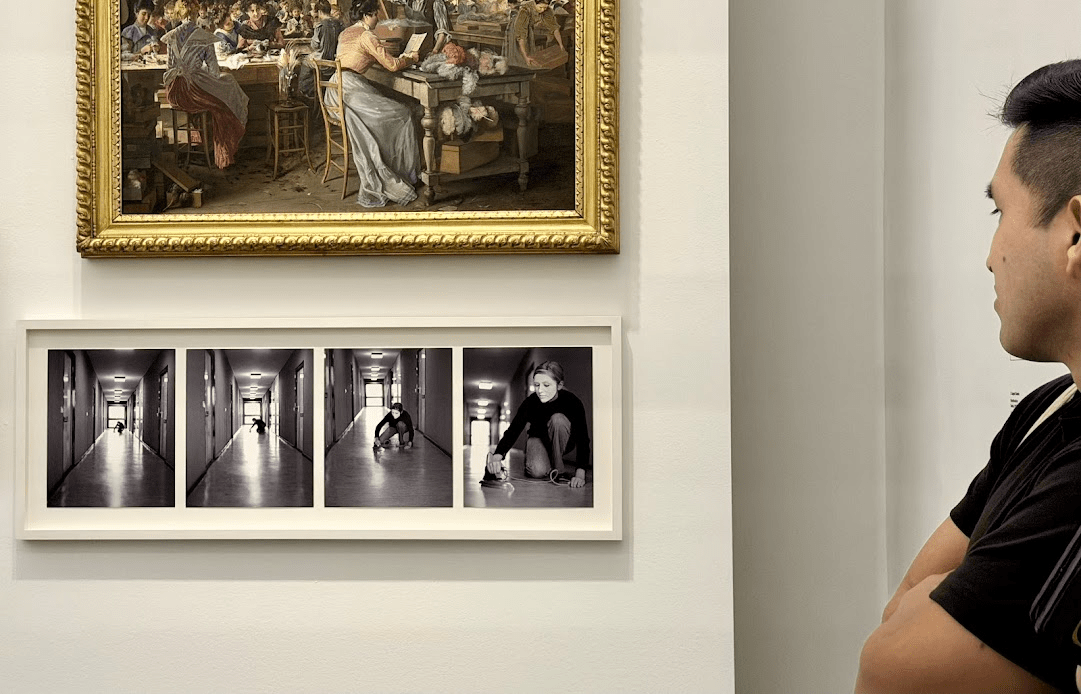
Sehr gelungen ist auch, dass die Ausstellung Künstlerinnen aus verschiedenen Epochen sichtbar macht. Das ist leider immer noch keine Selbstverständlichkeit. Ein Beispiel ist Greta Freists Gemälde „La famille d’un peintre“, in dem ein Maler bei der Arbeit gezeigt wird, während im Hintergrund die unbezahlte Hausarbeit von einer Frau erledigt wird. Es ist ein ruhiges Bild, aber die Aussage ist klar. Arbeit ist nicht gleich Arbeit, und Anerkennung ist ungleich verteilt.
Überhaupt zieht sich dieses Thema der Unsichtbarkeit durch die gesamte Ausstellung. Care-Arbeit, Hausarbeit, emotionale Arbeit, all das, was gesellschaftlich notwendig ist, aber selten als gleichwertig anerkannt wird. Die Ausstellung macht diese blinden Flecken sichtbar, ohne sie platt zu erklären.
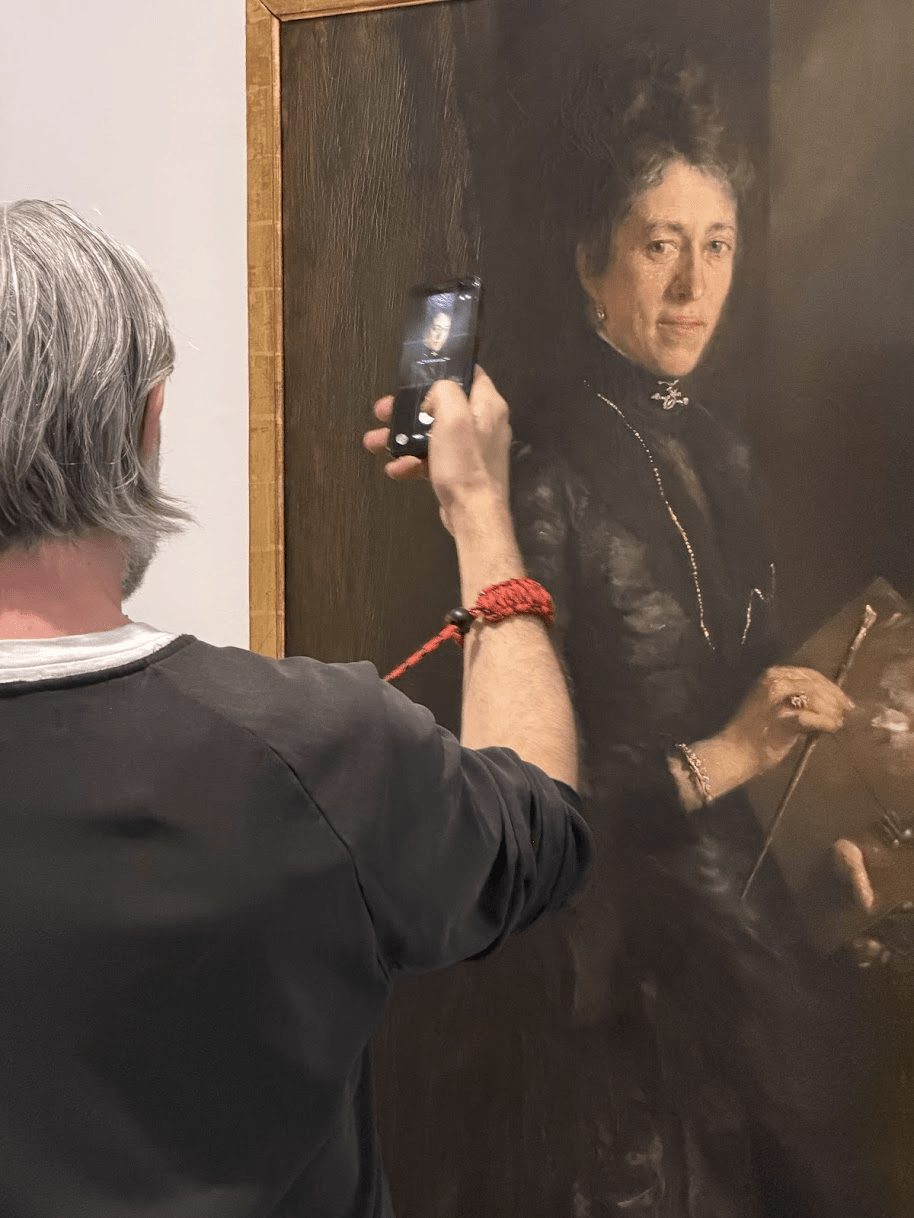
Ein ganz anderer, ruhigerer Zugang zu Arbeit zeigt sich im Porträt von Olga Wisinger-Florian, gemalt 1888 von Arthur Kurtz. Sie erscheint nicht im Moment der Anstrengung, sondern in einer konzentrierten, fast selbstverständlichen Haltung bei der Arbeit. Pinsel und Palette in der Hand, der Blick ruhig und direkt, ohne Inszenierung. Gerade das macht das Bild so stark: Es zeigt eine Künstlerin, die sich ihres eigenen Schaffens bewusst ist, zu einer Zeit, in der Frauen in der Kunst längst nicht selbstverständlich sichtbar waren. Arbeit erscheint hier nicht als Last oder Zwang, sondern als Ausdruck von Identität und Selbstverständnis.
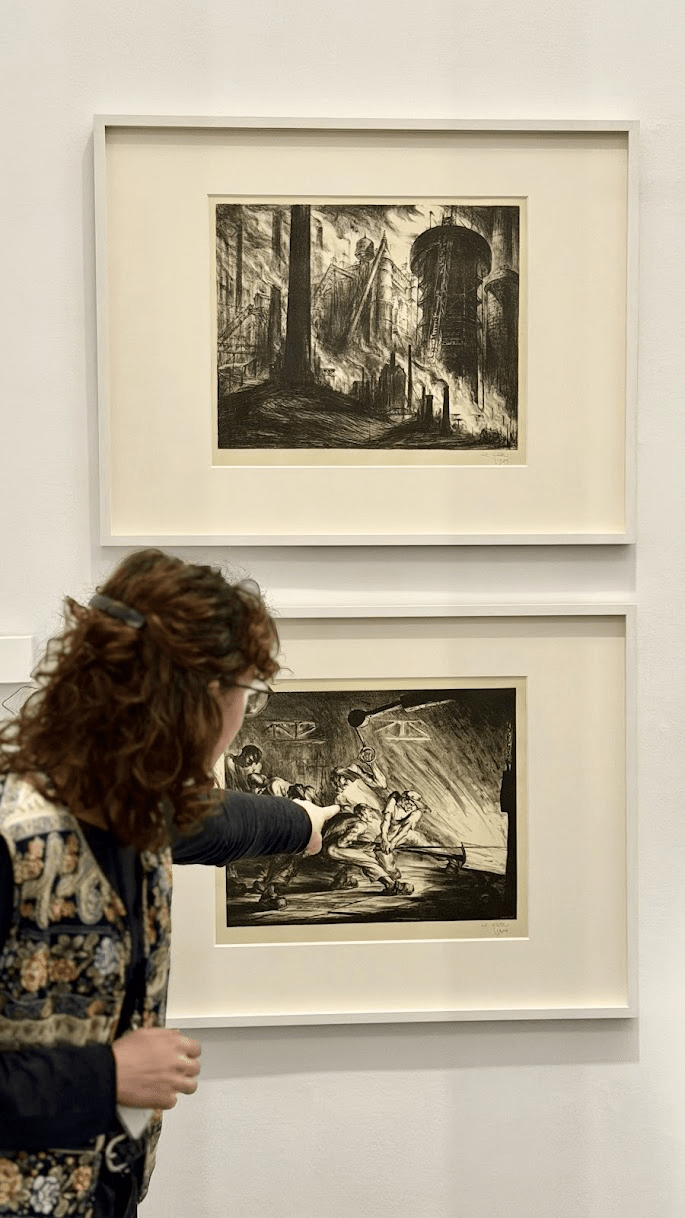
Die beiden Lithografien unten stammen von der in Wien geborenen Künstlerin Lili Réthi. In Blast Furnace Plant (1924) zeigt sie eine monumentale Industrielandschaft, in der der Mensch fast verschwindet und Arbeit als übermächtiges System erscheint. Das darunterliegende Werk rückt dagegen die Arbeiter selbst in den Fokus: gebückte Körper, konzentrierte Bewegungen, spürbare körperliche Anstrengung. Zusammen zeigen die beiden Arbeiten sehr klar die zwei Seiten von Arbeit – oben die Struktur, unten der Mensch, der sie trägt.
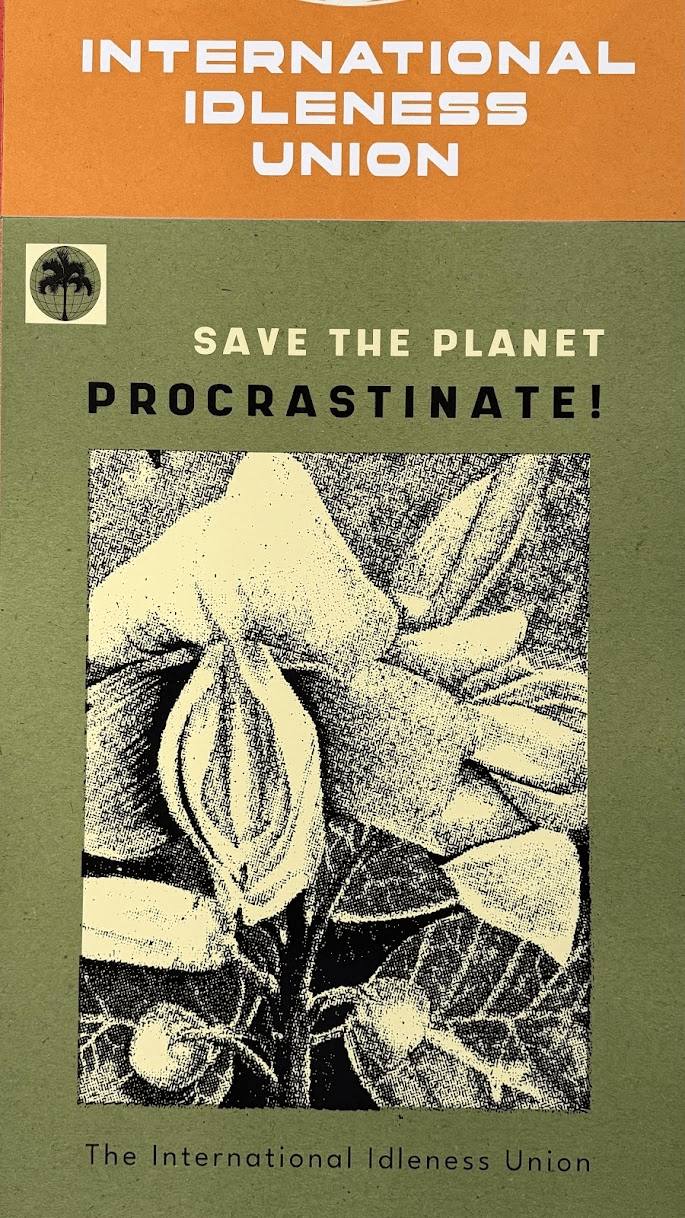
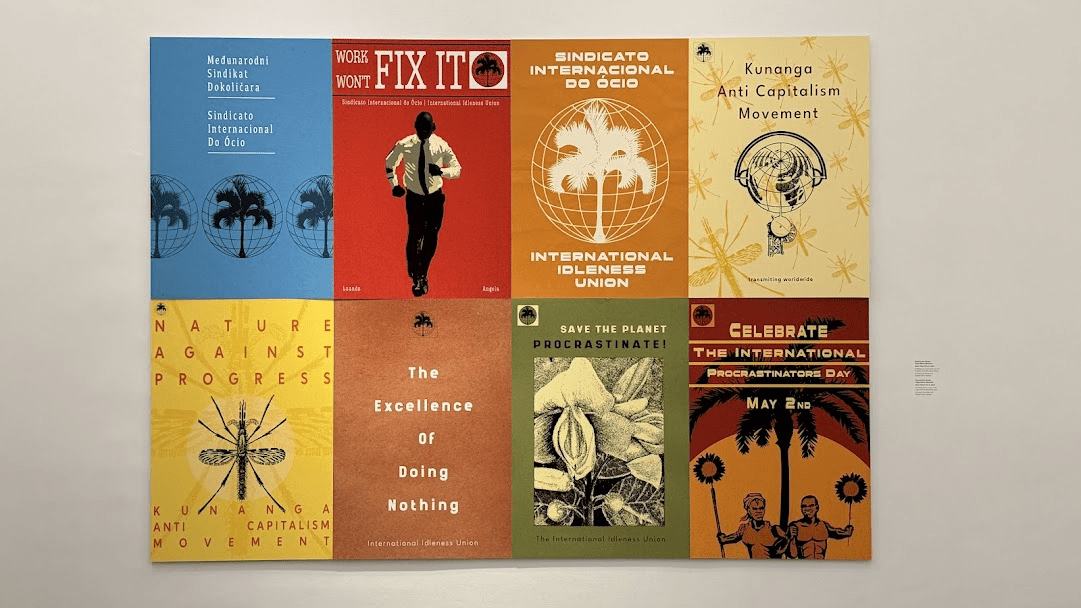
Beim Spazieren durch diese Ausstellung schleicht sich noch ein Gedanke ein: Was, wenn man Arbeit nicht als selbstverständlich gegeben hinnimmt? Wenn man beginnt, sie zu hinterfragen? Die Ausstellung greift das auf, etwa in Arbeiten, die sich mit Pause, Verweigerung oder Nichtstun beschäftigen. Ein überraschend aktueller Ansatz in einer Zeit, in der Produktivität fast schon moralisch aufgeladen ist.
Am Ende verlässt man die Ausstellung nicht mit klaren Antworten. Eher mit einer leichten Irritation und dem Gefühl, dass viele Dinge, die man als gegeben hinnimmt, vielleicht doch nicht so selbstverständlich sind.
Work, Worth, and Who Pays the Price
“Work in Progress” at Dom Museum Wien
There are exhibitions you enjoy. And then there are exhibitions that unsettle you, just slightly. Alles in Arbeit at Dom Museum Wien clearly belongs to the second category.
I visited the exhibition last week as part of a guided tour with IGersAustria, one of those rare occasions where you don’t just look, but actually understand what’s behind the works. And it quickly becomes clear: this is not about work in the conventional sense. Not just jobs, income, or careers. It’s about something more fundamental. About value. About visibility. About power.
Curated by Johanna Schwanberg together with Vanessa Joan Müller, the exhibition doesn’t feel like a neatly structured overview, but more like a kind of conceptual parcours. You move between historical and contemporary works, between painting, photography, sculpture, and video, and realise: this isn’t about defining work, but about taking it apart. At times it feels meaningful, at others absurd, at others simply unfair. And it’s exactly this tension that keeps the exhibition engaging.
What stands out is the multiplicity of voices. There is no single perspective. Instead, you encounter different approaches that contradict, complement, and occasionally challenge each other. Work appears at times meaningful, at times alienating, at times invisible and systematically undervalued.
One piece that particularly stayed with me was the installation made from jackets of food delivery riders who have quit their jobs. At first glance, it looks almost inviting, like a seating or resting surface. You can lie down, take a break, switch off for a moment. But that’s exactly where the discomfort begins. These jackets represent people working under precarious conditions, often underpaid, physically strained, and largely without security. People whose labour we casually rely on when we order food because it’s convenient. Suddenly, this seemingly comfortable object takes on a very different weight.
I was amused by the small putty figures by Robert Adrian X. They appear humorous, depicting the various jobs the artist held to make a living. And yet they carry a quiet honesty about the reality of work: that it is often fragmented, improvised, not linear. A reclining male nude seems almost vulnerable, slightly absurd, and at the same time a reminder that even the body itself can become part of labour.
Another moment that stays with me is the series of historical photographs documenting the reconstruction of St. Stephen’s Cathedral. Presented almost like an archive, they show not just architecture, but work in its most fundamental sense: physical, collective, necessary. The cathedral, heavily damaged during World War II, is not shown here as a finished landmark, but as a process. Stone by stone, task by task. And looking out of the window in that room, visitors can see the cathedral standing there, in all its present glory.
The reconstruction becomes a kind of quiet counterpoint to today’s often invisible forms of labour. Back then, work was visible, heavy, communal. Today, it is often fragmented, digital, outsourced. And inevitably, the question arises: which forms of work do we still choose to see?
It is also striking how consistently the exhibition includes female artists from different periods. This is still far from a given. One example is Greta Freist’s painting La famille d’un peintre, where a male artist is shown at work while, in the background, unpaid domestic labour is carried out by a woman. It is a quiet image, but the message is clear: work is not equal, and recognition is unevenly distributed.
This theme of invisibility runs throughout the entire exhibition. Care work, domestic work, emotional labour, all the things that are essential to society but rarely recognised as such. The exhibition brings these blind spots into view without reducing them to simple explanations.
A different, quieter perspective on work appears in the portrait of Olga Wisinger-Florian, painted in 1888 by Arthur Kurtz. She is not shown in a moment of strain, but in a state of focused, almost self-evident concentration. Brush and palette in hand, her gaze calm and direct, without theatricality. That is precisely what makes the painting so compelling: it shows an artist fully aware of her own practice, at a time when women in the art world were far from being naturally visible. Here, work is not burden or obligation, but an expression of identity.
The two lithographs by Vienna-born artist Lili Réthi offer yet another perspective. In Blast Furnace Plant (1924), she depicts a monumental industrial landscape in which the human figure nearly disappears and work becomes an overwhelming system. The piece below, by contrast, brings the workers themselves into focus: bent bodies, concentrated movements, tangible physical effort. Together, the two works clearly show the dual nature of labour, above the structure, below the human being who sustains it.
Walking through the exhibition, another thought gradually emerges: what happens if we stop taking work for granted? If we begin to question it? The exhibition touches on this through works that deal with pause, refusal, or even doing nothing. A surprisingly relevant approach in a time when productivity has become almost moralised.
In the end, you don’t leave the exhibition with clear answers. More with a slight sense of unease, and the feeling that many things we consider self-evident might not be so obvious after all.
Alles in Arbeit is on view at Dom Museum Wien, Stephansplatz 6 in Vienna’s first district, running until 30 August 2026. In other words, no excuse for missing it unless you actively try.
EXHIBITION PHOTOS © KARIN SVADLENAK
 ViennaCultgram