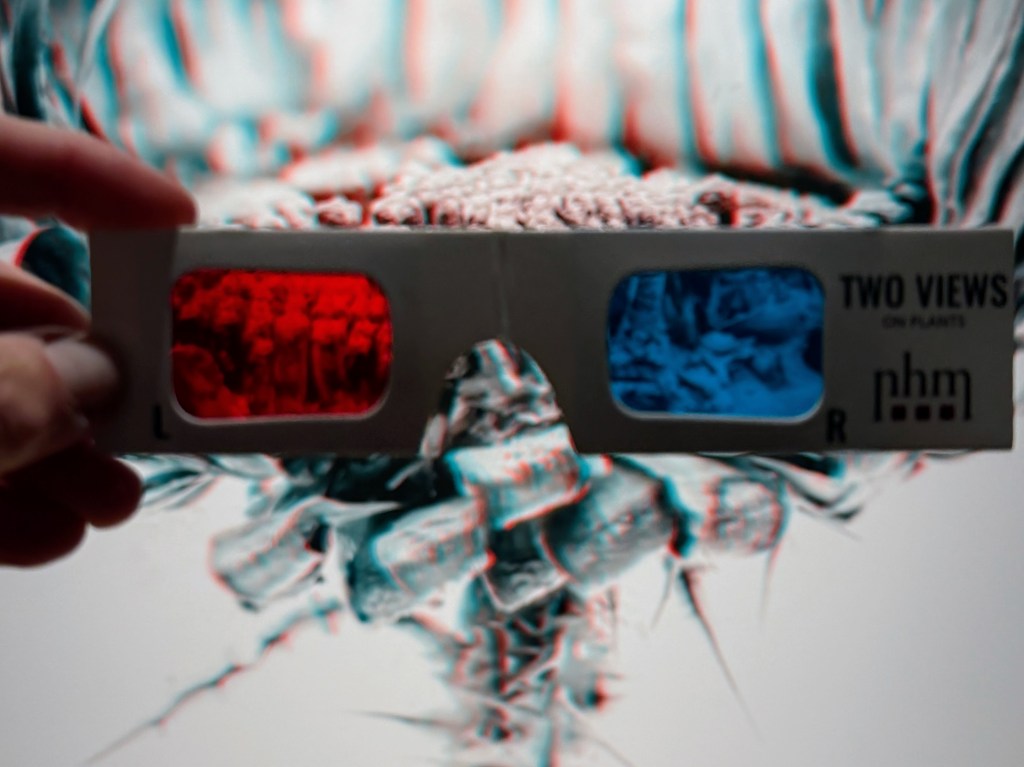
Two Views on Plants im NHM
(Scroll down for the English text.)
Pflanzenfotografie? Klingt vielleicht nach Kalenderidylle – auch wenn ich selbst ein Fan bin. Doch “Two Views on Plants“ von Sebastian Cramer im Naturhistorischen Museum Wien sprengt genau dieses Bild. Das hier ist botanische Fotografie für Skeptiker.
Wie muss ein Bild aussehen, um in 2D und 3D gleichermaßen interessant zu sein?
Gleich zu Beginn stolpert man über ein Zitat von Cramer:
„Ich war fasziniert von der Tatsache, dass allgemein gültige Gestaltungs-Prinzipien hinterfragt werden mussten, wenn man der Bildgestaltung einen neuen Aspekt hinzufügt: die dritte Dimension.
Wie muss ein Bild aussehen, um in 2D und 3D gleichermaßen interessant zu sein?“
Genau diese Frage zieht sich durch die gesamte Ausstellung.
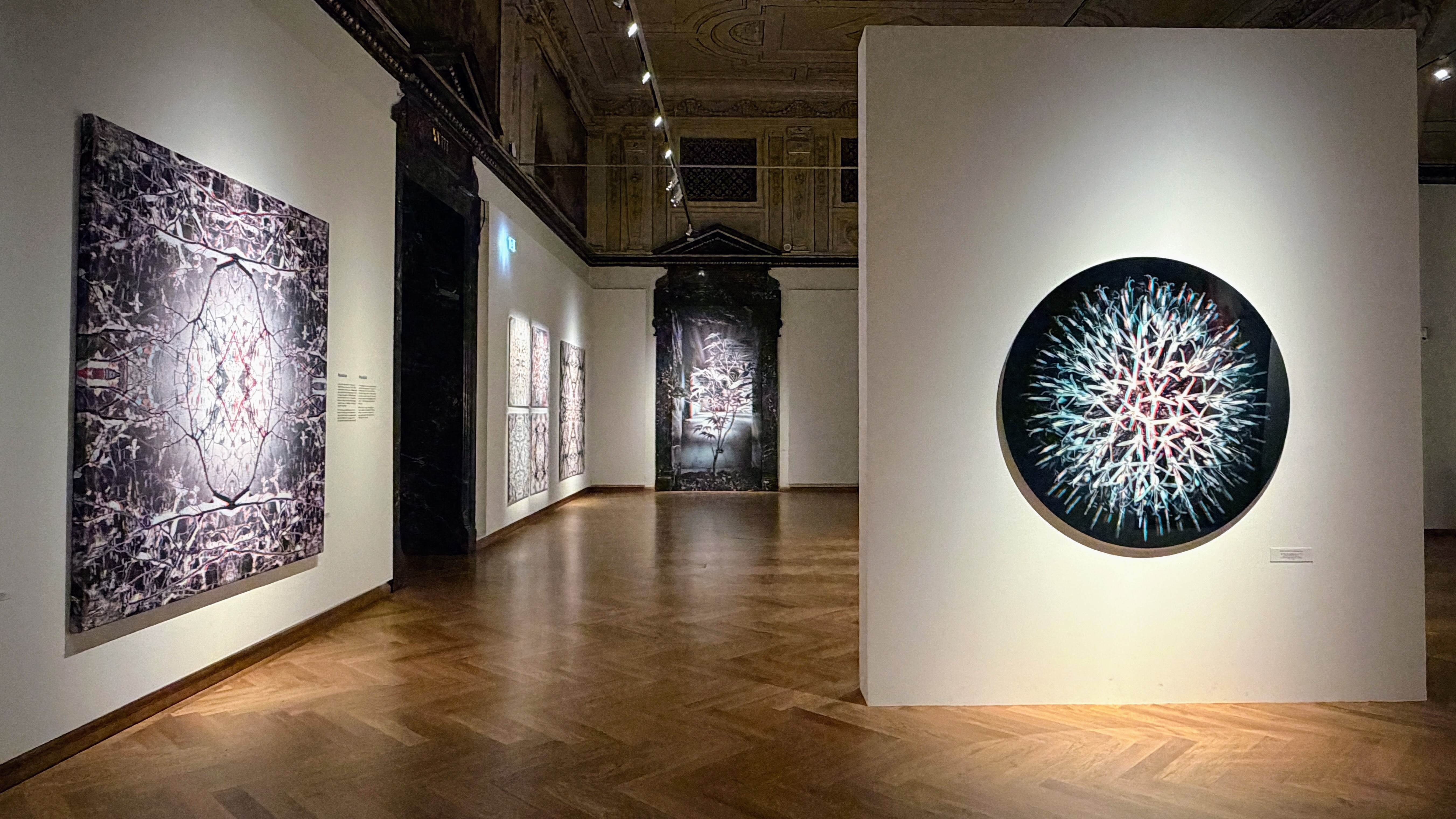
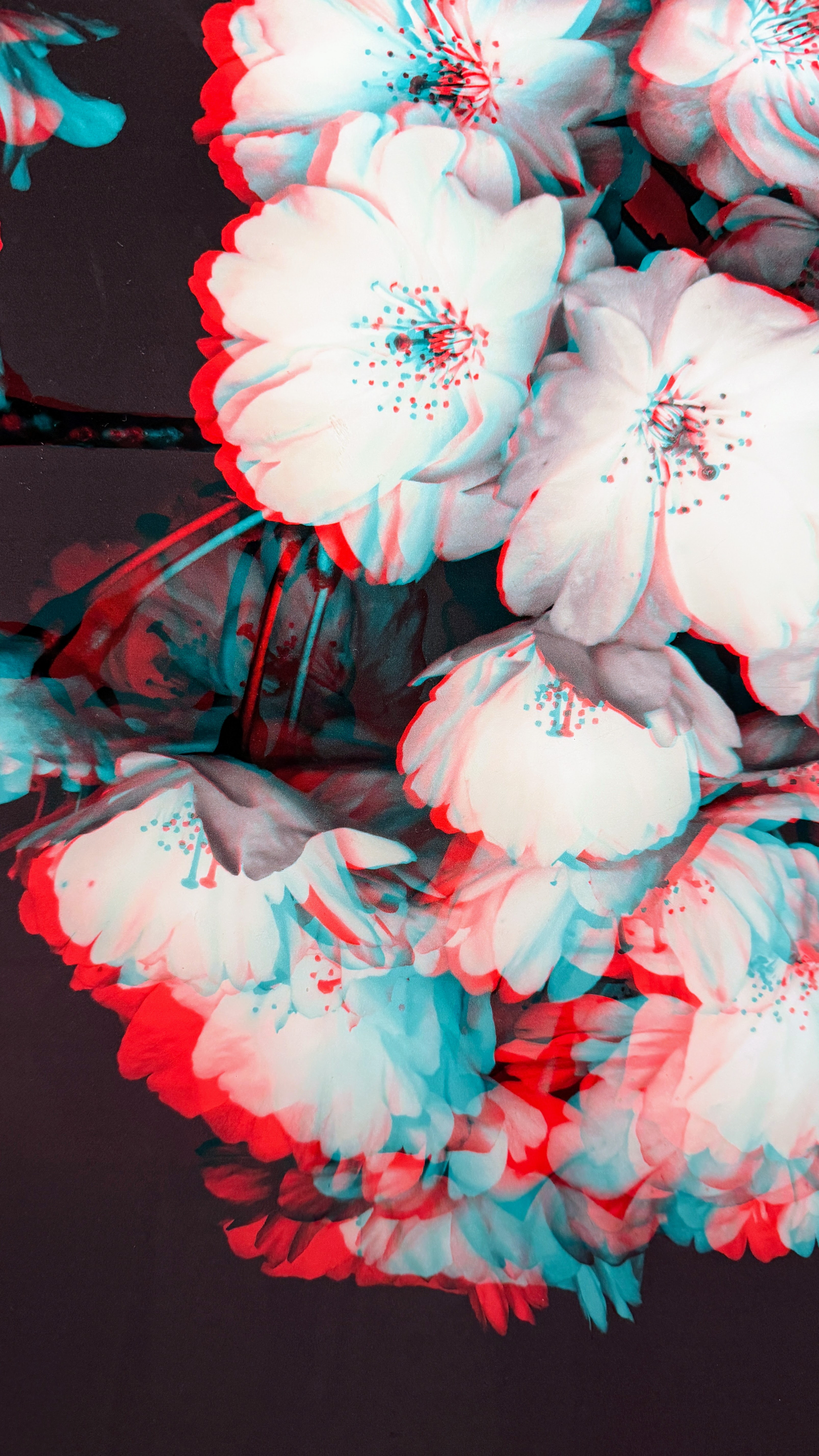
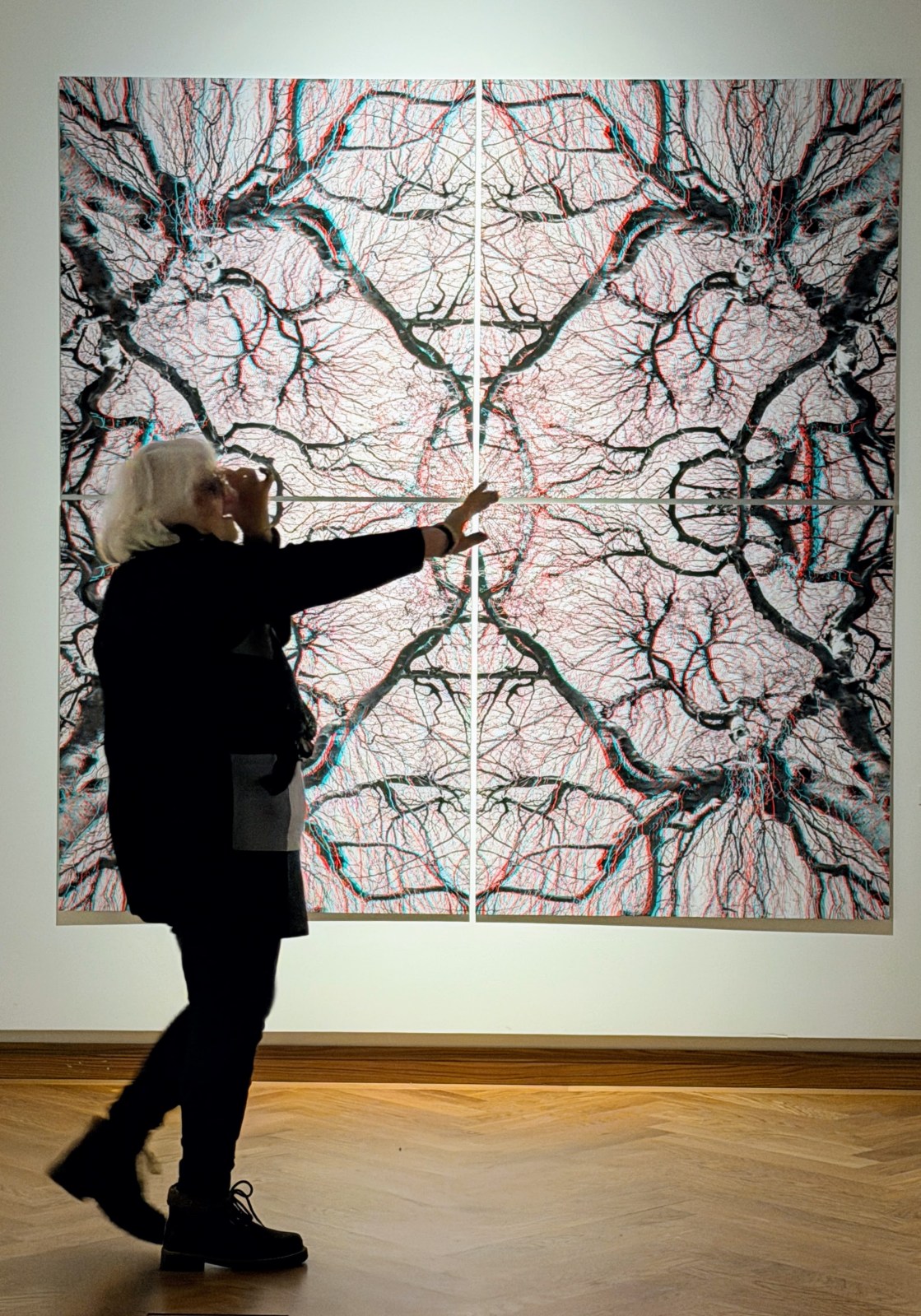
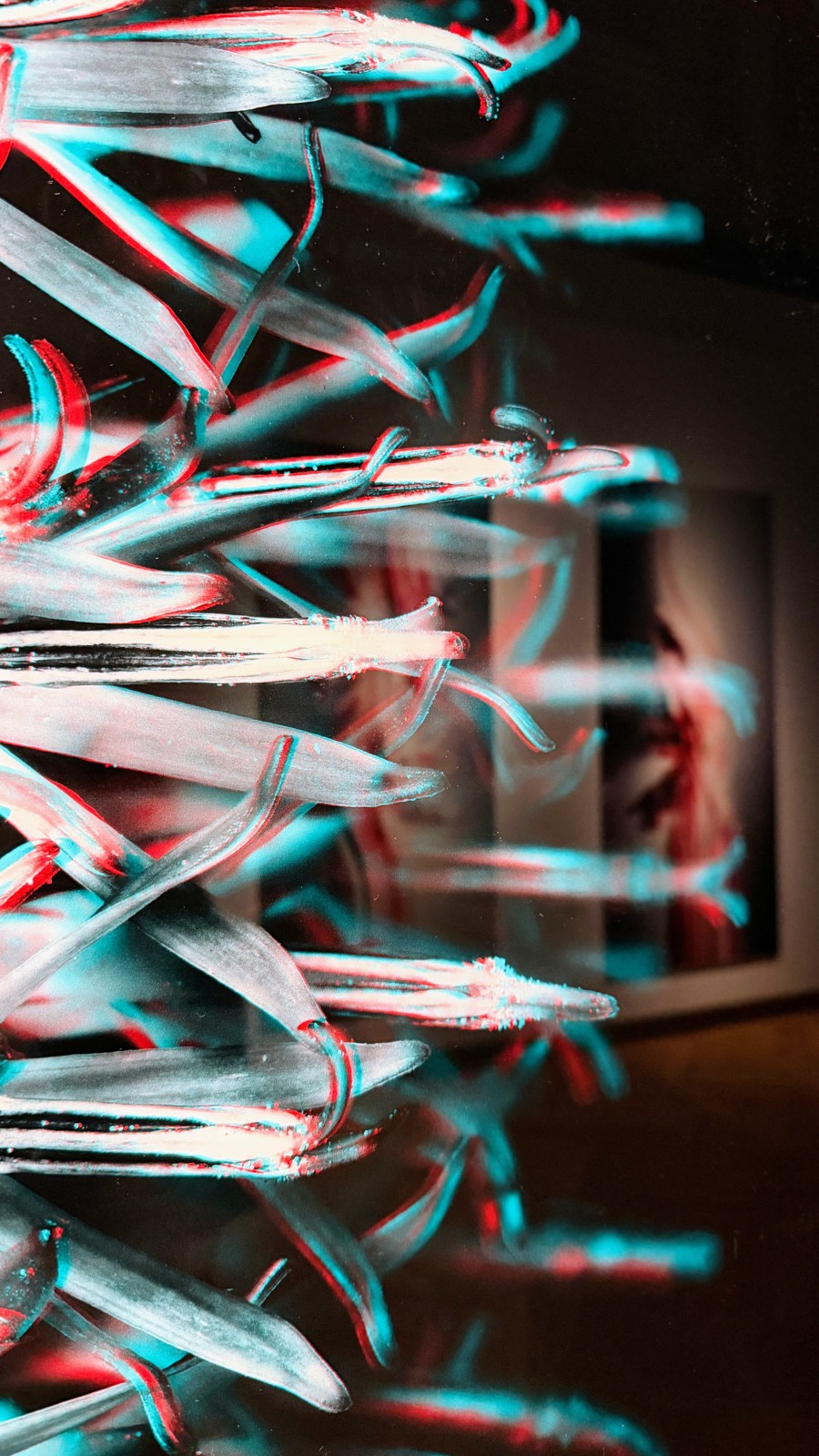
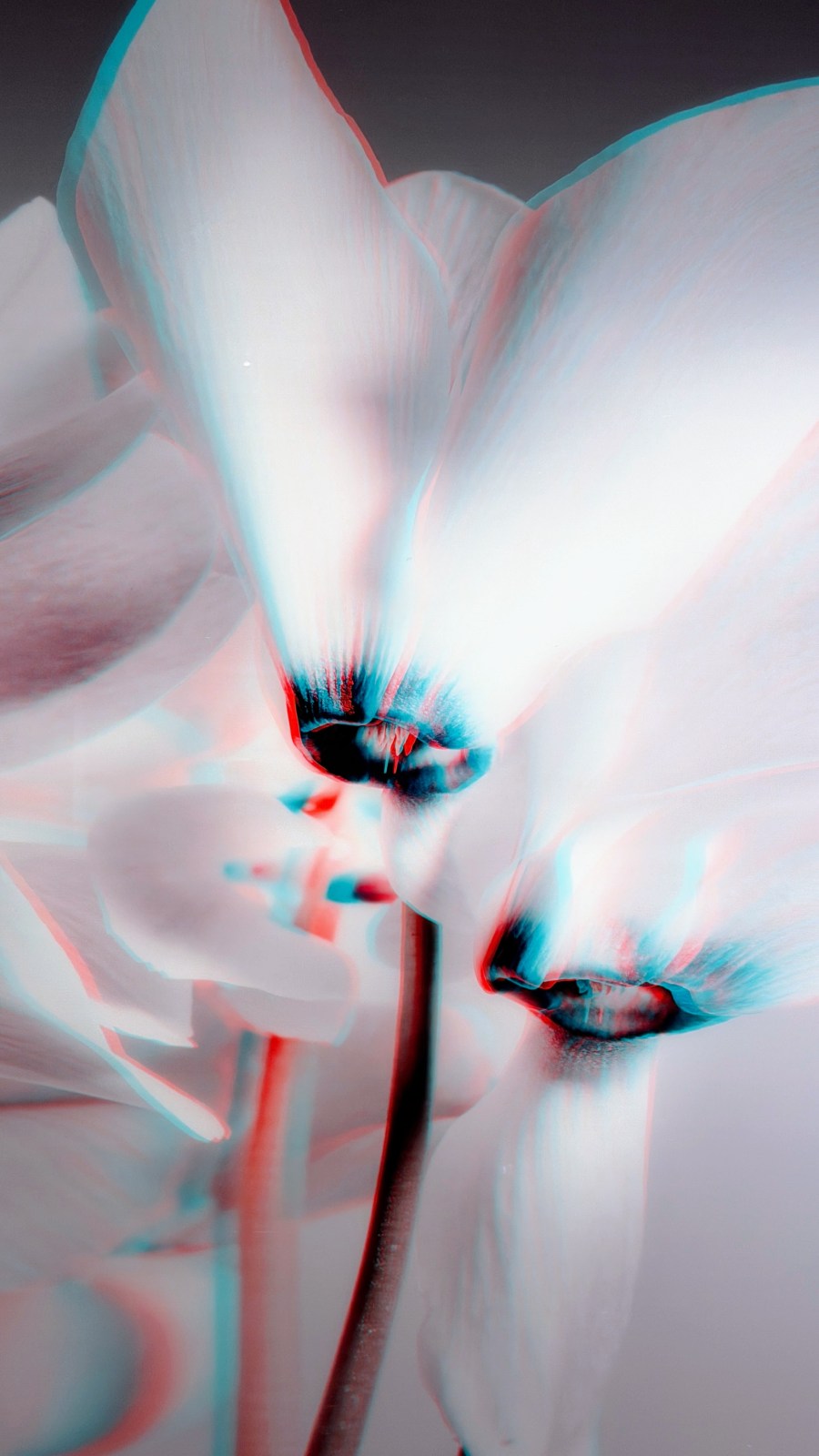
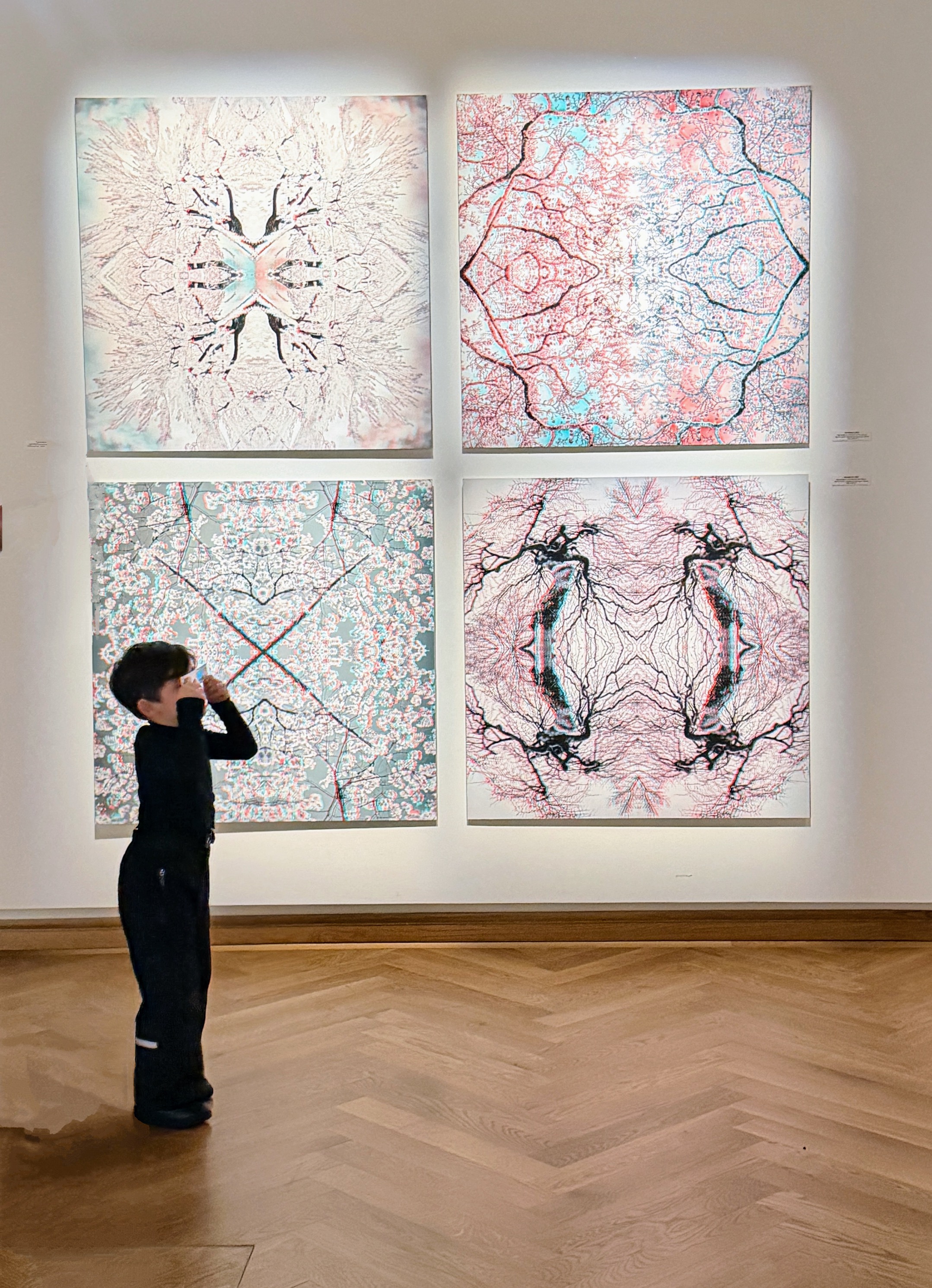
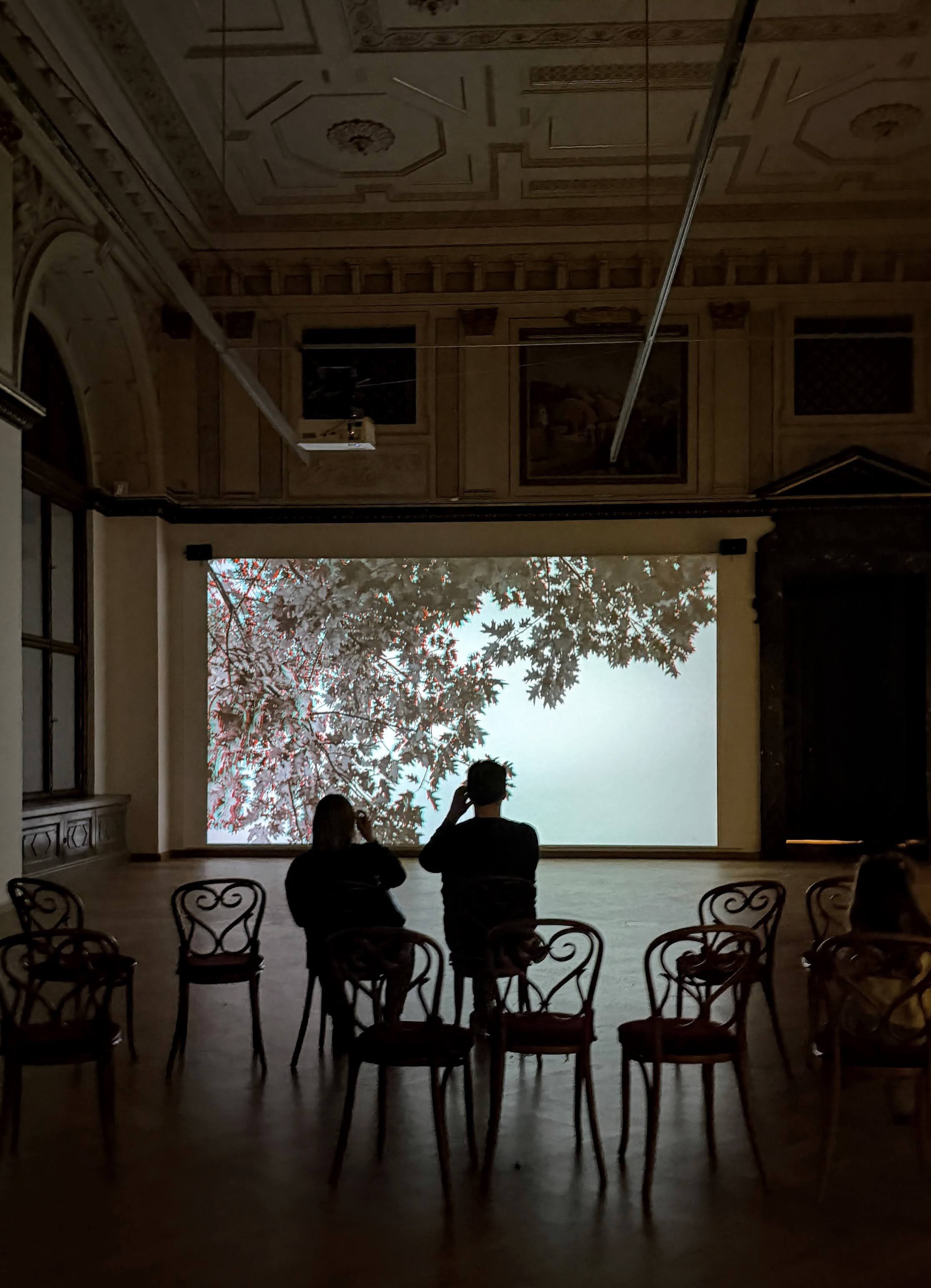
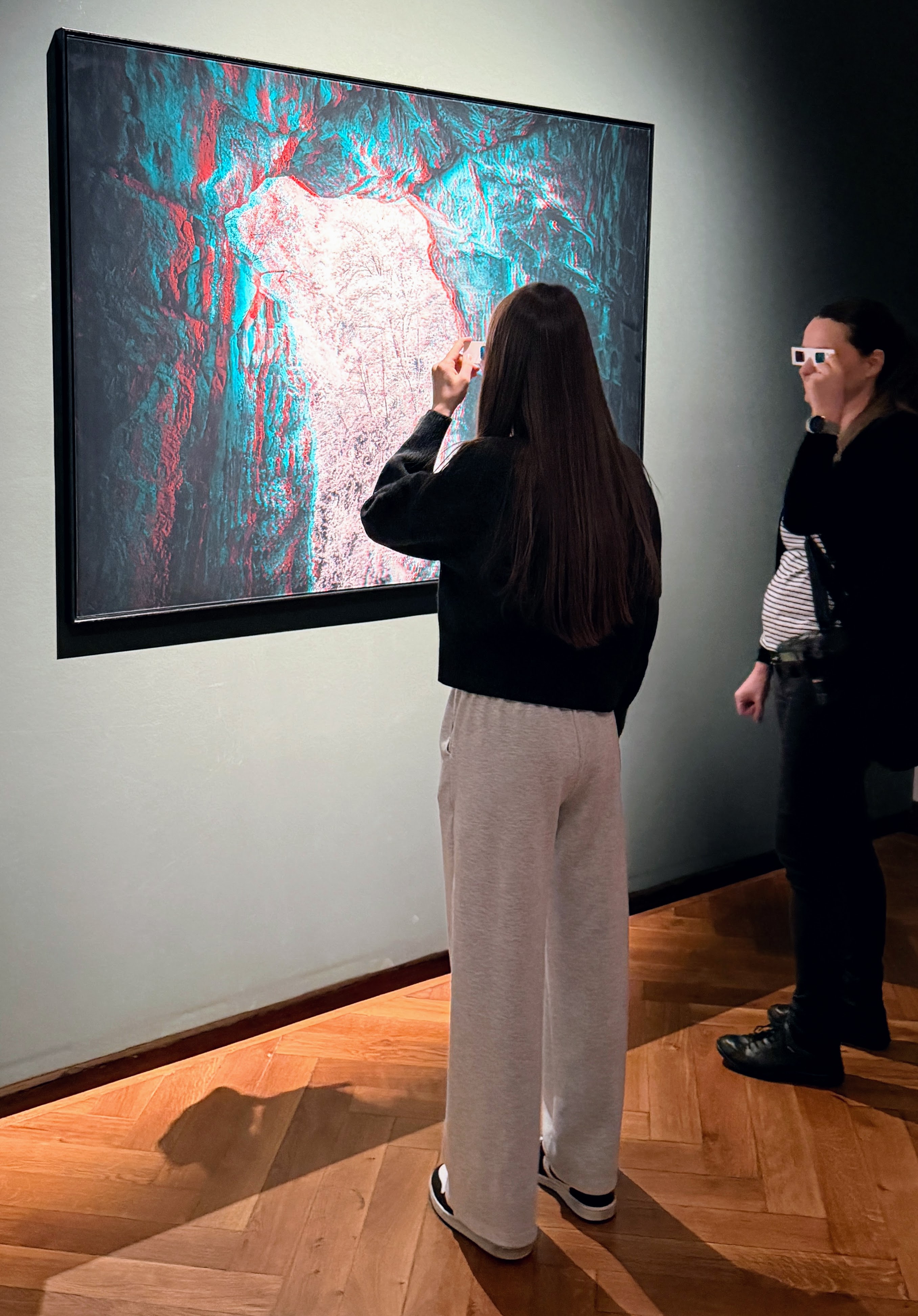
In der 2D-Ansicht wirken viele Arbeiten fast abstrakt. Zarte Blüten, Stängel, Samenstände – eingefärbt in Rosa und Teal. Die typischen Anaglyphenfarben, die man von klassischen 3D-Bildern kennt. Flächig betrachtet sind es starke, grafische Kompositionen. Linien, Wiederholungen, Symmetrien. Manche Motive erinnern fast an Mandalas oder wissenschaftliche Diagramme.
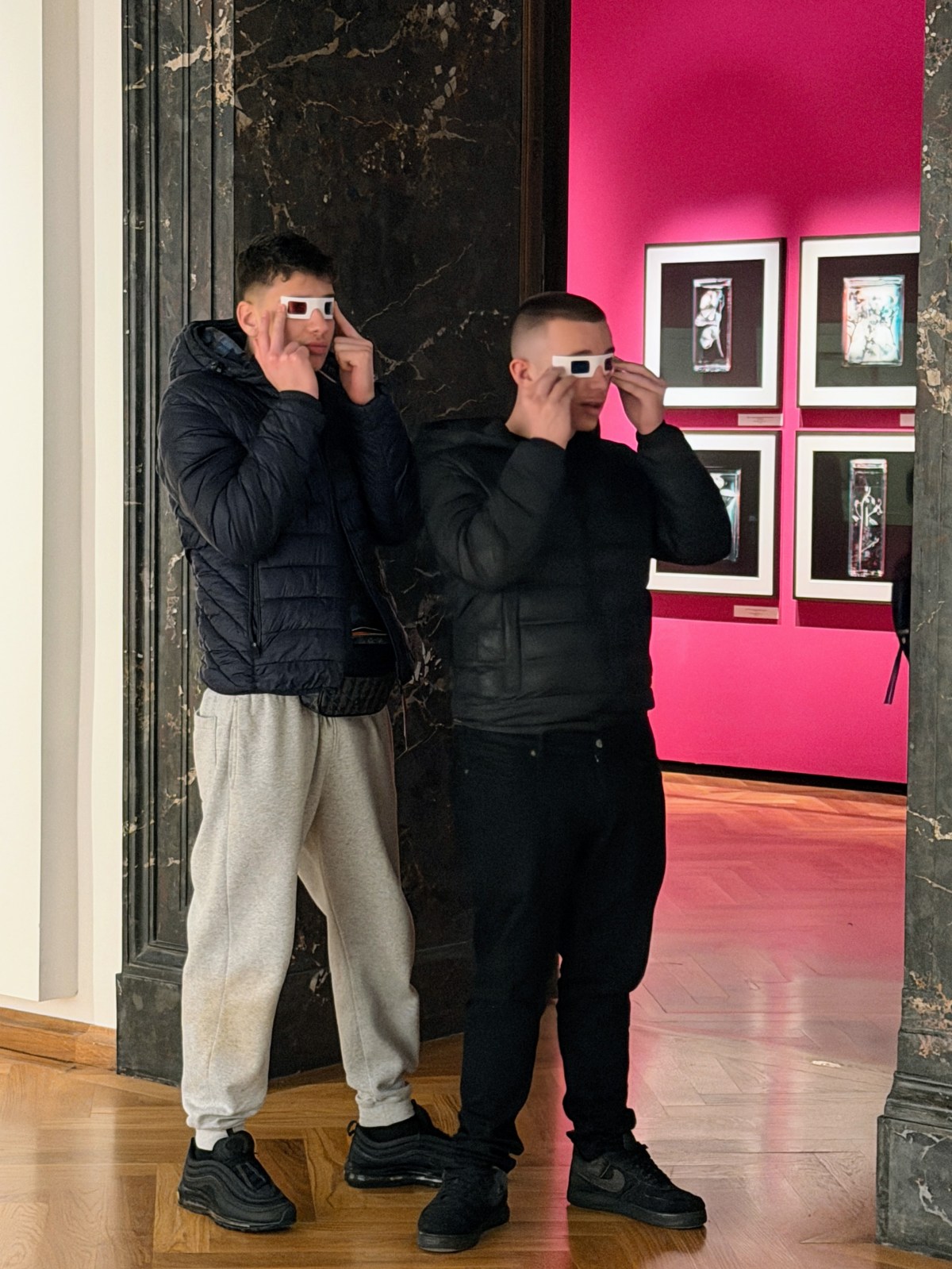
Und dann setzt man die 3D-Brille auf.
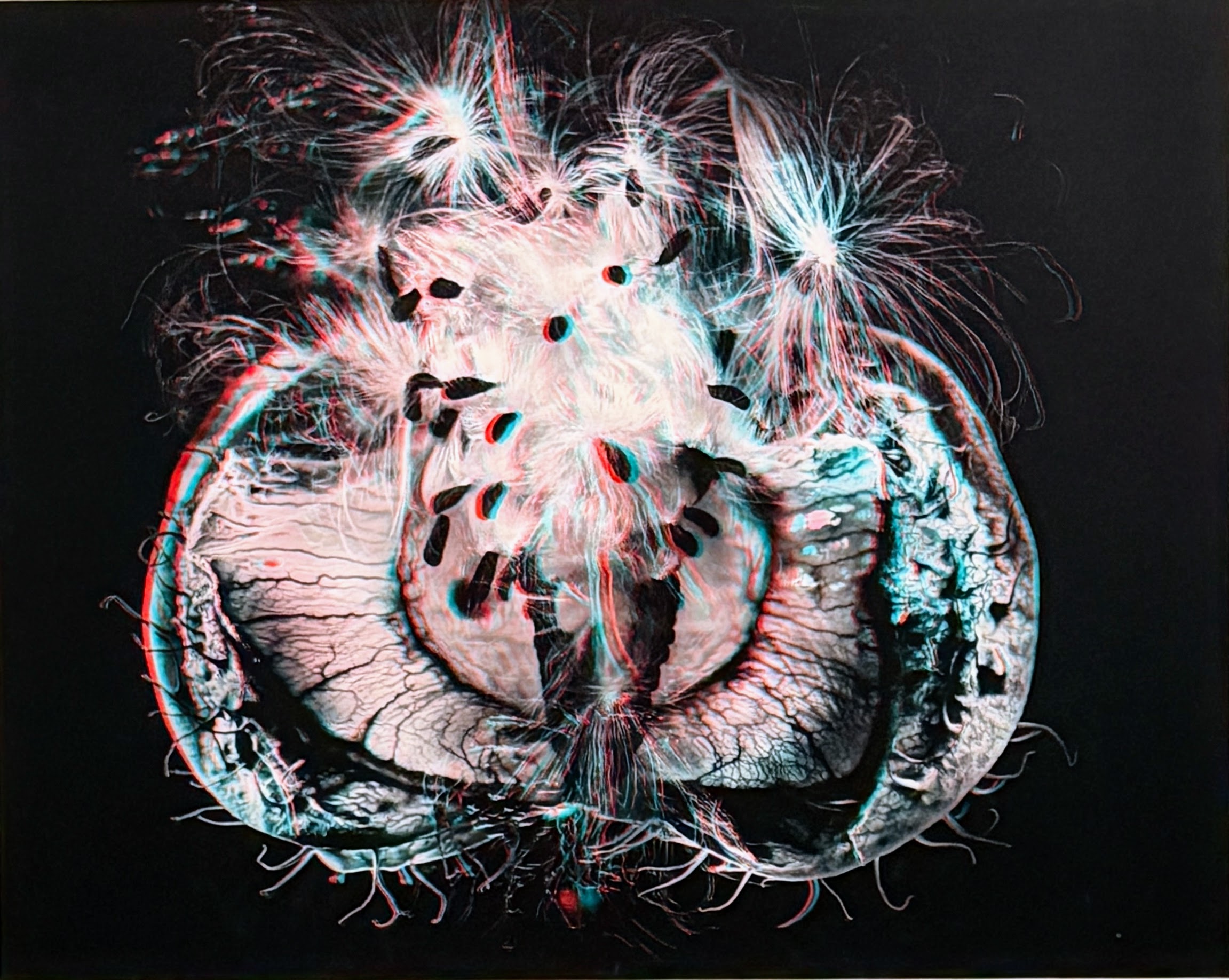
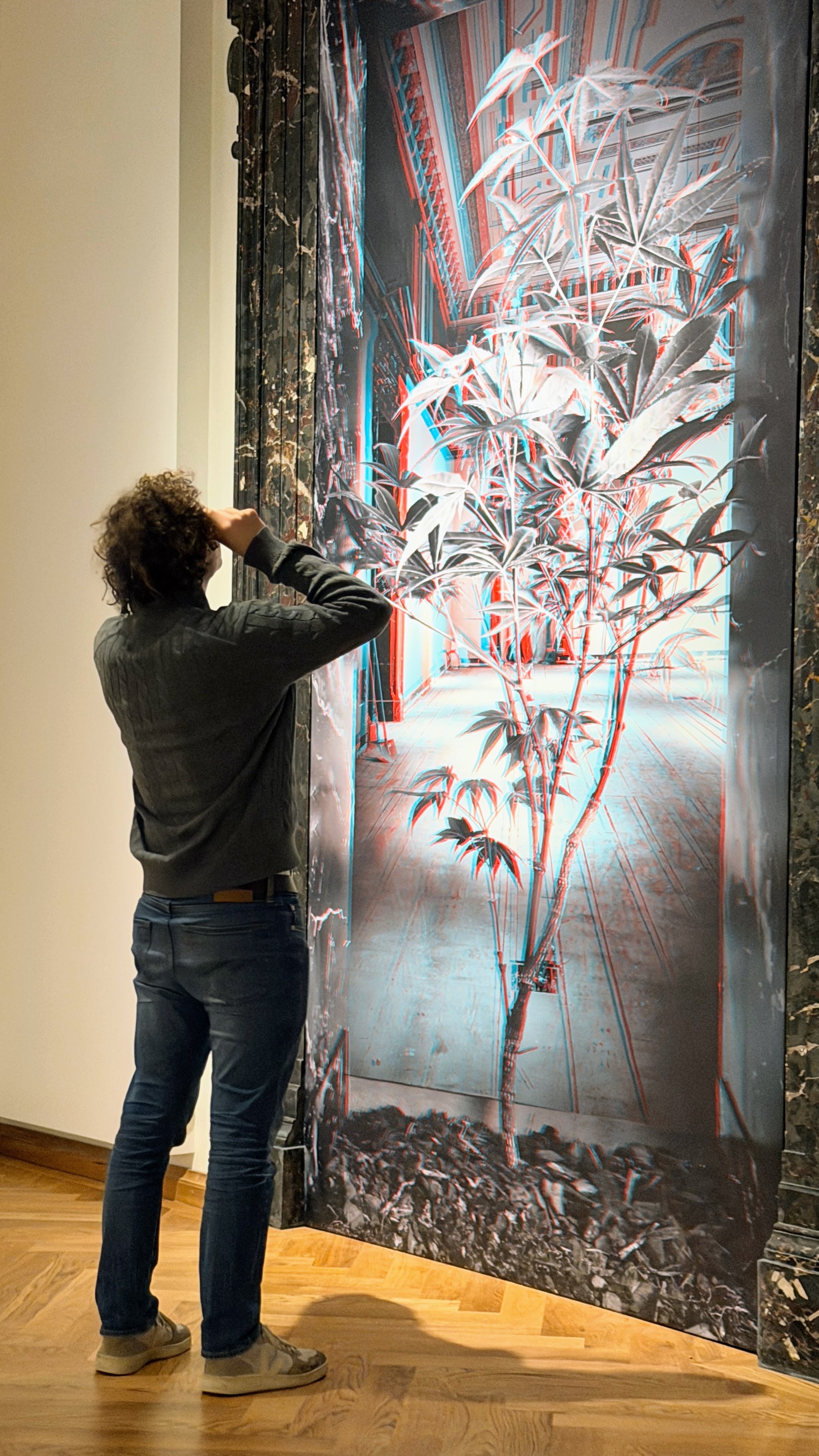
Plötzlich kippt alles in den Raum. Blüten treten nach vorne, Stängel staffeln sich in Ebenen, feine Strukturen schweben beinahe greifbar im Raum. Man hat diesen ganz körperlichen Impuls: anfassen. Diese Pflanzen „poppen“ nicht platt ins Gesicht, sondern bauen präzise komponierte Tiefenräume auf. Das funktioniert, weil die Bilder in 2D bereits stark genug sind.
Eine fast vergessene Technik
Die Ausstellung widmet sich der Stereoskopie – einer „fast vergessenen Form der Fotografie“. Zwei leicht versetzte Bilder erzeugen, kombiniert mit der Farbtrennung, ein räumliches Seherlebnis. Im 19. Jahrhundert war das ein sehr populär. Heute, im digitalen Zeitalter von 3D-Filmen, VR und Simulationen, wirkt klassische Stereofotografie eher anachronistisch. Und gerade deshalb spannend.
Denn sie verlangt etwas, das wir kaum noch gewohnt sind: Konzentration. Zeit. Ein bewusstes Einlassen, eine Auseinandersetzung mit der Wahrnehmung
Cramer formuliert es so:
„In einer Zeit ökologischer Krisen wird auch das Sehen politisch.
Die stereoskopische Fotografie bietet die Möglichkeit, diesen Blick zu erneuern.
Wahrnehmen als Akt der Verbundenheit, nicht der Distanz.“

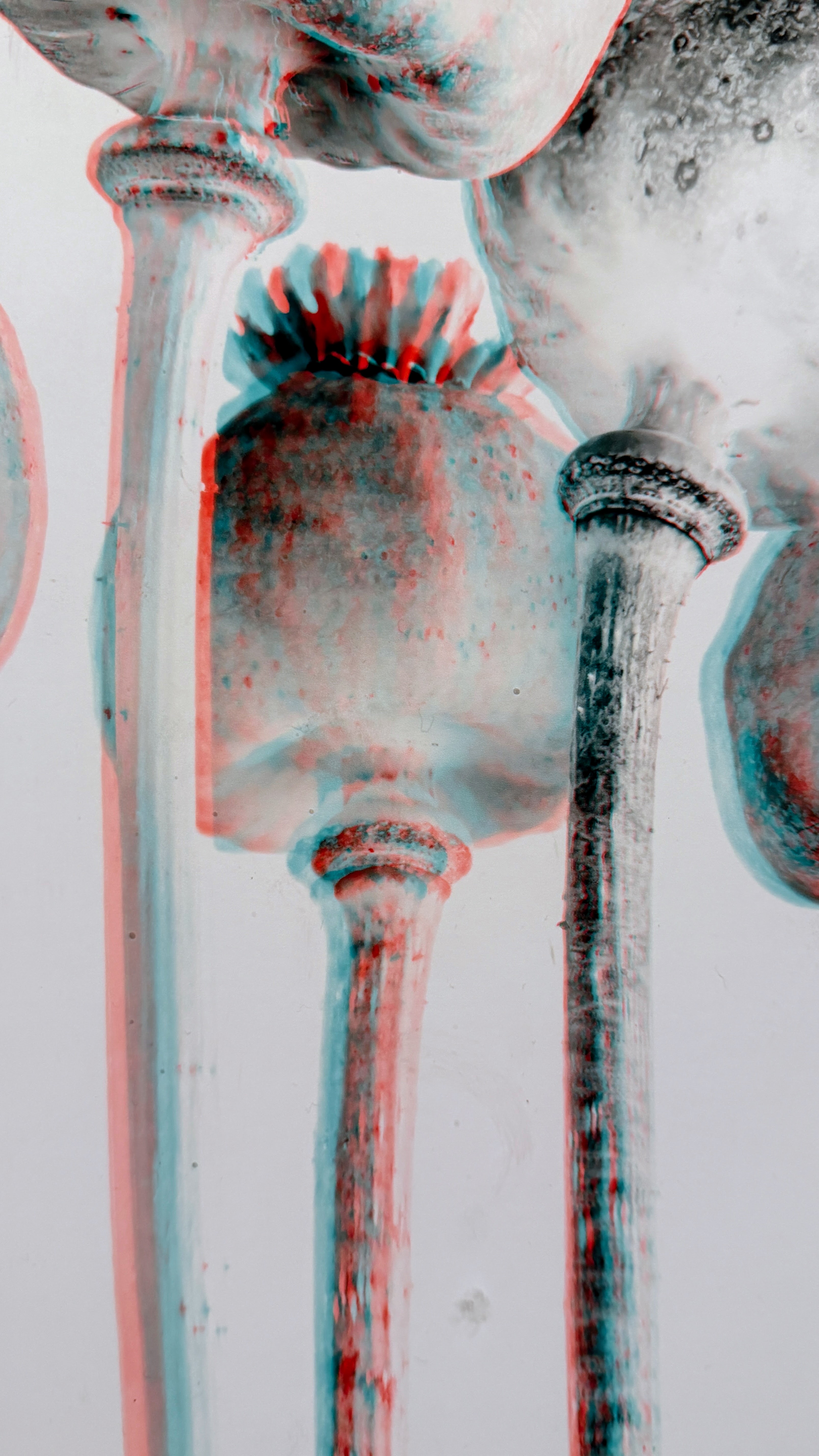
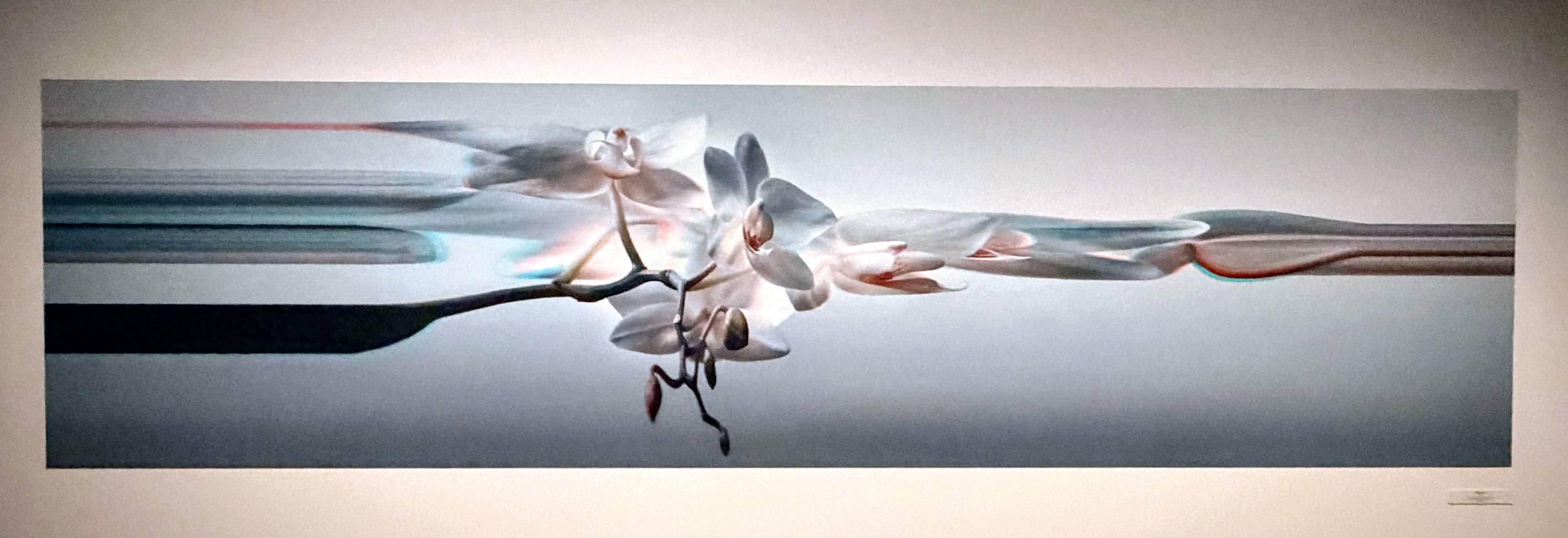
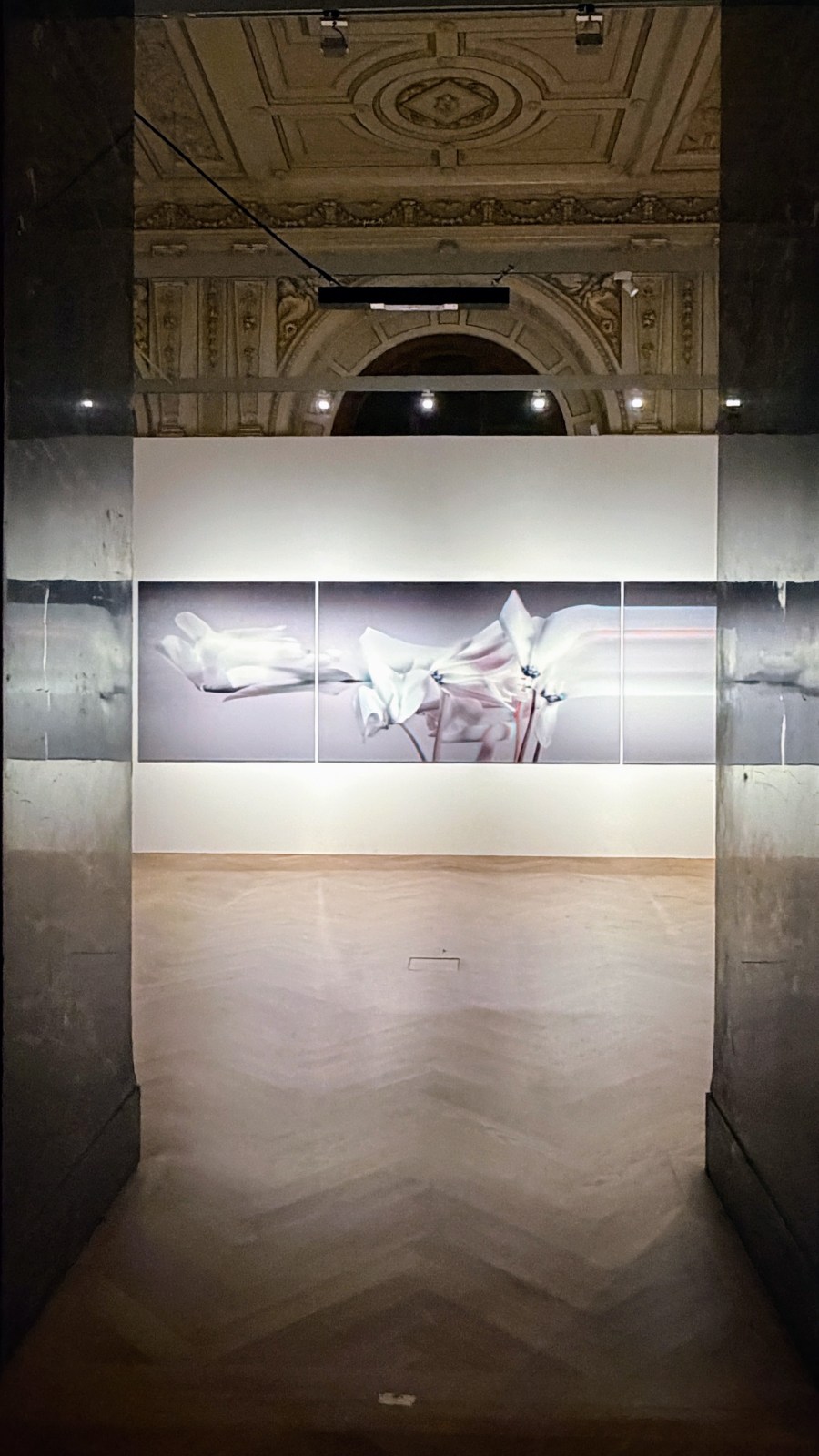
Ein weiterer Aspekt, der mich besonders fasziniert hat, ist die technische Seite. Cramer arbeitet auch mit Slitscan-Fotografie – einer Technik aus der industriellen Bildverarbeitung. Dabei wird nicht ein komplettes Bild auf einmal aufgenommen, sondern Zeile für Zeile. Während sich Motiv oder Kamera bewegen, entsteht ein Bild, das nicht nur Raum, sondern auch Zeit abbildet.
„Nur Veränderung verleiht den Dingen Gestalt“, heißt es an einer Wand.
Zwischen Herbarium und Gegenwart
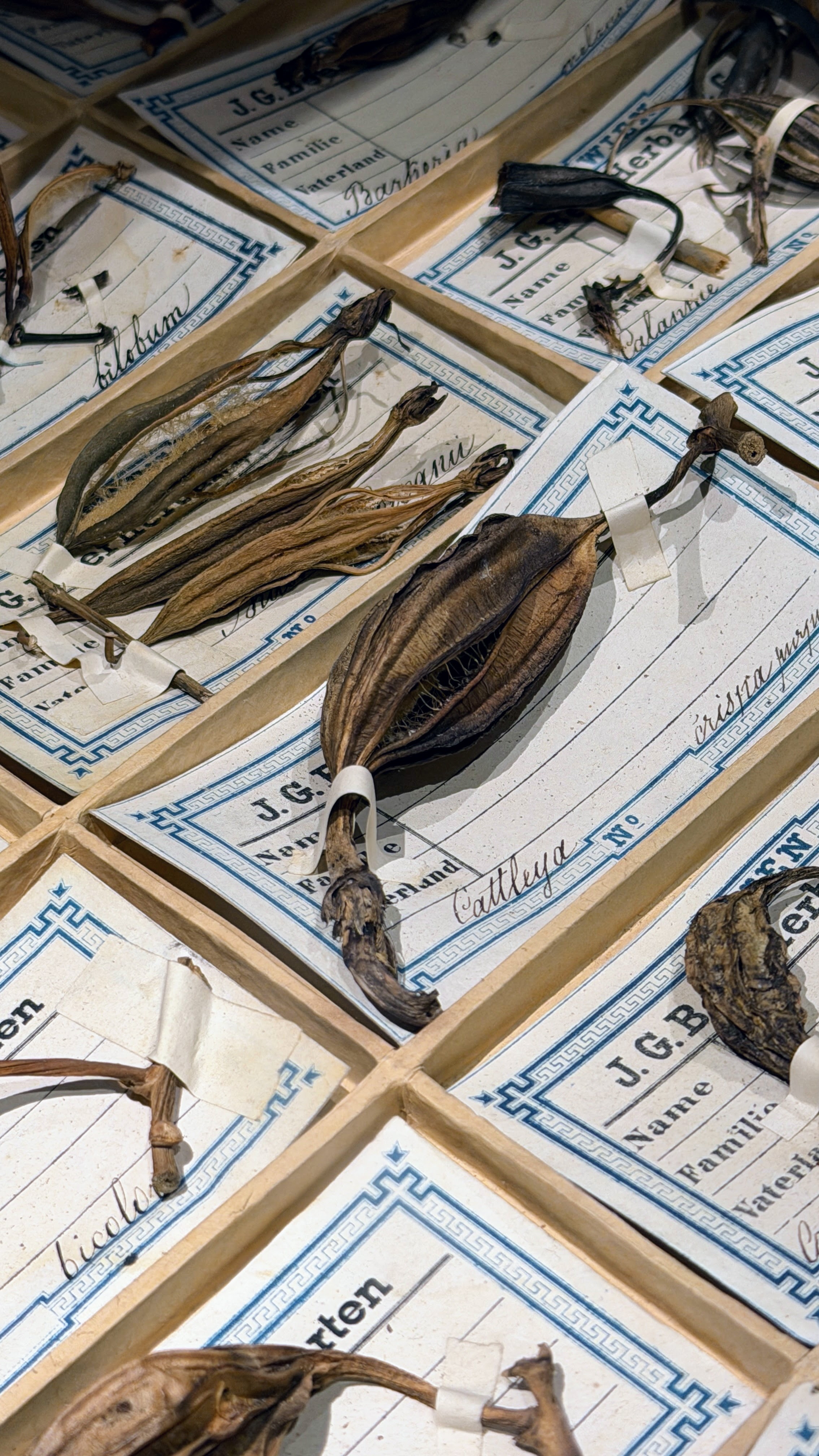
Der Kontext im NHM ist perfekt gewählt. Das Herbarium ist ein „Wissensspeicher“ mit Millionen konservierter Pflanzenbelege. Pflanzen als Forschungsobjekt, als Datenträger, als archivierte Natur.
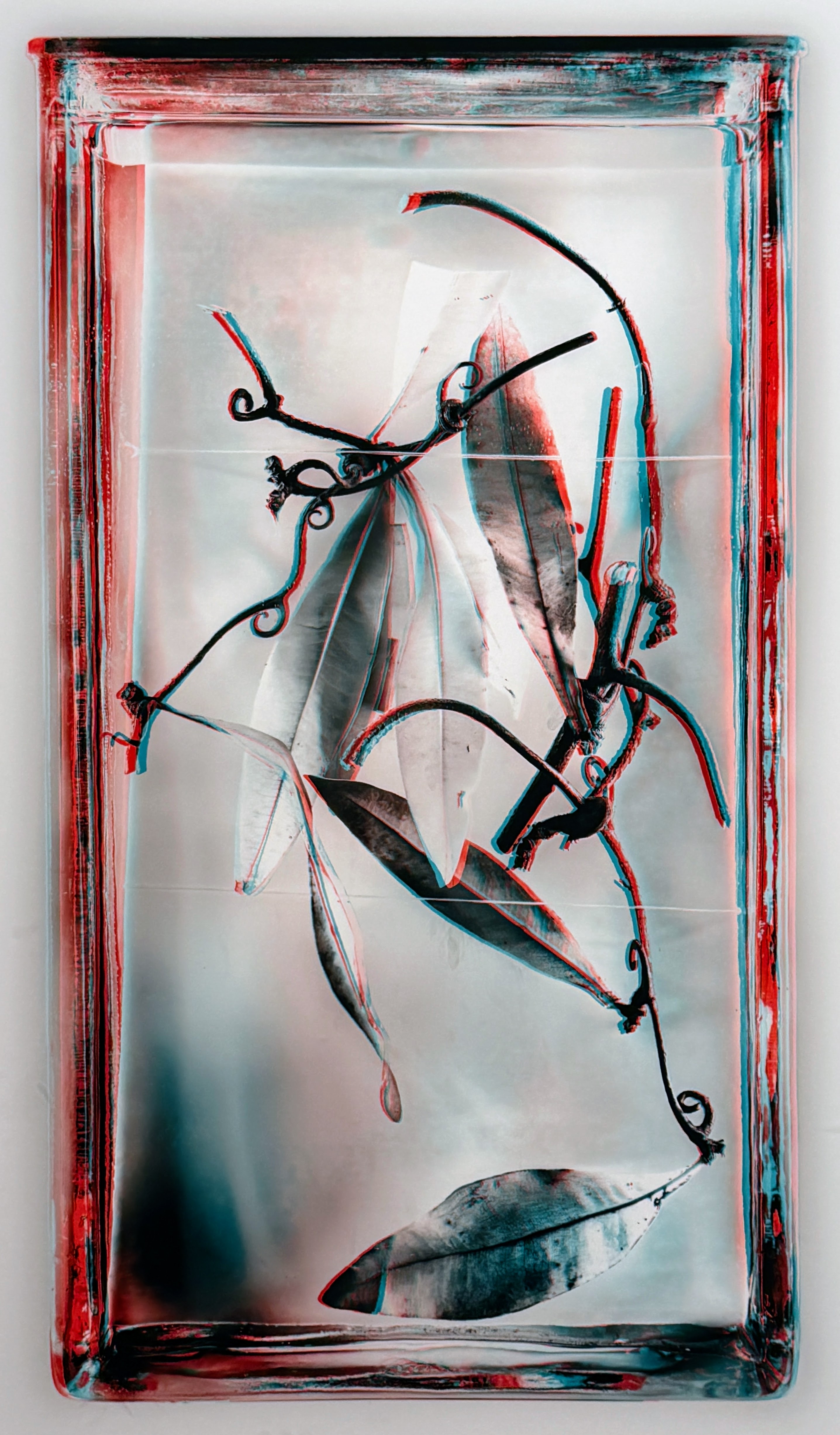
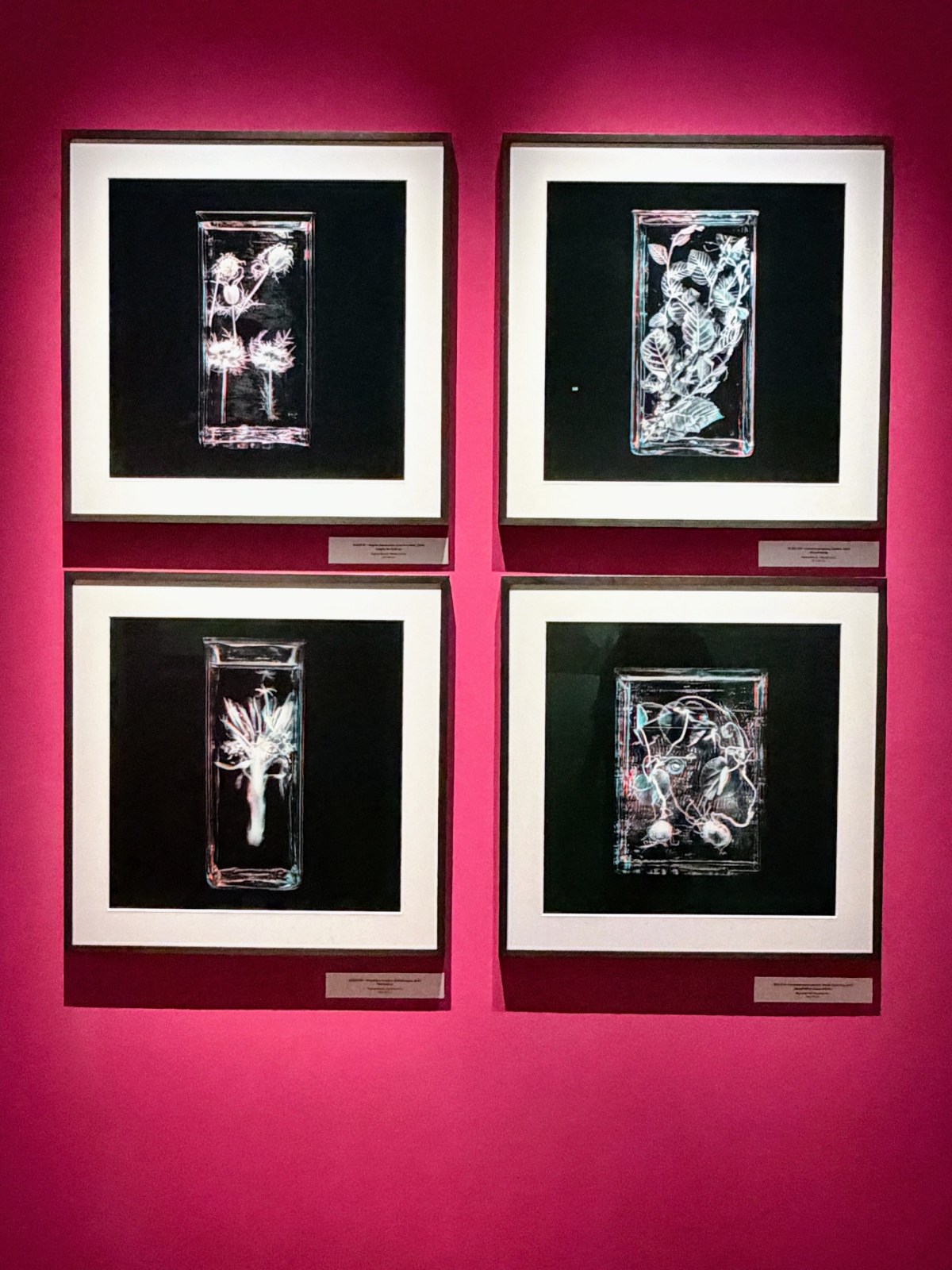
Cramer bewegt sich zwischen wissenschaftlicher Präzision und künstlerischer Transformation. Seine Serie ALCOPLANTS zeigt historische Pflanzenpräparate in Alkohol. Die Farben sind verblasst, die Strukturen wirken transluzent, fast geisterhaft. Eine Zeitkapsel aus Glas. Schönheit entsteht hier gerade durch das Vergehen.
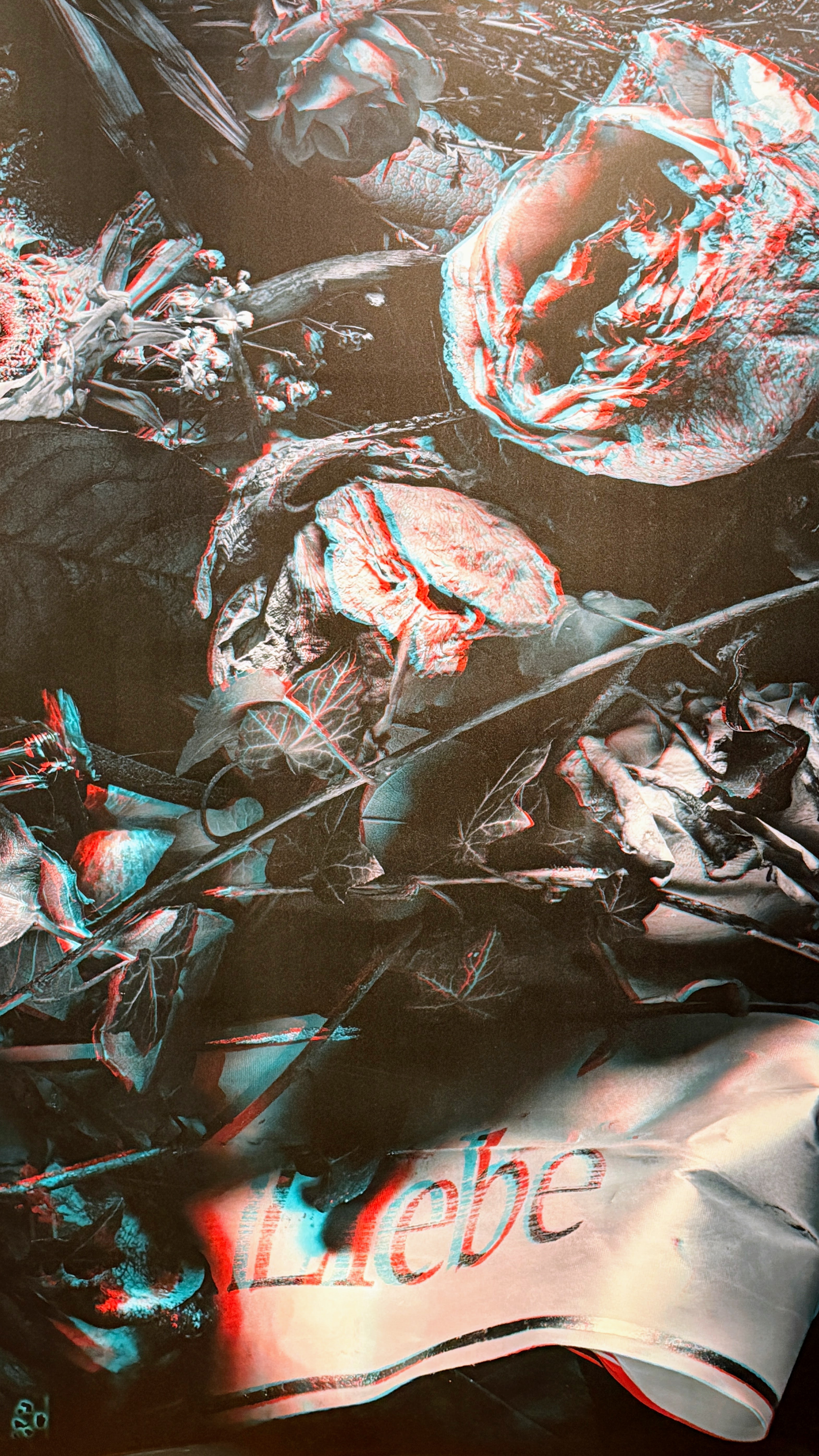
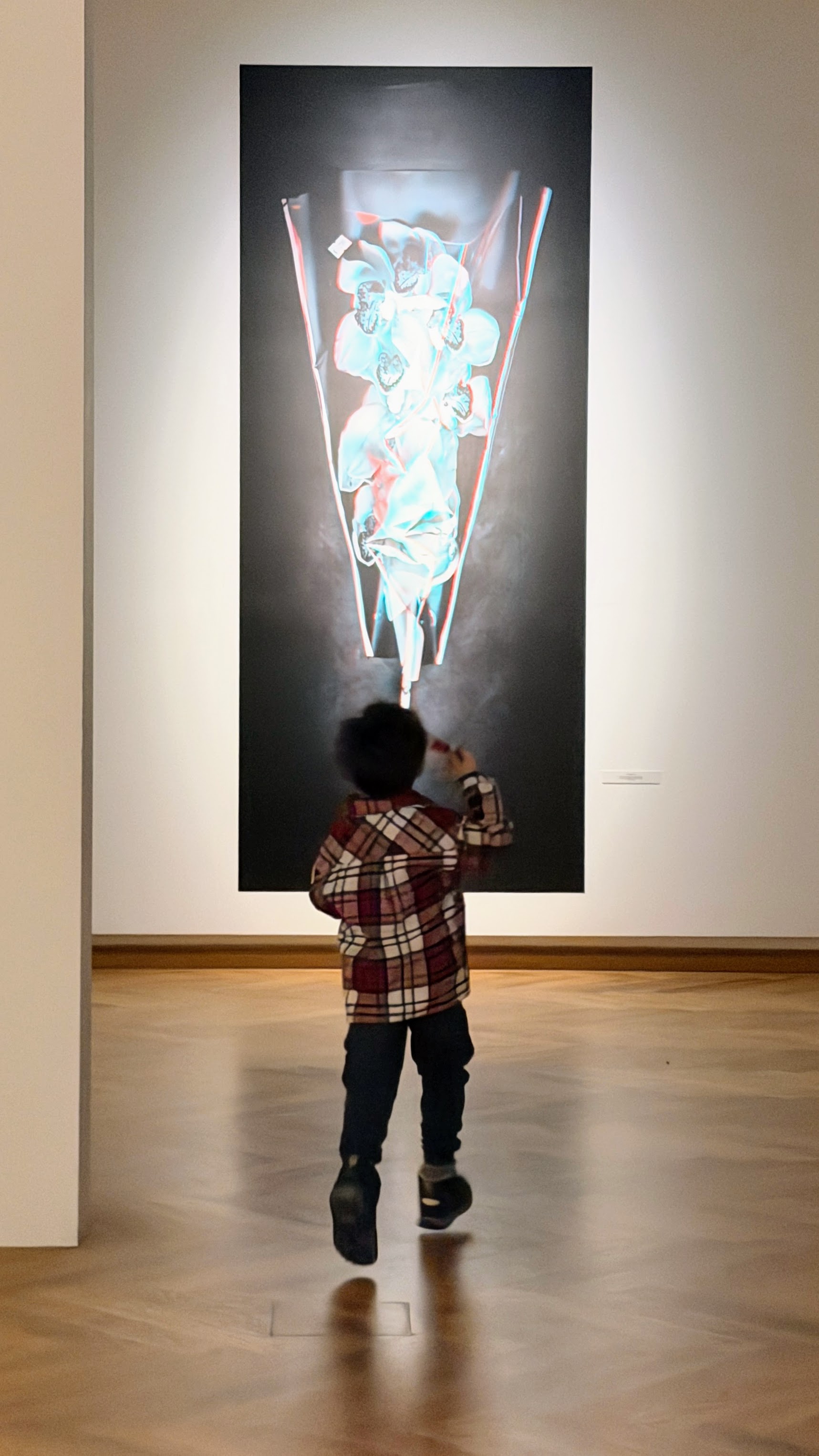
In der Serie Friedhofsblumen wird es existenziell. Weggeworfene Blumen, Zeichen von Erinnerung und Trauer, werden zu Symbolen von Gleichzeitigkeit: Aufblühen und Vergehen in einem Moment. Leben und Tod nicht als Gegensätze, sondern als zwei Zustände im selben Bildraum.
Ein Stück Kindheit
Durch die 3D Brillen betrachtet haben mich die Bilder persönlich ein Stück in meine Kindheit zurückgebracht. Dieses 3D-Spielzeug mit der rotierenden Scheibe, bei dem man Szenen in die Tiefe klicken konnte. Dieses Staunen, wenn plötzlich Raum entsteht. Genau dieses Gefühl war wieder da – nur diesmal auf musealem, künstlerischem Niveau.
„Two Views on Plants“ ist eine kluge, technisch anspruchsvolle und ästhetisch starke Ausstellung über Wahrnehmung, Zeit, Natur und unsere Beziehung zur lebendigen Welt.
Sebastian Cramer schafft es, dass seine Arbeiten sowohl als flächige, grafische Kompositionen funktionieren als auch als plastische Bildräume. 2D und 3D sind hier keine Spielerei, sondern zwei gleichwertige Perspektiven.
Manchmal ist es gut, rechtzeitig hinzugehen. Die Ausstellung läuft nur noch bis 2. März. Und das ist einer dieser seltenen Fälle, wo ich ohne Pathos sage: Das sollte man gesehen haben!
Almost touchable
Two Views on Plants at the NHM
Plant photography? It may sound like calendar-style idyll – even though I am personally a fan. But Two Views on Plants by Sebastian Cramer at the Natural History Museum Vienna completely disrupts that image. This is botanical photography for skeptics.
How does an image have to be composed in order to be equally compelling in 2D and 3D?
Right at the beginning of the exhibition, you encounter one of Cramer’s quotes:
“I was fascinated by the fact that generally accepted design principles had to be questioned when adding a new aspect to image design: the third dimension.
What does an image have to look like to be equally interesting in 2D and 3D?”
This question runs through the entire exhibition.
In 2D, many of the works appear almost abstract. Delicate blossoms, stems and seed heads are tinted in pink and teal – the classic anaglyph colors familiar from traditional 3D imagery. Viewed flat, they become strong graphic compositions: lines, repetitions, symmetries. Some motifs resemble mandalas or scientific diagrams.
And then you put on the 3D glasses.
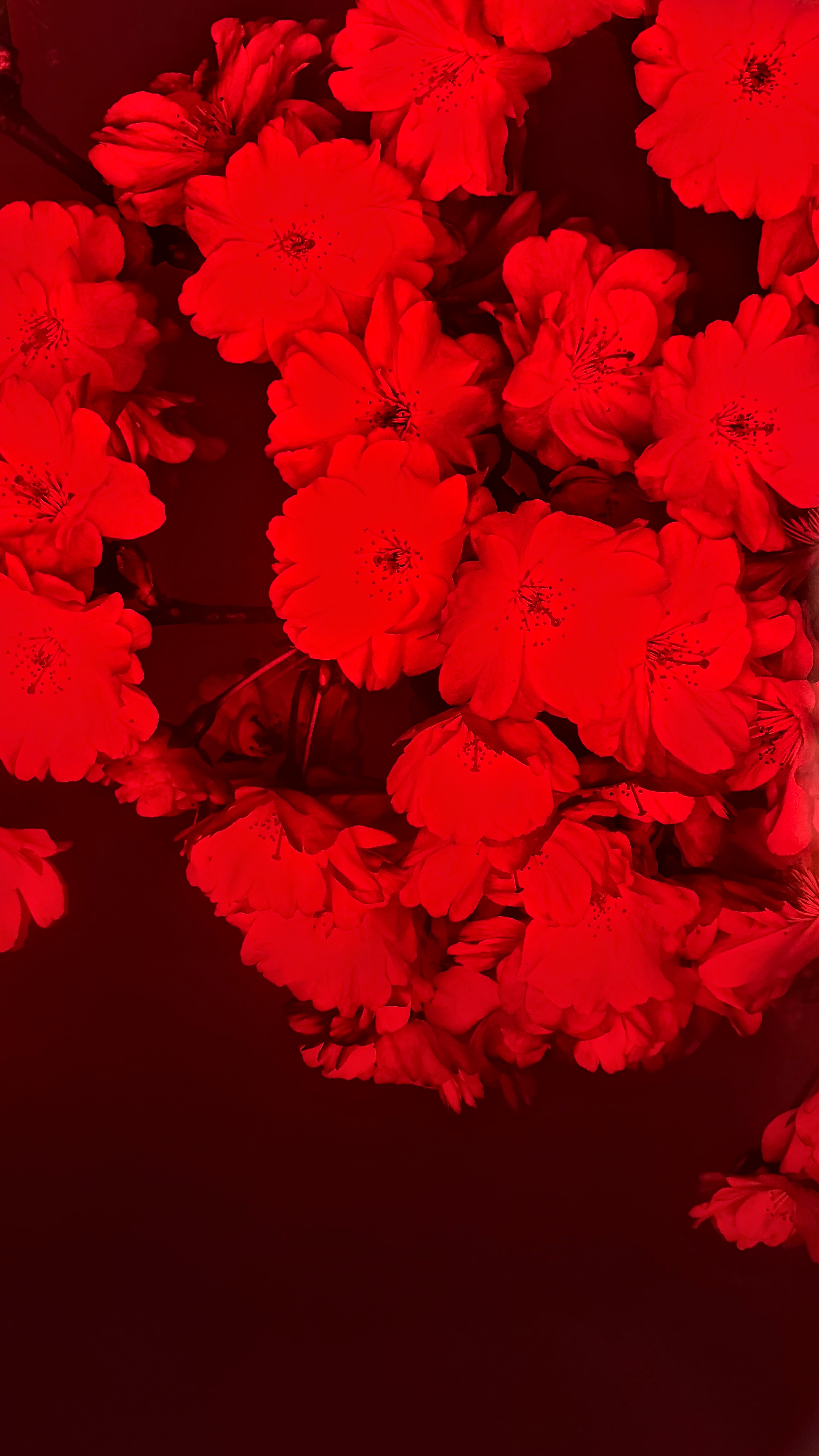
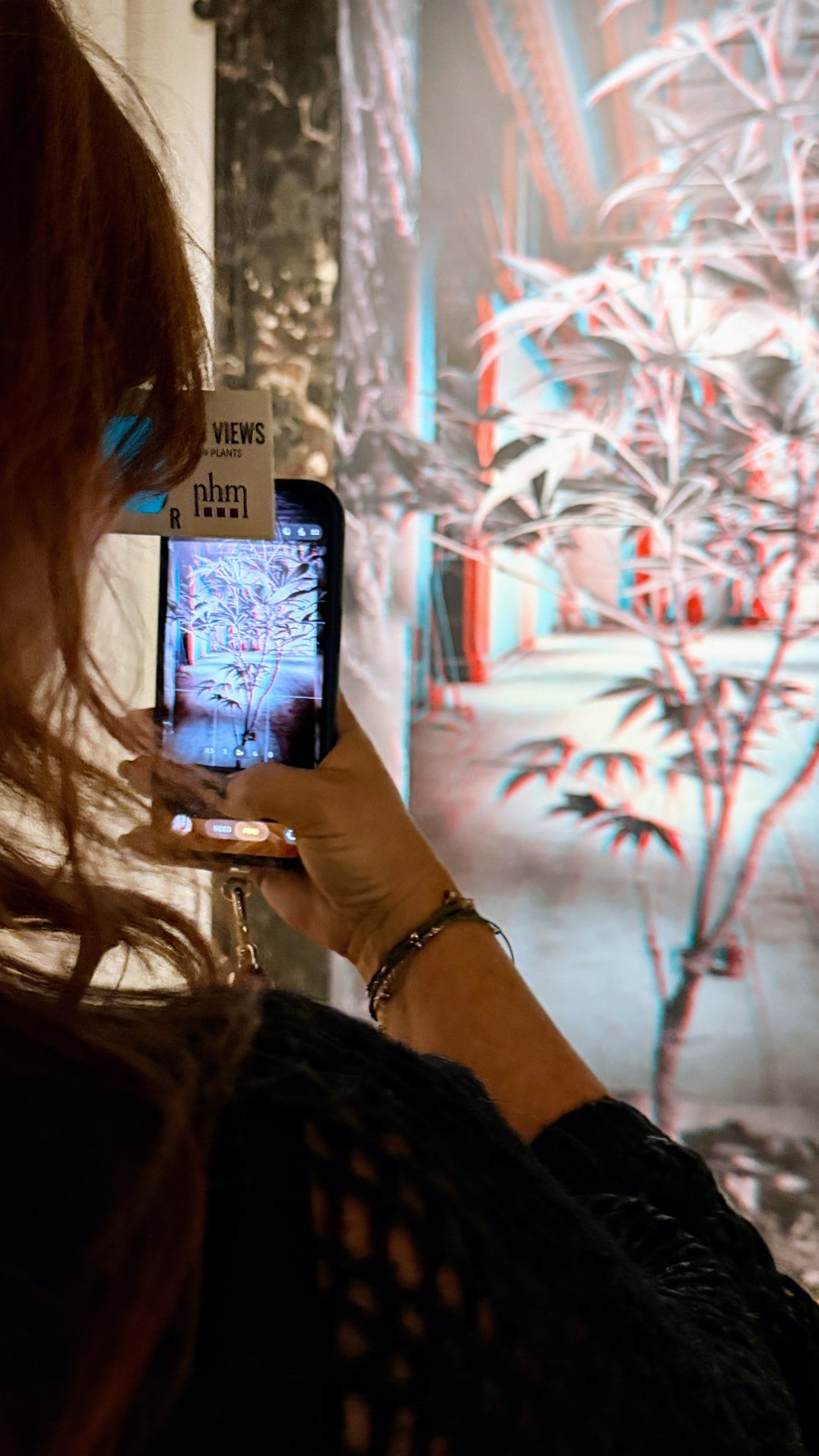
Suddenly, everything shifts into space. Blossoms move forward, stems layer themselves into depth, fine structures float almost within reach. There is a physical impulse to touch them. These plants do not jump out in a cheap, gimmicky way. Instead, they construct carefully composed spatial environments. The effect works because the images are already convincing in 2D.
An Almost Forgotten Technique
The exhibition centers on stereoscopy – an “almost forgotten form of photography.” Two slightly offset images, combined through colour separation, create a spatial viewing experience. In the 19th century, stereoscopy was extremely popular. Today, in the era of 3D cinema, VR and digital simulations, classical stereoscopic photography feels almost anachronistic. And precisely for that reason, it is fascinating.
It demands something we rarely practice anymore: concentration. Time. A conscious engagement with perception.
Cramer formulates it this way: “In a time of ecological crises, even seeing becomes political. Stereoscopic photography offers the possibility to renew this gaze. Perception as an act of connection, not of distance.”
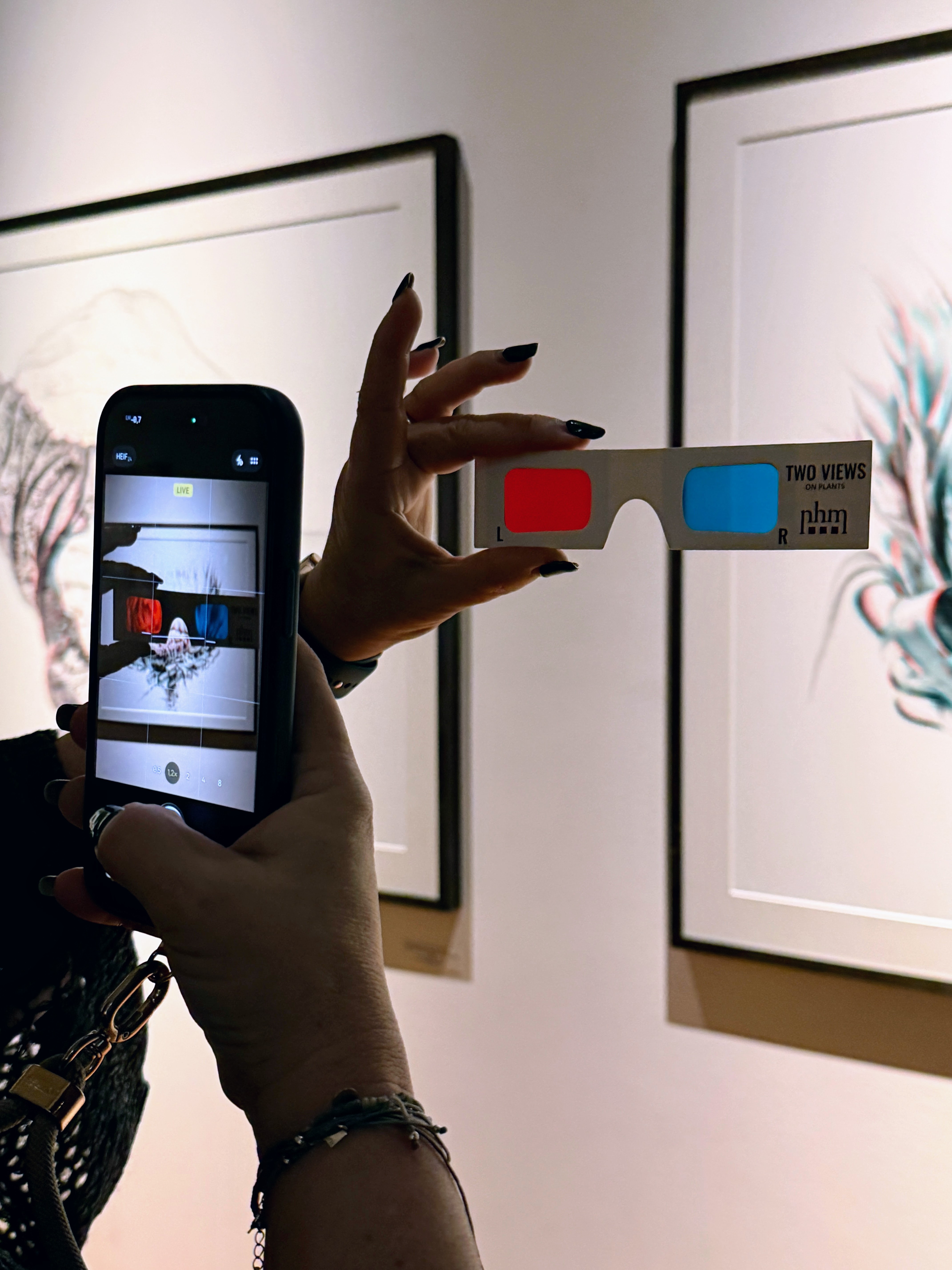
It is unfortunate that a simple camera lens cannot capture the 3D effect. I tried photographing through the 3D glasses out of curiosity, but that only tinted the images red or blue. Another aspect that impressed me is the technical dimension. Cramer also works with slitscan photography – a method originating in industrial image processing. Instead of capturing a full image at once, the photograph is recorded line by line. As either the subject or the camera moves, the resulting image depicts not only space but also the passage of time. As one wall text states:
“Only change gives things form.”
Between Herbarium and the Present
The museum setting is perfectly chosen. The Herbarium at NHM is described as a “repository of knowledge,” containing millions of preserved plant specimens. Plants as research objects, as data carriers, as archived nature.
Cramer moves between scientific precision and artistic transformation. His series ALCOPLANTS presents historical plant specimens preserved in alcohol. The colors have faded, the structures appear translucent, almost ghostlike. A time capsule in glass. Beauty emerges precisely through decay.
In the series Cemetery Flowers, the tone becomes more existential. Discarded flowers – once symbols of remembrance and mourning – become expressions of simultaneity: blooming and fading within a single moment. Life and death are not opposites here, but two states within the same visual space.
A Piece of Childhood
Viewing the works through the 3D glasses unexpectedly brought me back to childhood. Those old 3D toys with rotating discs, where you clicked through scenes that suddenly gained depth. That moment of wonder when space appears. The same feeling returned here – only now at a museum-level artistic standard.

Two Views on Plants is an intelligent, technically sophisticated and visually striking exhibition about perception, time, nature and our relationship to the living world.
Sebastian Cramer succeeds in creating works that function both as flat graphic compositions and as spatial image environments. 2D and 3D are not gimmicks here, but two equally valid perspectives.
The exhibition runs only until March 2. And this is one of those rare cases where it would genuinely be a pity to miss it.
EXHIBITION PHOTOS © KARIN SVADLENAK
 ViennaCultgram