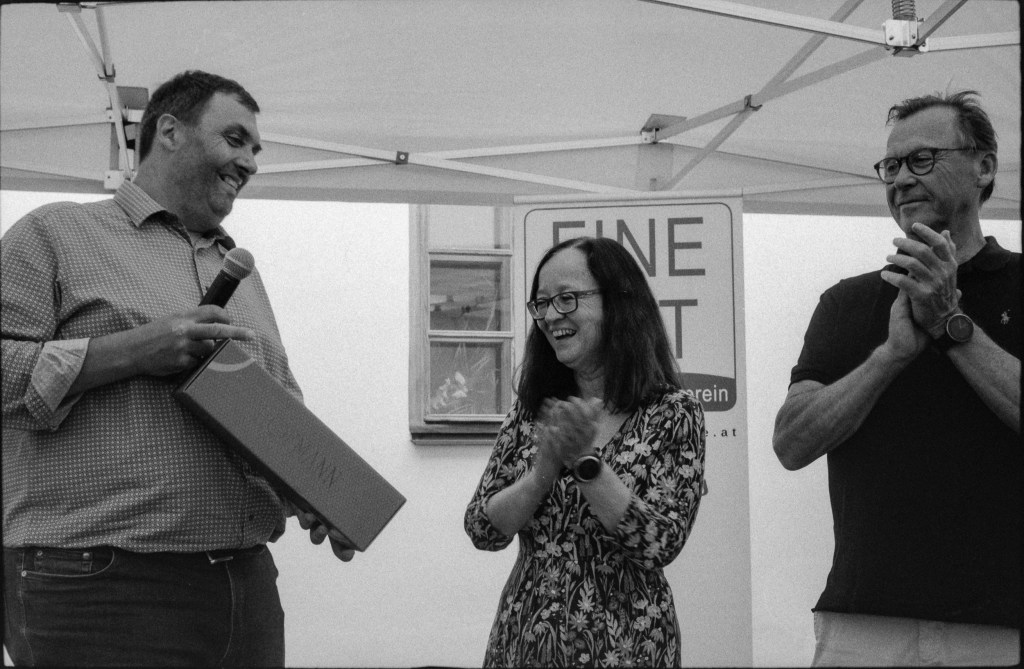
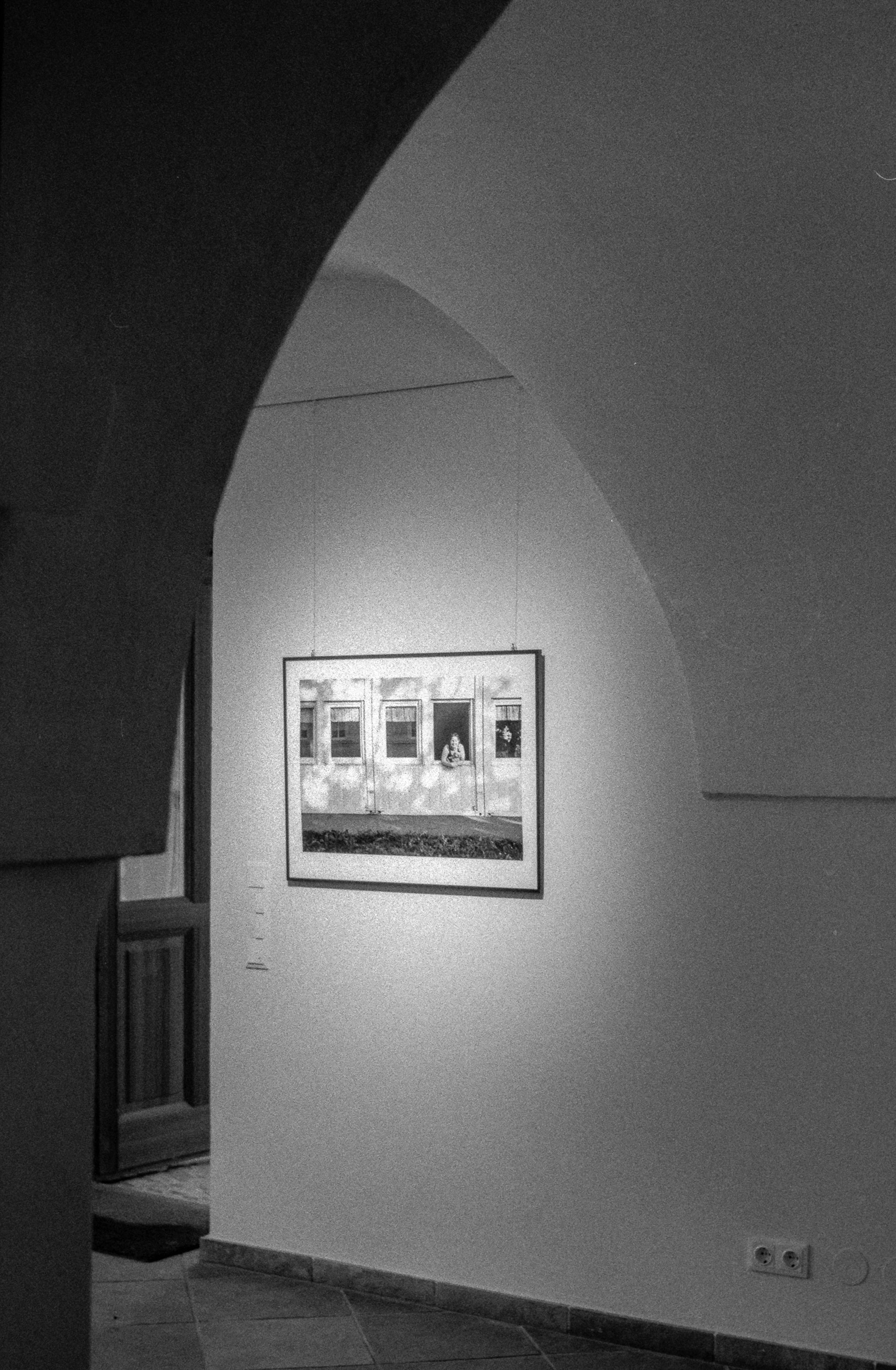
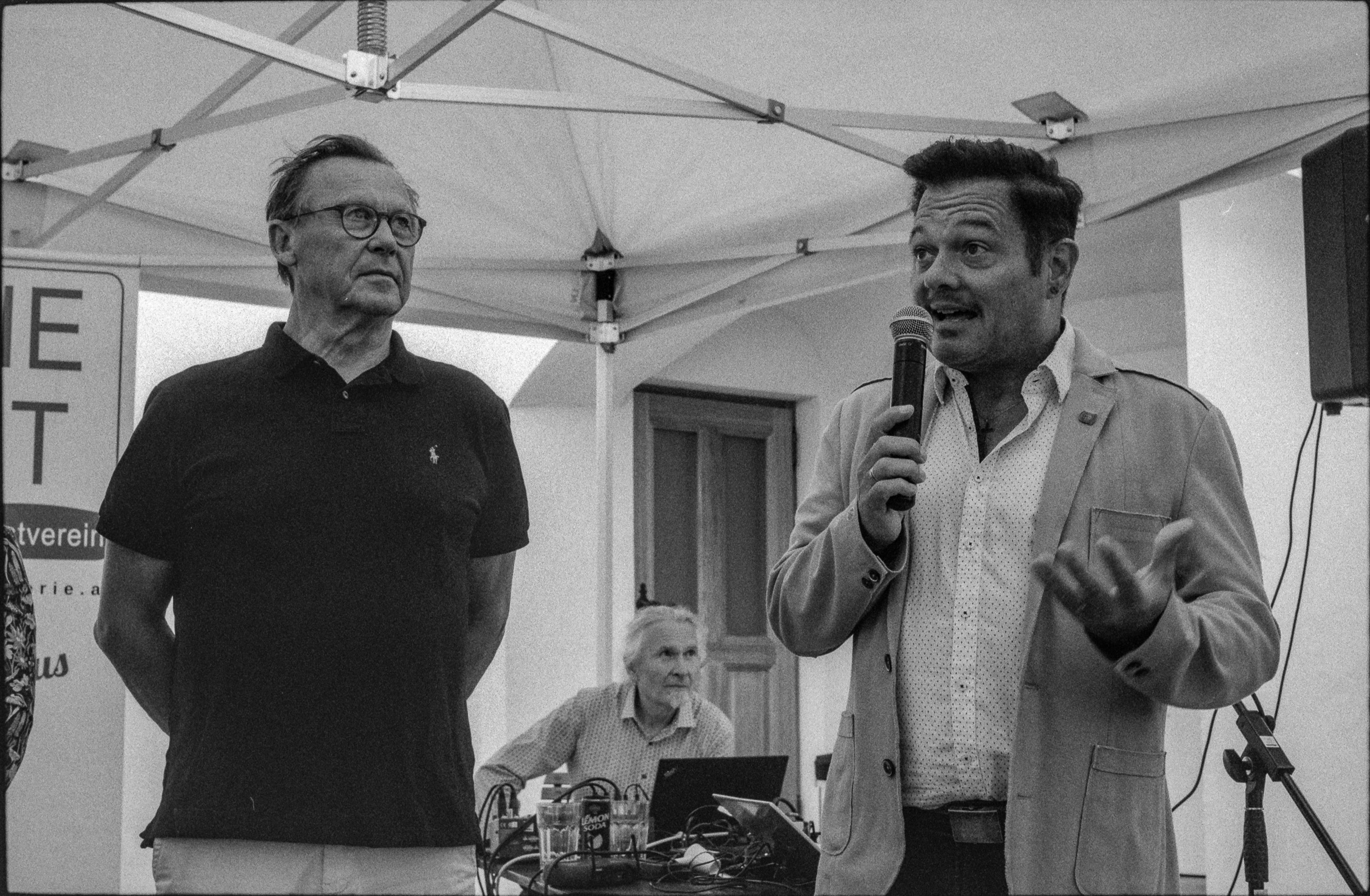
On Sunday evening, the exhibition “Ehrensache – A Matter of Honour” by photographer Jutta Fischel opened at the Fine Art Galerie in Traismauer. This fine exhibition pays tribute to 42 female volunteers in photographs. Fischel´s pictures are a touching portrait of these women and their diverse activities. They show the pride and commitment with which they work to give something back to their community.


Millions of Austrian citizens actively engage in voluntary work across various aspects of daily life. Women tend to engage more in “informal volunteering,” often referred to as neighborly assistance, but this is changing. Men are more likely to participate in “formal volunteering” through organizations, associations, or institutions.
Jutta Fischel, herself a volunteer curator and manager of the Fine Art Galerie, explains: “I had the pleasure and honour of portraying 42 wonderful women who volunteer in Traismauer and the surrounding area in 17 pictures. Without these committed women (and men), many things in Austria would not work so well.”
Why do they do it? A question on the minds of many women who dedicate their time and energy to volunteer work is: “If not me, then who?” This unwavering sense of purpose, fuelled by a desire to make a meaningful contribution to their communities, is what drives voluntary work.
Jutta Fischel´s photo essay aims to shine a spotlight on a small yet significant segment of remarkable women, whose unwavering commitment forms the backbone of countless associations in Traismauer. Some have been doing it for over four decades, and some are just starting their volunteer journey, but they are all united by a shared passion for serving the greater good.
The portrayed women skilfully manage not only their volunteer work but also maintain professional websites, YouTube channels, social media platforms, and even online courses. Many juggle multiple volunteer positions, demonstrating remarkable resilience and enthusiasm. The knowledge and experience they’ve accumulated over the years, often acquired through their volunteer work, are invaluable assets to their communities. But volunteering also has its own rewards, providing a sense of accomplishment and belonging.
Within these volunteer spheres, traditional gender roles are gradually dissolving. The indispensable rural volunteer fire departments, for instance, would be inconceivable without the increasing involvement of women. While the nationwide female participation rate remains below 10%, a promising 30% of the fire brigade’s youth members are already girls.
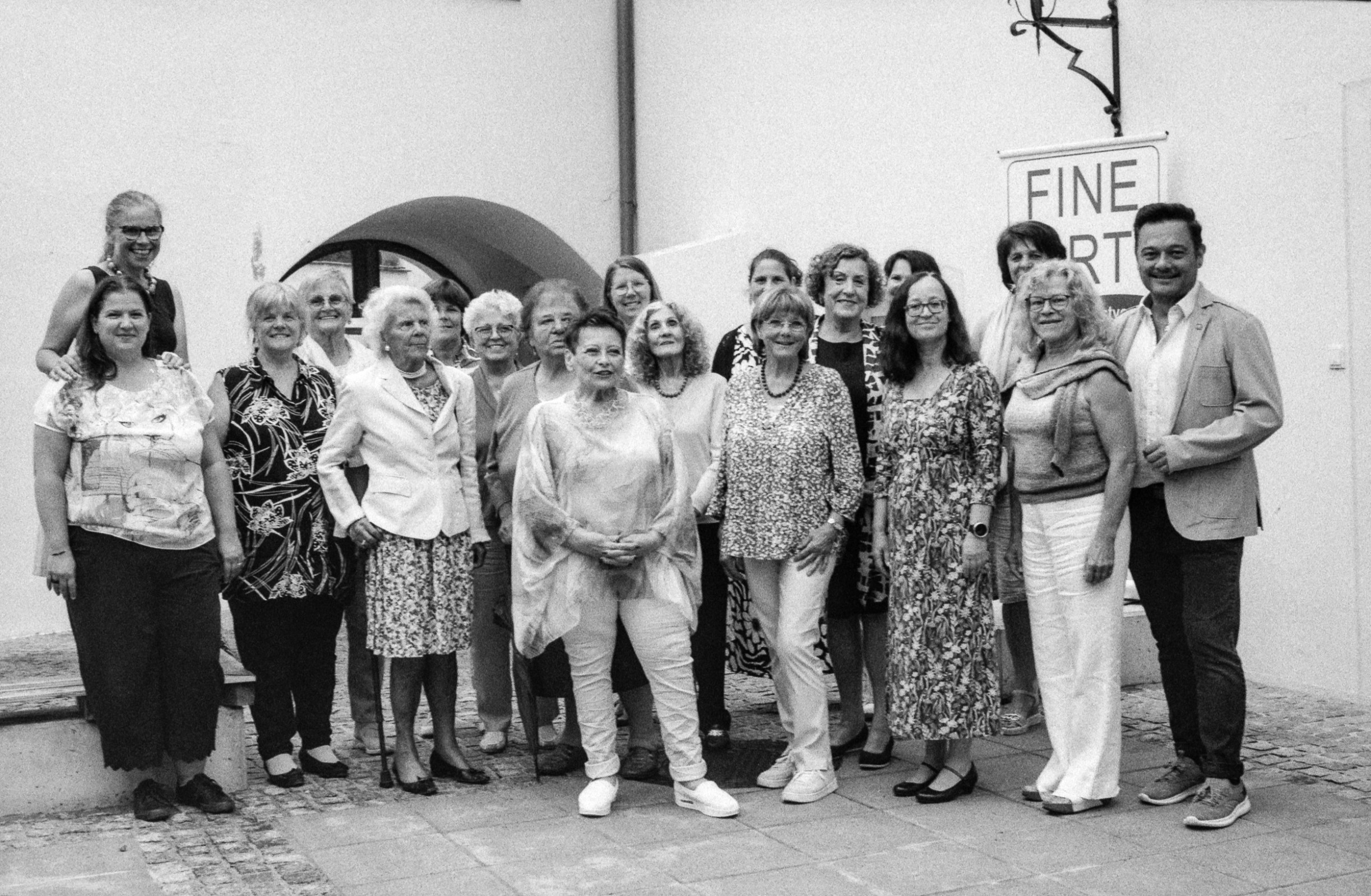
These women are the unsung heroines, the backbone of Austrian communities. Their unwavering dedication, expertise, and passion are driving positive change, challenging stereotypes, and paving the way for a more inclusive and equitable future.
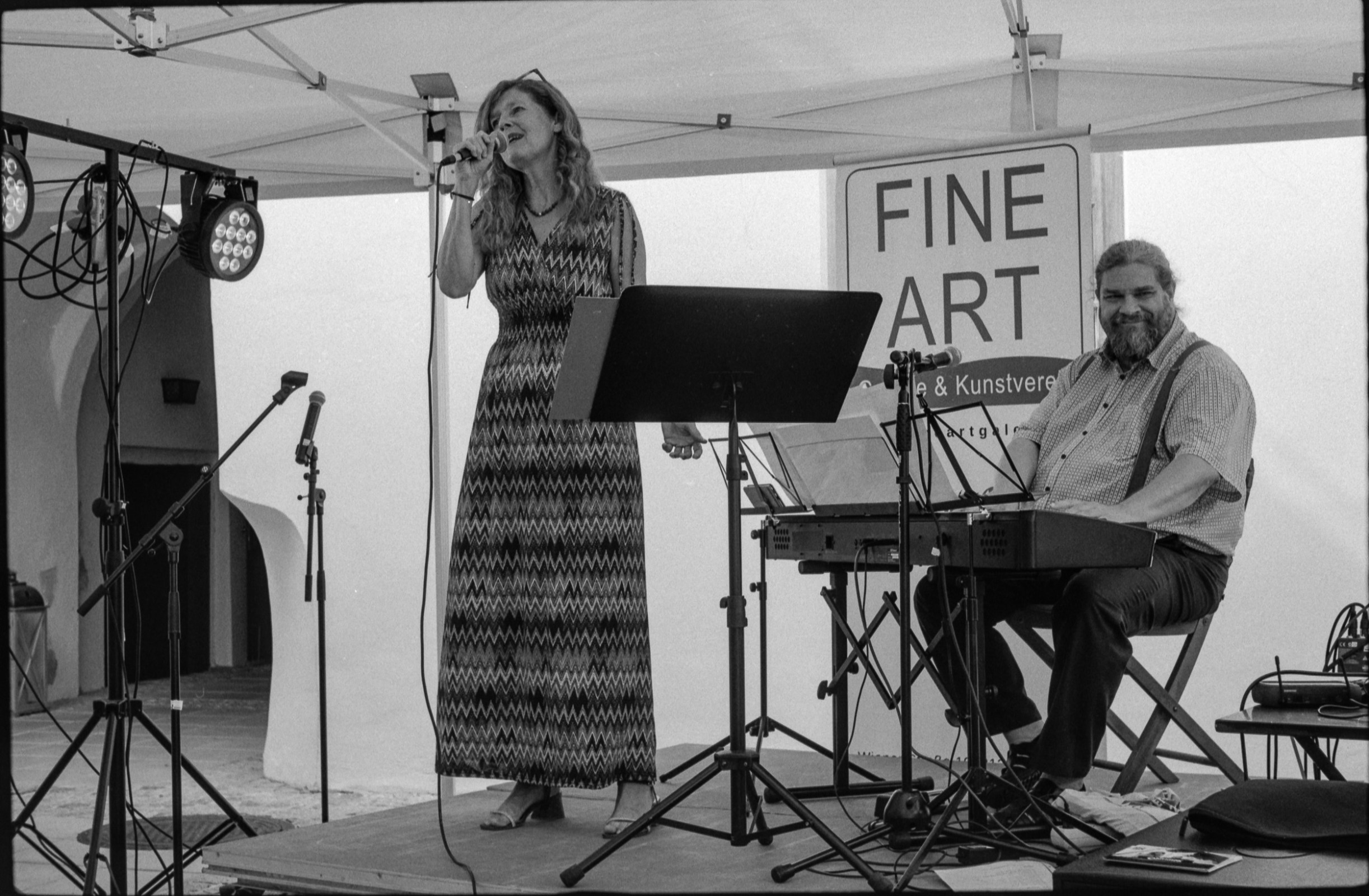
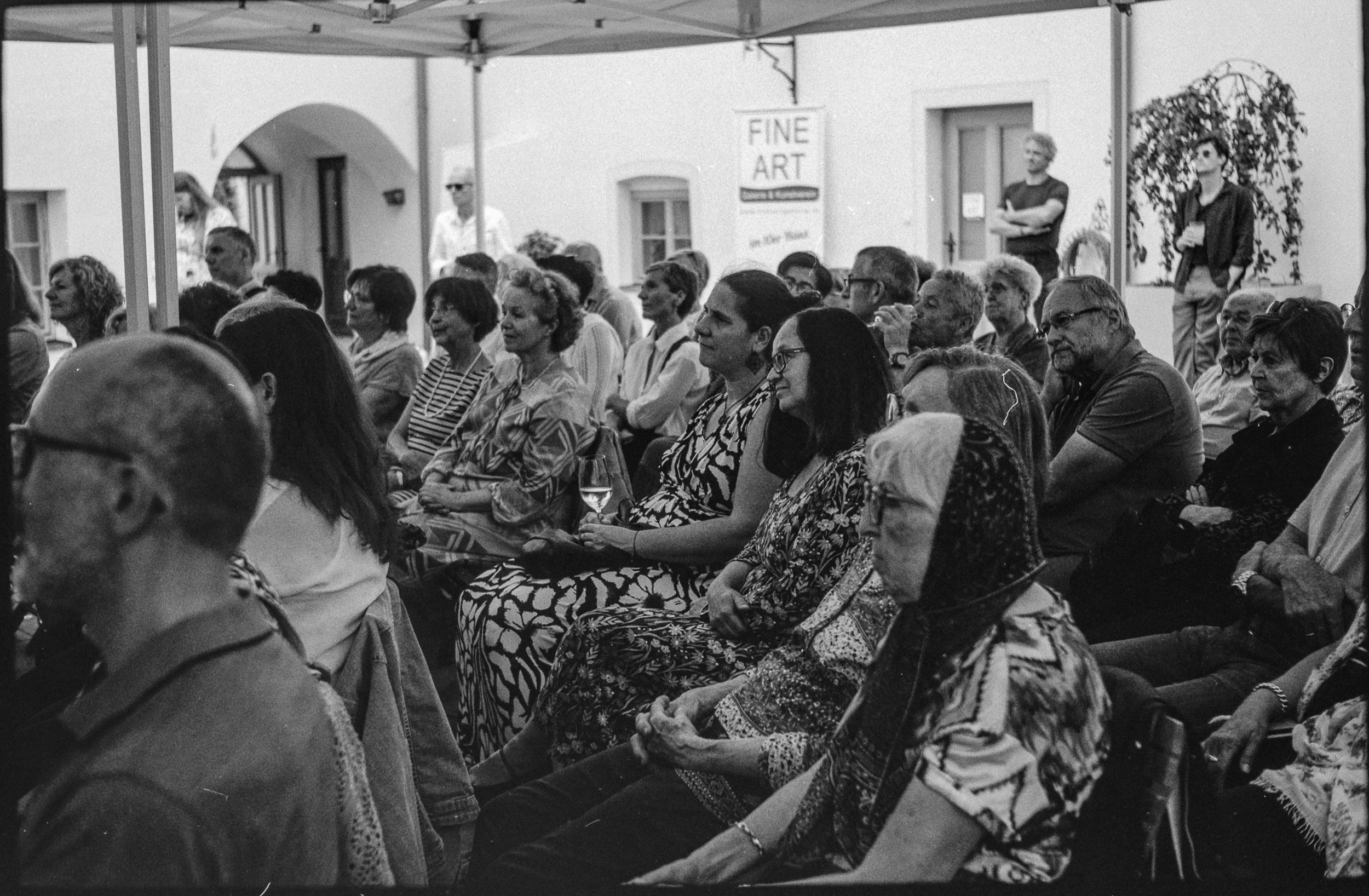
A word on this reportage: Before you start wondering why my photos are so grainy all of a sudden: I captured the powerful and expressive images of the exhibition with my analog camera, a Voigtländer Bessamatic. I used black and white ISO 100 and 400 Kentmere PAN film, which gave the photos the desired contrast and sufficient sharpness (though of course the ISO 400 film is a lot grainier). This was the first time I documented an exhibition in analog format, and it was the first time I used this particular camera. I am quite pleased with the results though.
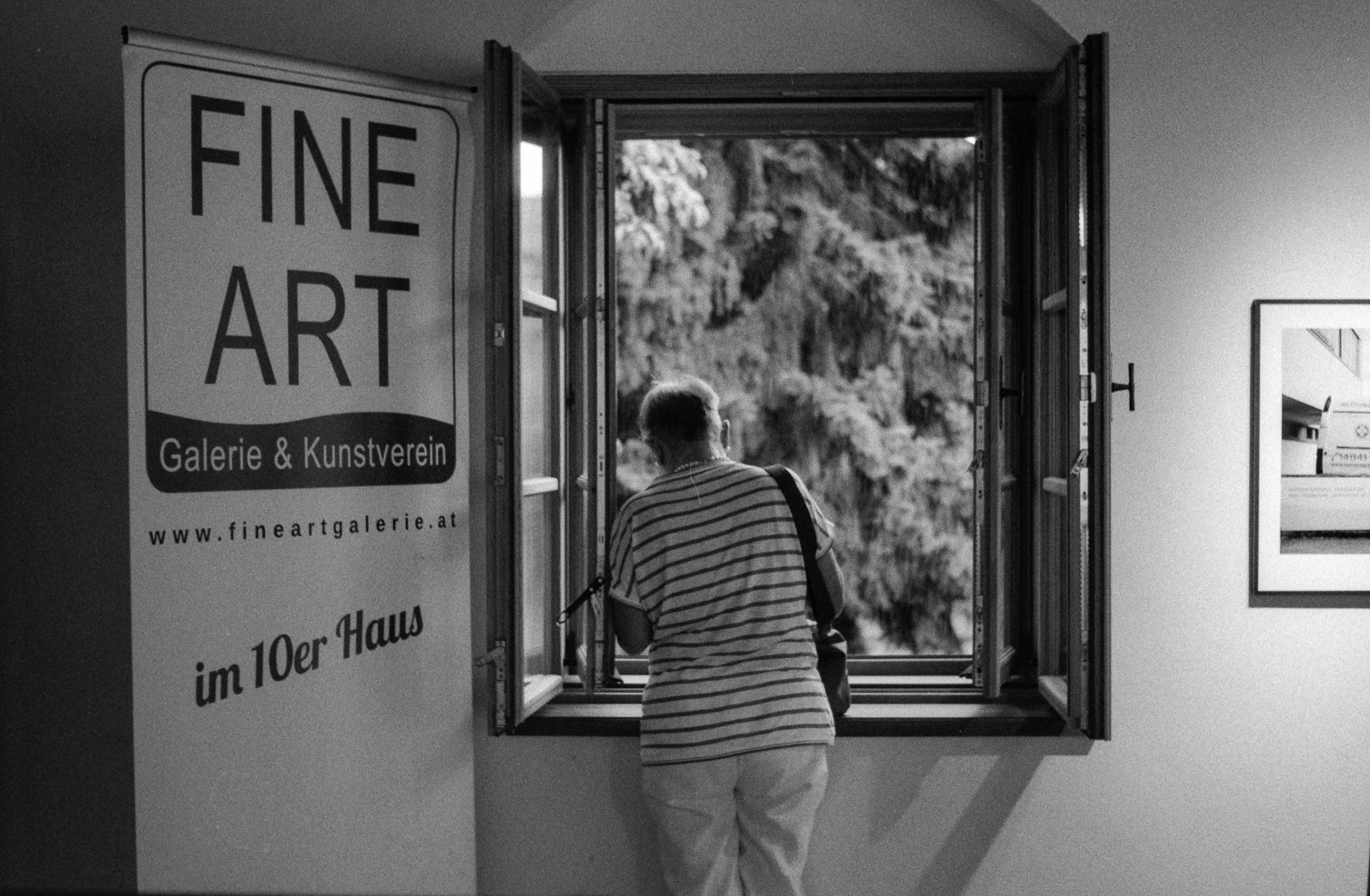


A Refined Classic: The Voigtländer Bessamatic Deluxe (1962-1967)The Voigtländer Bessamatic, with which I photographed the exhibition opening, is a fully mechanical 35mm SLR camera that was produced in Germany from 1958 to 1969. Mine is the Deluxe version, crafted by Voigtländer AG Braunschweig from 1962 onwards. It is considered one of the best of its time and is characterized by its robust construction, its precise mechanics, and its outstanding image quality. It is a bit heavy to lug around with its 938 grams (w/ lens), which is due to the sturdy metal and glass construction, but I like the feel of it in my hands.
The Bessamatic Deluxe took the legacy of the original Bessamatic a step further by incorporating a clever improvement: a distinctive T-shaped “Judas window” positioned above the exposure meter. This innovative feature allows photographers to conveniently check both aperture and shutter speed settings without taking their eye off the viewfinder.
The lens I have on it is a 50 mm Voigtländer Color-Skopar X 1:2.8, with a Compur shutter with 1/500 the fastest speed. That is pretty good. I also love how the split image rangefinder allows getting the distance correct. Plus, the old coupled selenium light meter still works! No batteries needed.
For me this camera in my by now rather extensive collection of old beauties is definitely a keeper!
More about the Voigtländer Bessamatic
For more information about the exhibition
Where:
Fine Art Galerie, Traismauer, NÖ
When:
July 8 to August 15, 2024
Viewing:
“Ehrensache” can be viewed by appointment during the exhibition duration. Please contact the gallery by phone: +43 (0) 664 33 88 720 or email: office@fineartgalerie.at.
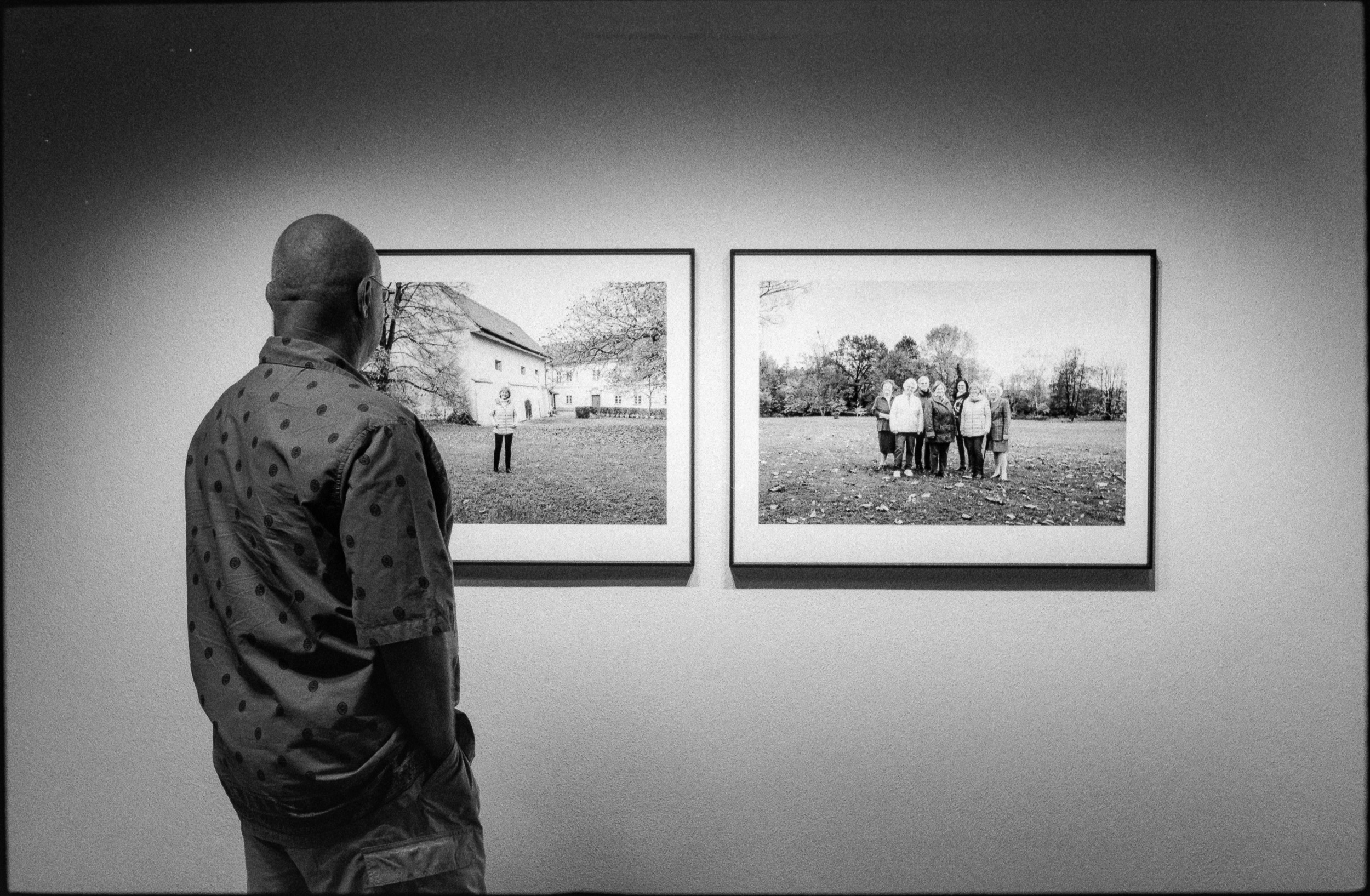
EXHIBITION PHOTOS © KARIN SVADLENAK-GOMEZ
 ViennaCultgram