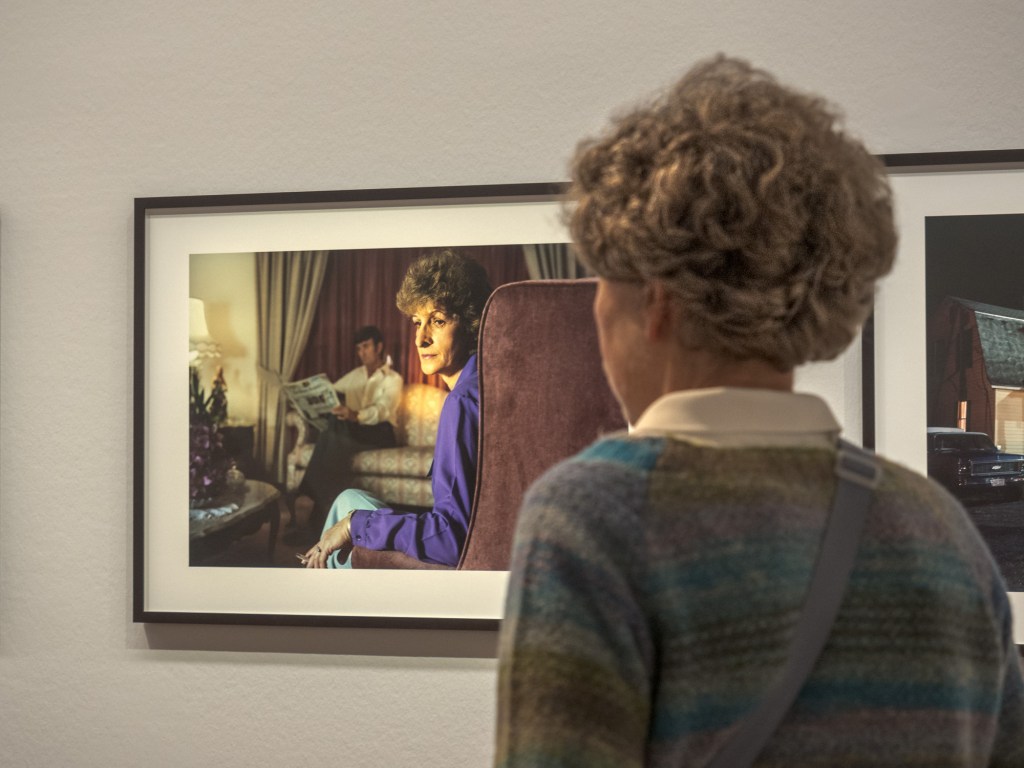
A recent visit to the Albertina Museum’s Gregory Crewdson retrospective with fellow photographers, organised by the Prager Fotoschule felt like stepping into a world I already knew. As a big fan of Edward Hopper’s paintings and moving pictures like David Lynch´s iconic “Twin Peaks” series, I was instantly drawn to Crewdson’s staged photographs. Their meticulous detail, unsettling beauty, and exploration of isolation in suburban America (where I have also lived for a few years) resonated deeply.

Gregory Crewdson is one of the world’s most renowned photographers. Since the mid-1980s, he has been using elaborately constructed sets and cinematic lighting to create staged photographs that focus on human isolation and social alienation. His work is often compared to films for its use of dramatic lighting and focus on narrative. And indeed, much like a film, Crewdson’s photographs are created with the help of hundreds of people, including casting agents, wardrobe and set designers, and even special effects technicians.


Crewdson’s work is distinguished by its attention to detail and its dreamlike quality. He constructs elaborate sets in small-town America, then uses a large team of assistants, actors, and special effects crews to stage scenes that at first glance may appear ordinary and at second glance are rather strange to behold. The resulting photographs are cinematic in their scope, with careful lighting and framing that heightens the mystery and drama of each scene.

Many of Crewdson’s scenes evoke a sense of Hitchcockian suspense. Just like the master of suspense, Crewdson uses dramatic lighting, voyeuristic framing, and ambiguous narratives to create a sense of unease in the viewer. We are left to wonder what has happened before the moment captured in the photograph, and what will happen next.
Crewdson’s work also recalls the paintings of Edward Hopper, another artist who excelled at depicting the loneliness and isolation of modern life. Like Hopper, Crewdson often uses empty rooms, stark lighting, and solitary figures to create a sense of melancholy and longing.

Crewdson is interested in psychology, in tensions, in contrasts, influenced in part by his father, who was a psychoanalyst. He looks at the psychology of the subjects in the pictures and feels they are somehow connected to his own. There is a sense of sadness and longing, of before and after stories, and it is important to him that the pictures feel timeless and somehow disconnected from our everyday life while still reflecting contemporary life. Even though the pictures are usually very quiet, there is a definite narrative, which is left up to the viewer to guess at.
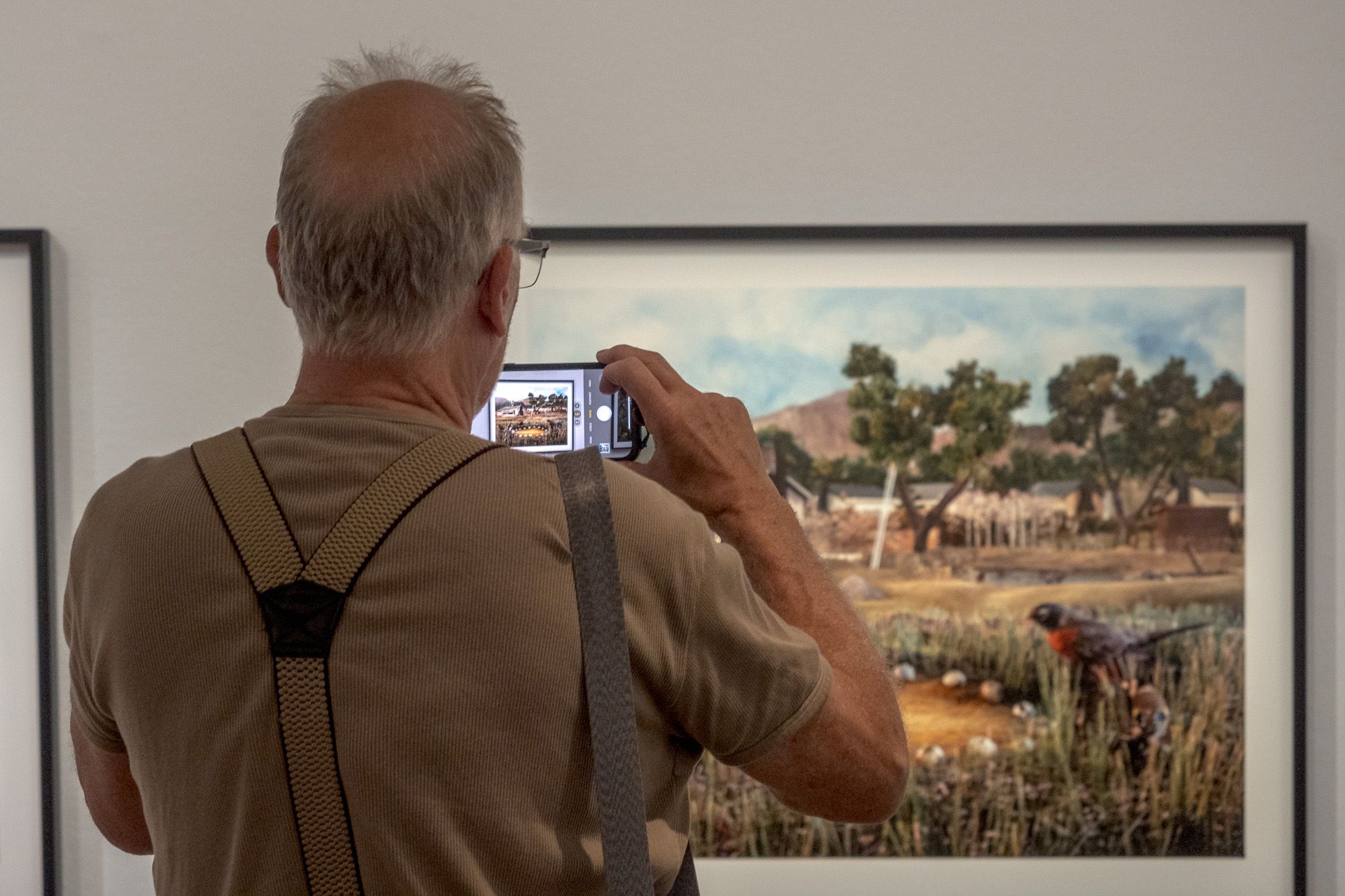
Thus Crewdson’s work transcends mere photography; it might be likened to a skilful theatrical production. The scale of his sets, the use of lighting and special effects, and the sheer number of people involved are awe-inspiring. The theatricality adds a layer of mystery to his photographs. We are left to wonder where reality ends and fiction begins, blurring the lines between the staged scenes and the hidden anxieties of everyday suburban life. And this is exactly what Crewdson is looking for.
I´m not really interested in documentation, I´m not interested in objective truth. I´m much more interested in something literary and poetic and cinematic and photographic. You can´t make a photography that actually expresses an objective reality. You can only make pictures that … come to your own personal truth. (Interview with Gregory Crewdson, Albertina Museum)
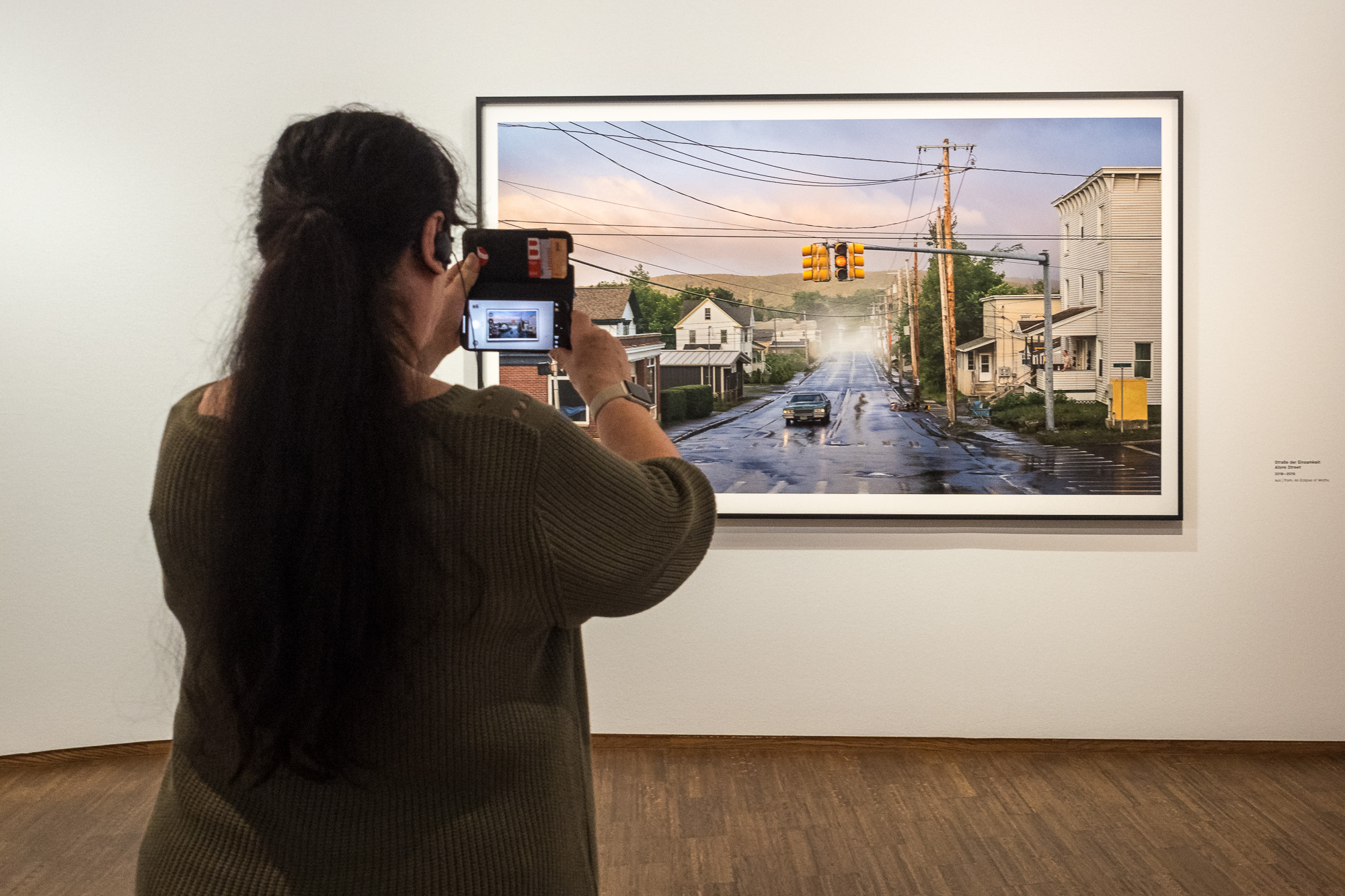
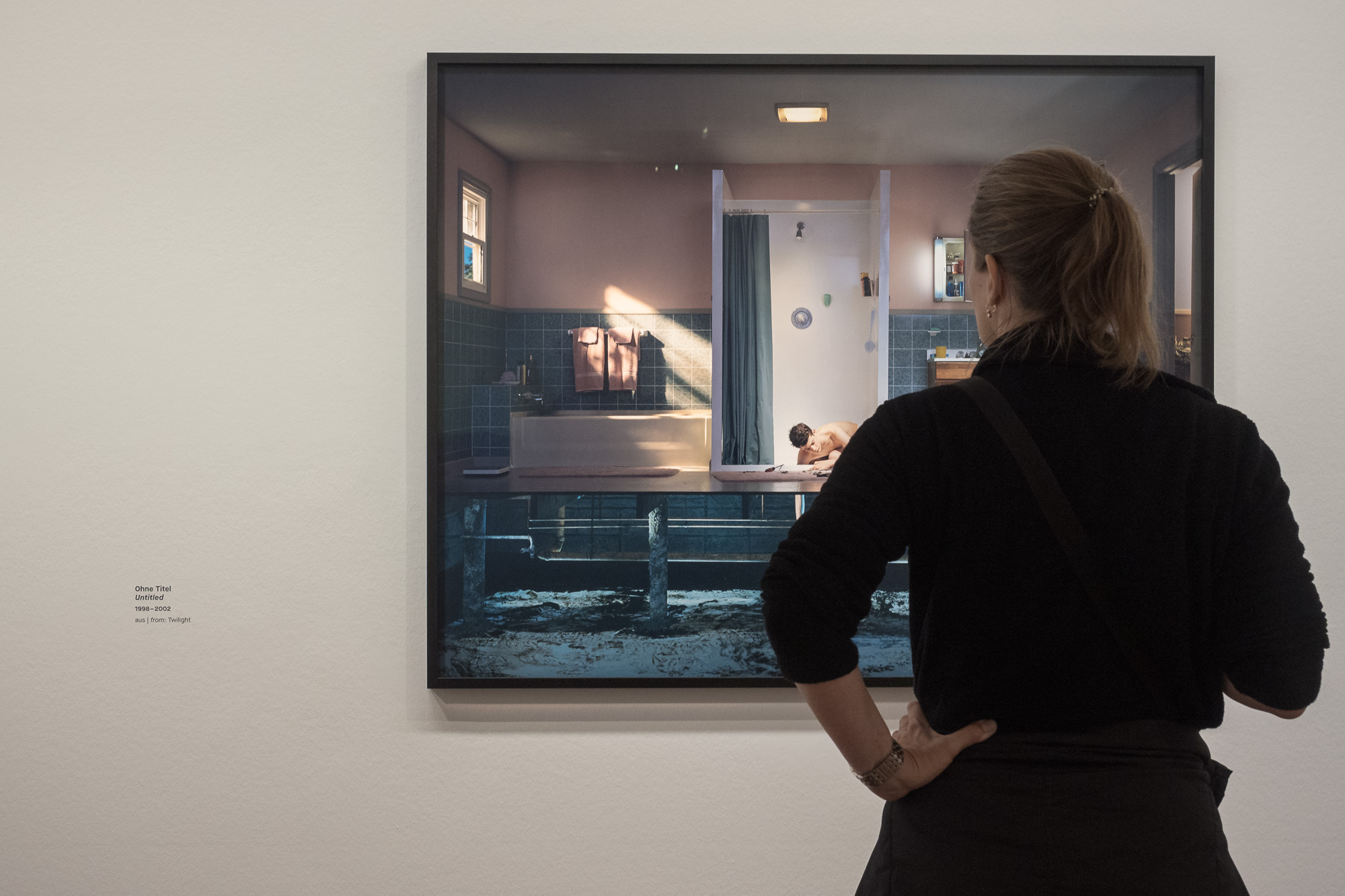
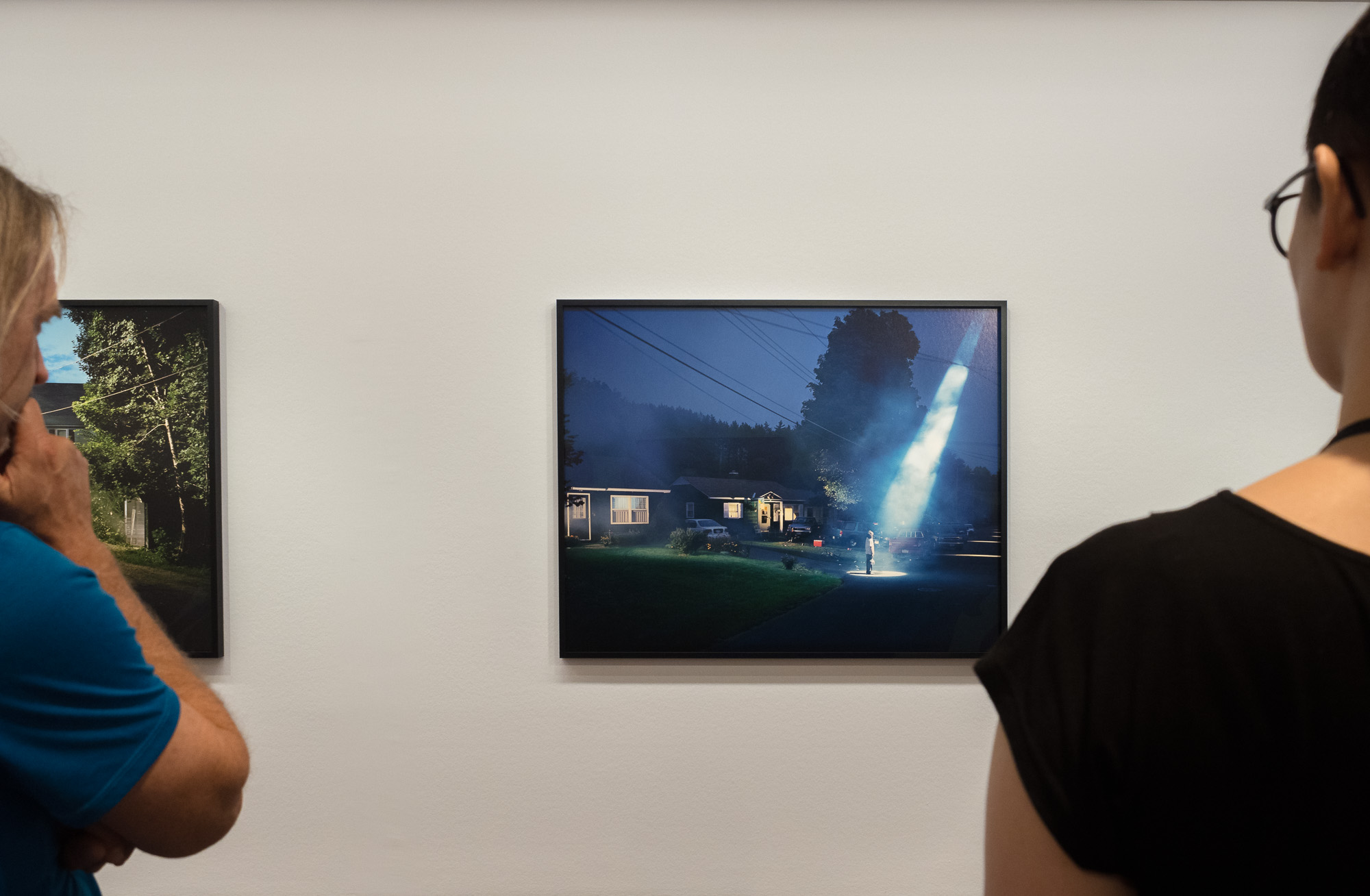
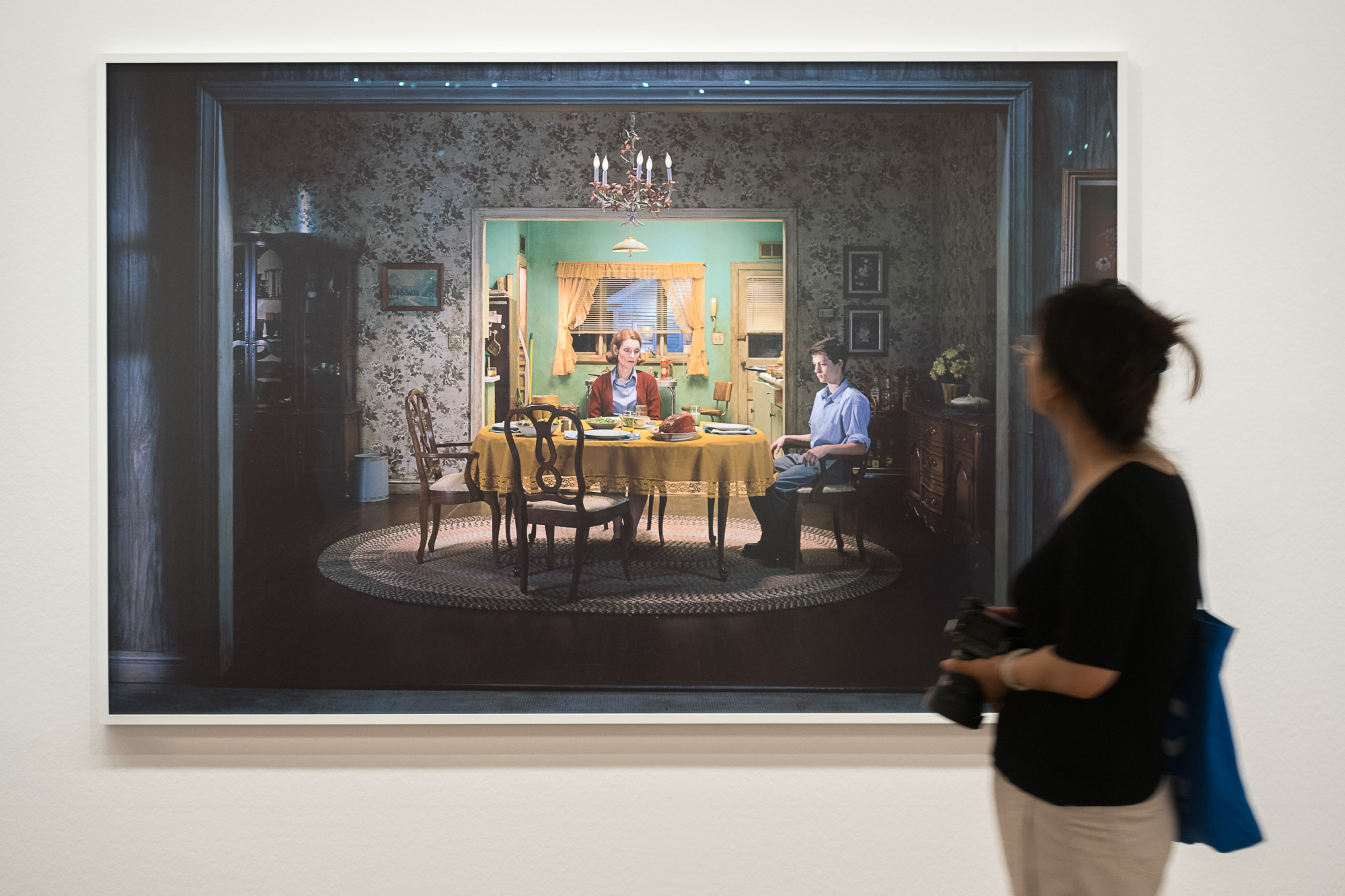
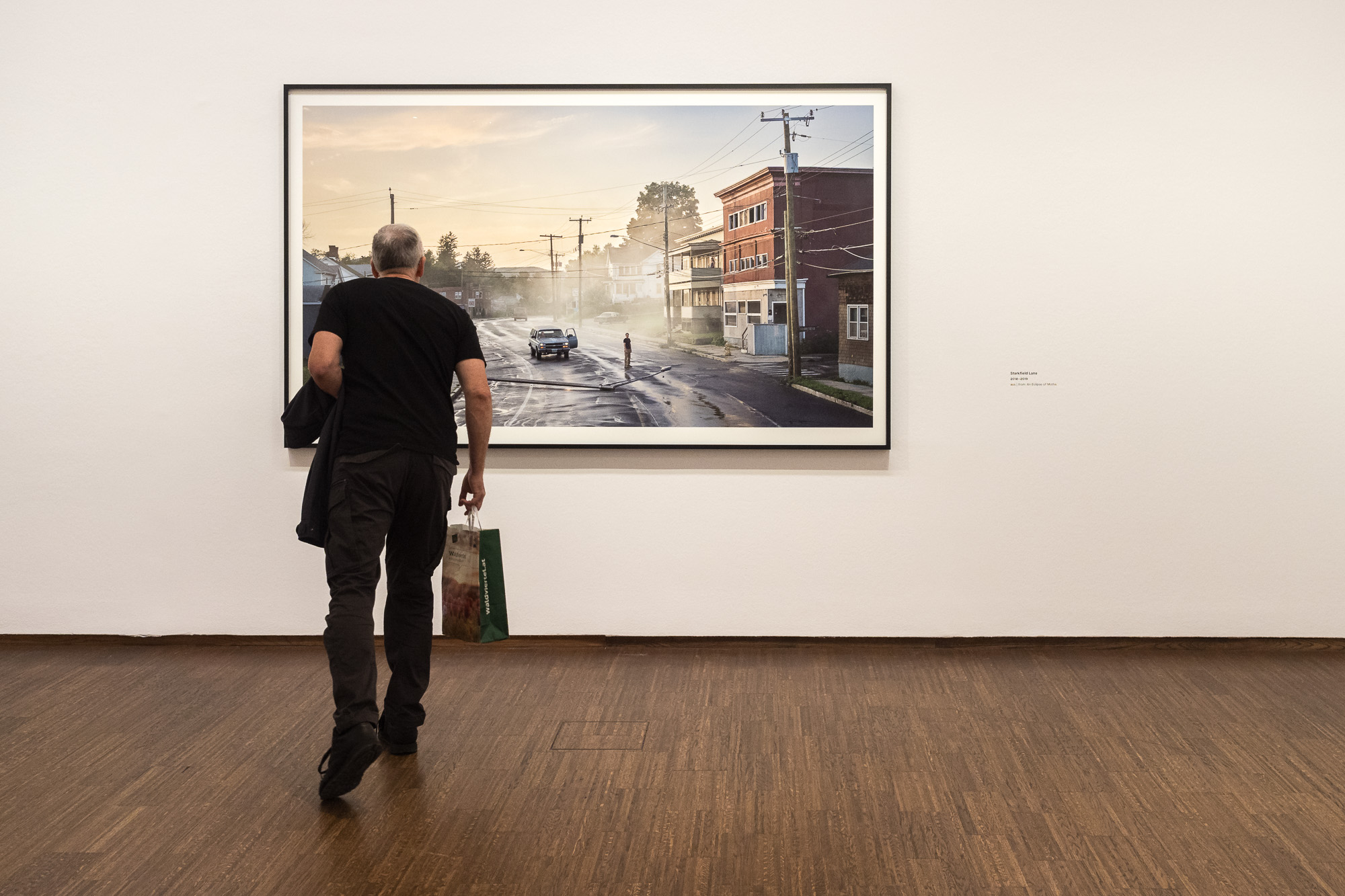
The exhibition spans Crewdson’s entire career, including works from his most famous series, such as “Twilight” (1998-2002), “Beneath the Roses” (2003-2008) , and his most recent series “Eveningside”. “Twilight” features unsettling scenes of domestic life, often bathed in an unnatural twilight glow, while “Beneath the Roses” delves deeper into the darkness, exploring themes of loss, despair, and the fragility of the American Dream. In the – unusually – black and white series “Eveningside” his theme is again the disconnect of individual experiences, with vibes from the film noir genre of the 1940s and 50s.
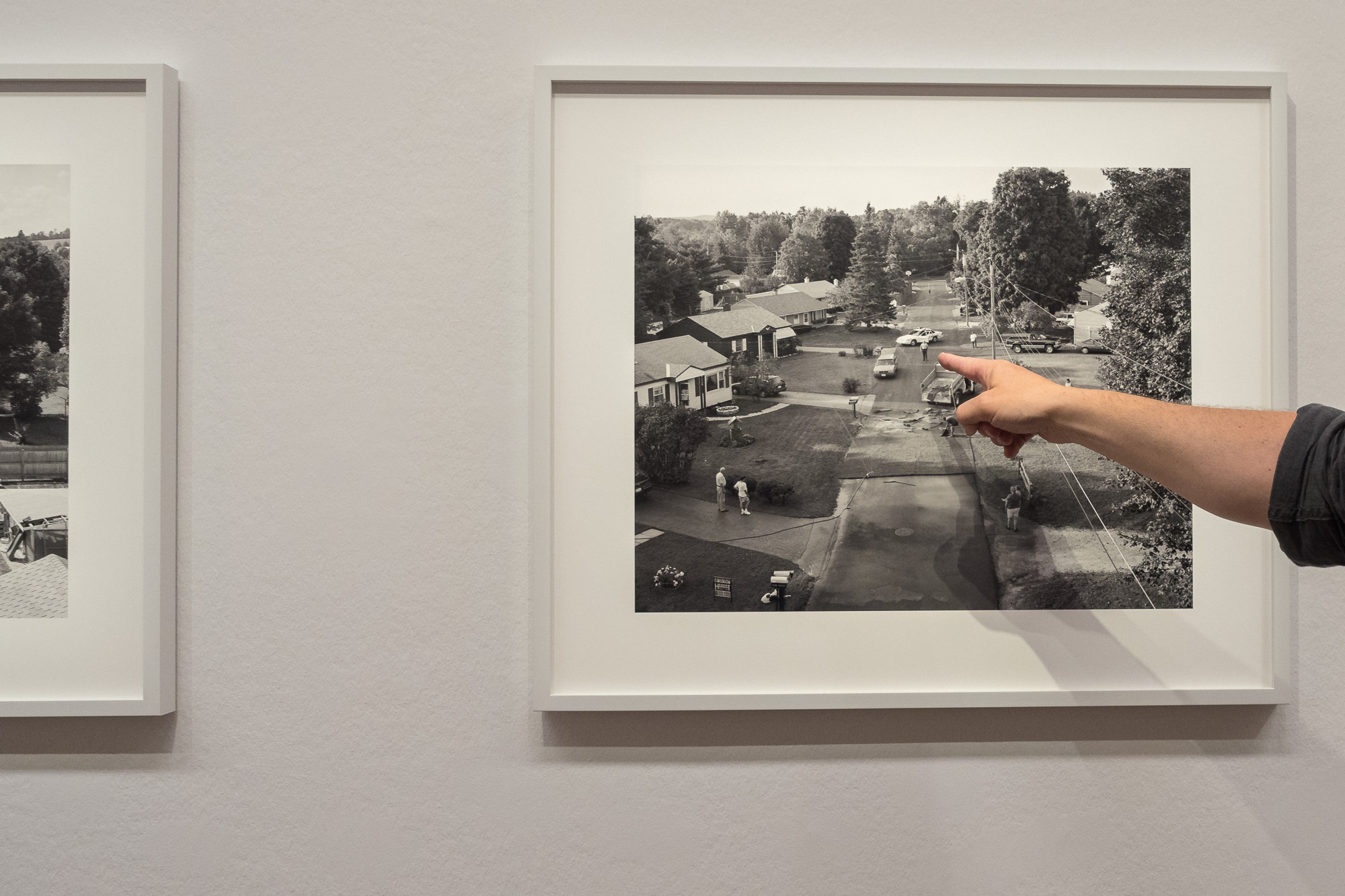
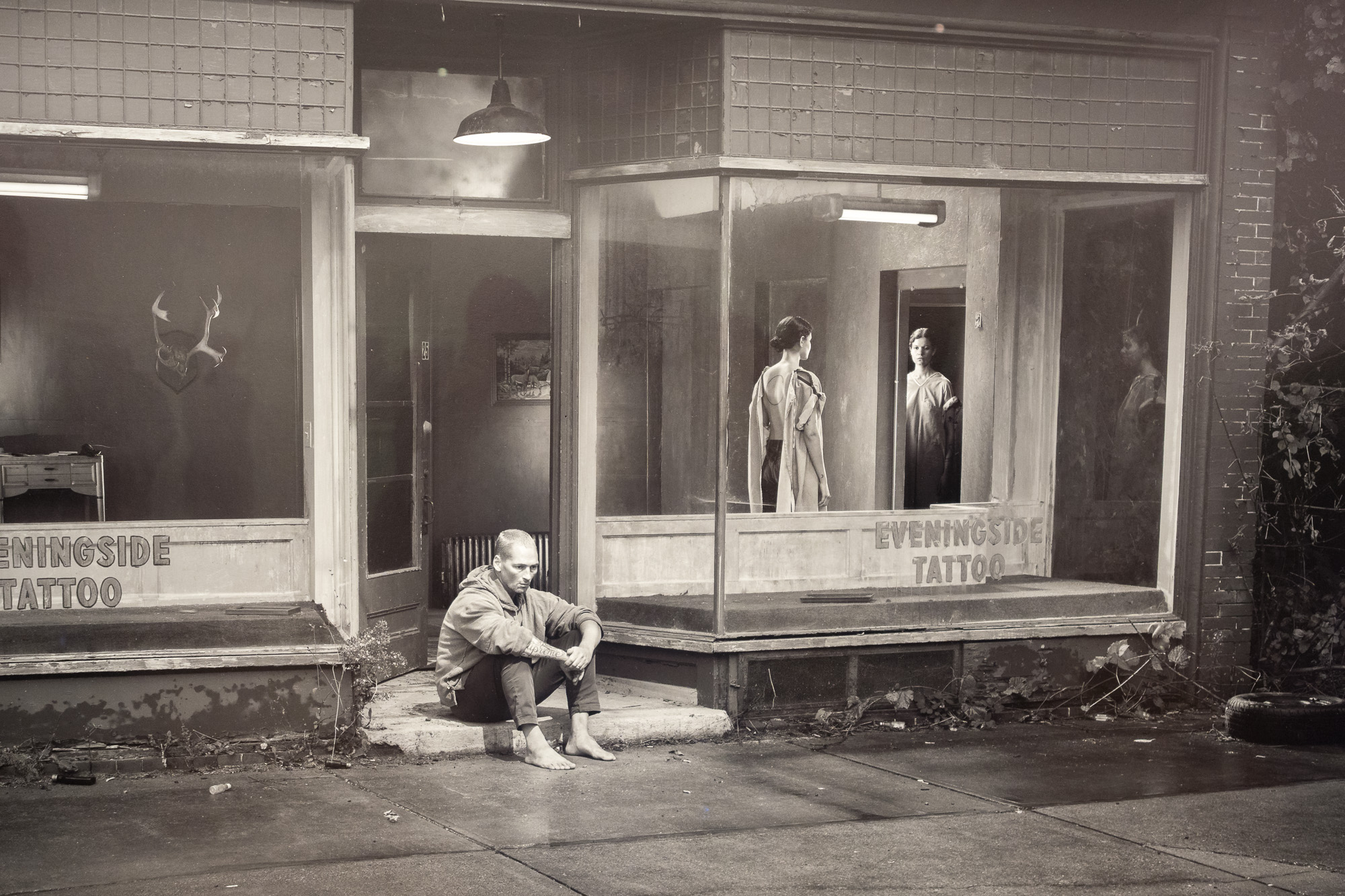
The Gregory Crewdson retrospective is a must-see for anyone interested in contemporary photography. Crewdson’s work is both beautiful and unsettling, and it forces us to confront the dark side of suburban life. The exhibition is on view at the Albertina Museum until September 8, 2024.
For more information
You can find out more about the exhibition, including an interview with the master himself, on the Albertina Museum’s website here.
Where:
Albertina Museum, 1010 Vienna
When:
until 8 September 2024.
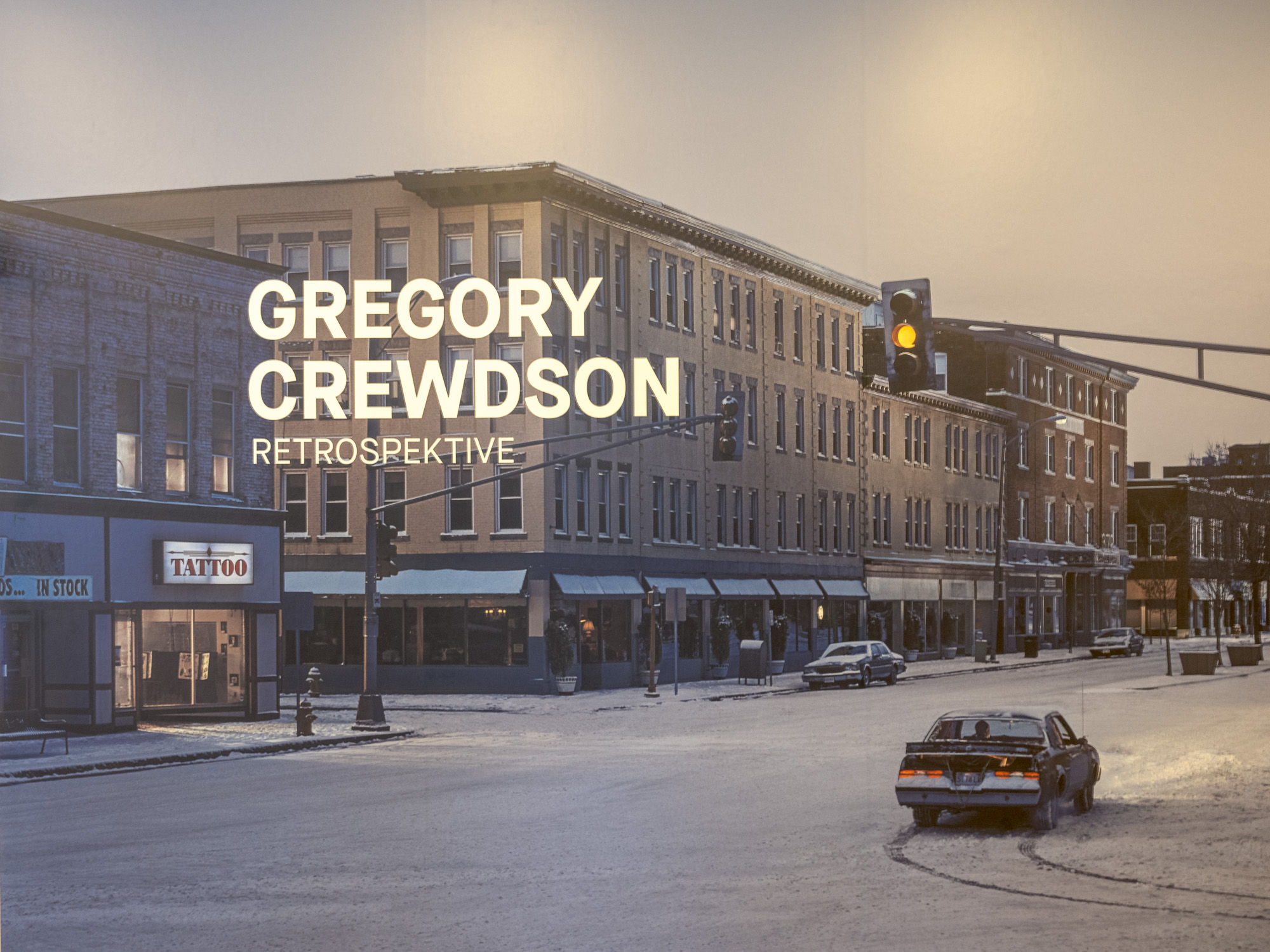
EXHIBITION PHOTOS © KARIN SVADLENAK-GOMEZ
 ViennaCultgram
I’m always a little ashamed when I first learn of American artists on your blog. But then Vienna is much more cosmopolitan than our city at the foot of the Rocky Mountains . . .
LikeLike