
Back when my analogue passion was reignited, for the Seven Sisters exhibition I was originally lent an Exakta Varex V. After bringing it to Hamburg and very carefully exposing a film with it (or so I thought) I was totally frustrated to find out on return that the film had not been properly transported and hence there were no pictures on it. So at that time, I switched to a different camera.
Meanwhile I have added quite a few old analogue cameras to my collection, mostly bought cheaply from an online platform. And lo an behold, I was thrilled when the other day I found a reasonably priced Exakta Varex IIb there. Before settling on this particular model, I had done quite a bit of research on the Exakta series, and I was fairly confident that this one would work for me. The woman who sold it to me said it had belonged to her father in law, who in turn had inherited it from his uncle. The uncle had used it until his death, and after doing a bit of testing I was pretty sure that the shutter release times work properly, that the film transport would be OK, and that hopefully the thing would be lightproof too. And so it turned out.

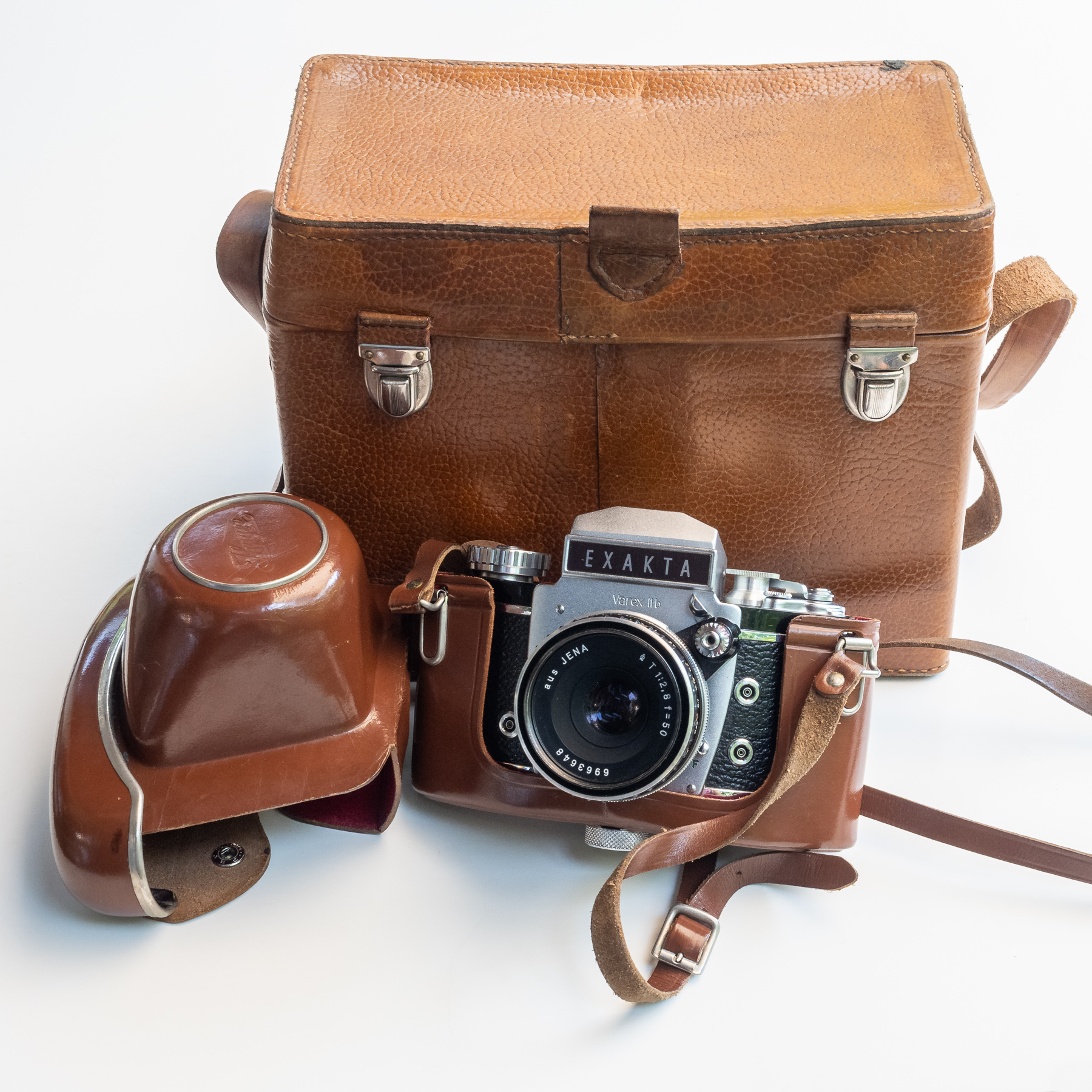
The Exakta Varex camera line was a series of single-lens reflex (SLR) cameras produced by the Ihagee Kamerawerk company in Dresden, Germany, from 1950 to 1969. The Varex line was the company’s flagship product and was known for its high quality and precision engineering. But before the Varex, Ihagee had alreay introduced a first Exakta camera in 1933. This was the first time that the SLR principle, in which the shooting lens also creates the viewfinder image on a screen (unlike in rangefinder lenses), was implemented in a small-format camera. This first Exakta had no long-term movement, no quick-winding mechanism and no flash synchronization, but it did have the Exakta-typical cloth focal plane shutter up to 1/1000s.
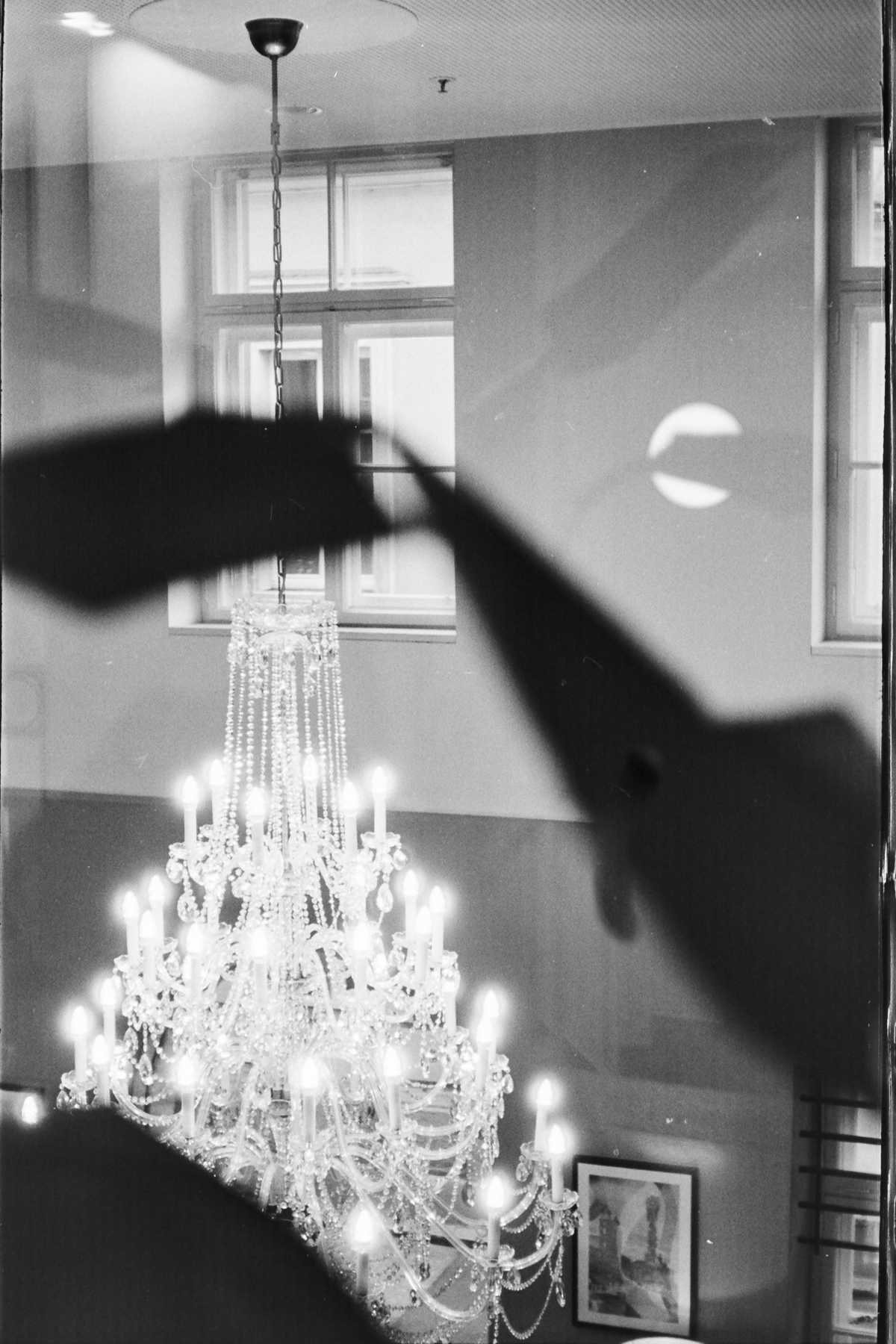
The first model in the Varex line was the Exakta Varex, which was introduced in 1950. The Varex was the first Exakta camera with an interchangeable waist- or eye-level viewfinder. It also had a number of other features that made it one of the most advanced SLRs on the market at the time. The Exakta Varex IIb, my model, was the highlight and at the same time the end of the development of the classic Exakta. Built between 1963 and 1967, compared to the previous model IIa, the shutter speeds were changed to the new geometric range (30,60,125,250…) and the camera finally received a rewind crank. Like all the Exaktas, it has an easily interchangeable waist- or eye-level viewfinder. For me working with the eye-level viewfinder is much easier, so that is what I used for the most part, though the swaying image in the waist-level light shaft viewfinder can be quite fun to play with.

I was able to download a user manual from the web for free, and although the Varex looks quite complex and has its release button in a rather unusual location, where it requires a very hard press with the left hand (making it rather risky to use it for any exposure time below 1/60), I quickly got used to it and enjoyed the process. It does not have a built-in light meter and thus requires one to either estimate exposure time by rule of thumb, or use an external light meter. (I have an app on my mobile, and an analog disk for estimating.)
Except for one, these pictures were all taken with the standard 50mm lens that says “from Jena” on it. It is actually a Zeiss lens, but after Dresden became part of the GDR it had to be called something else.
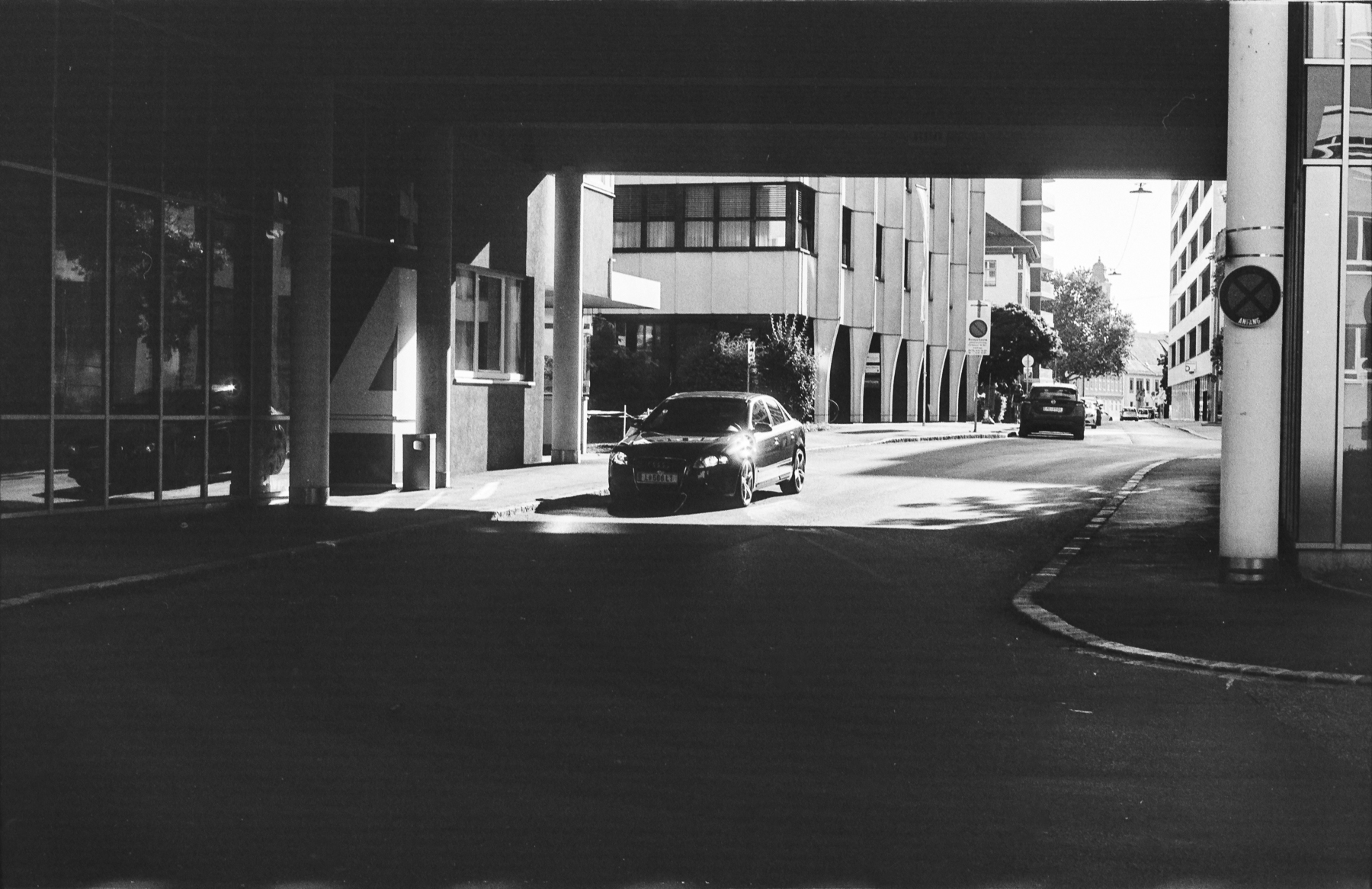

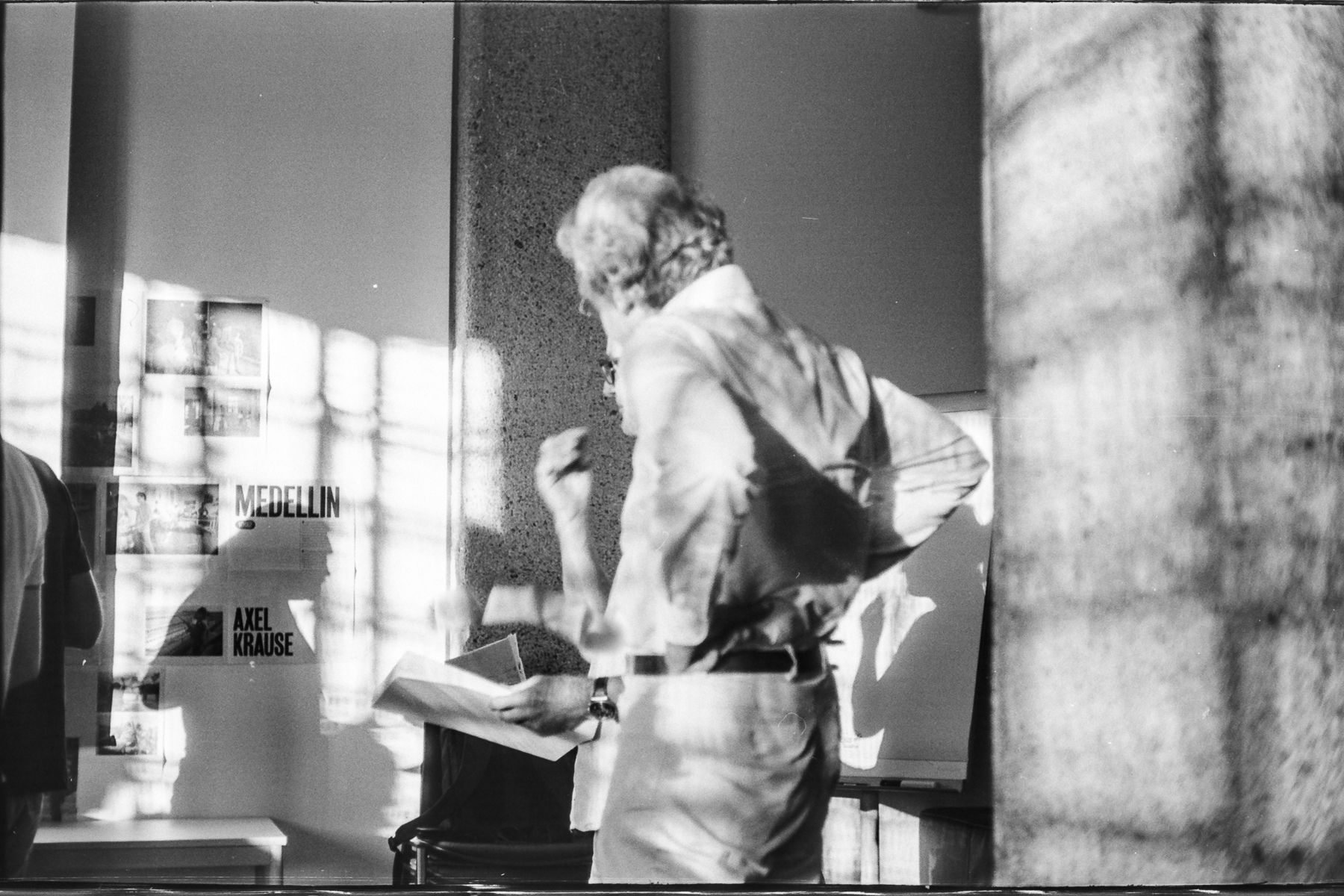


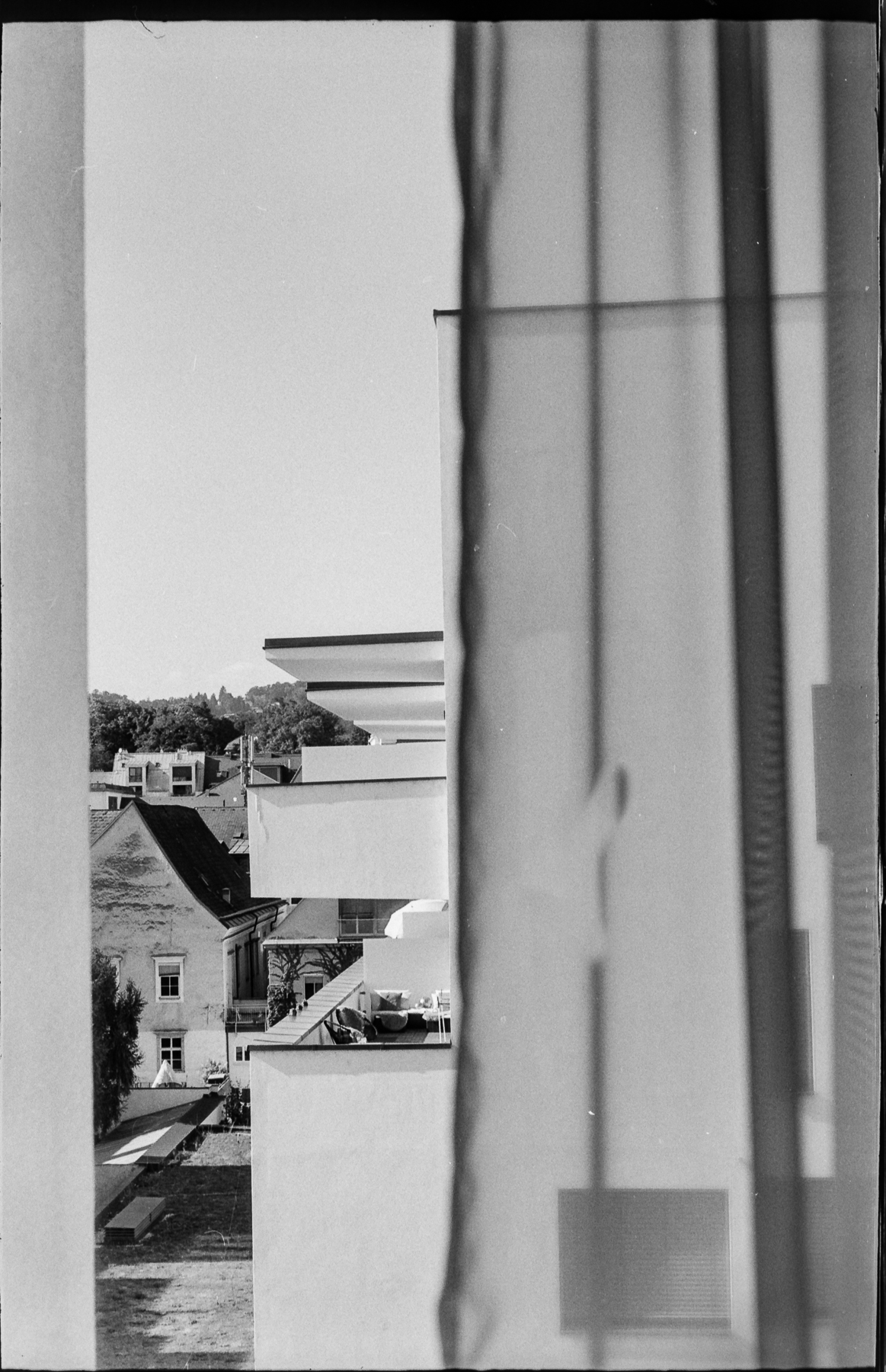
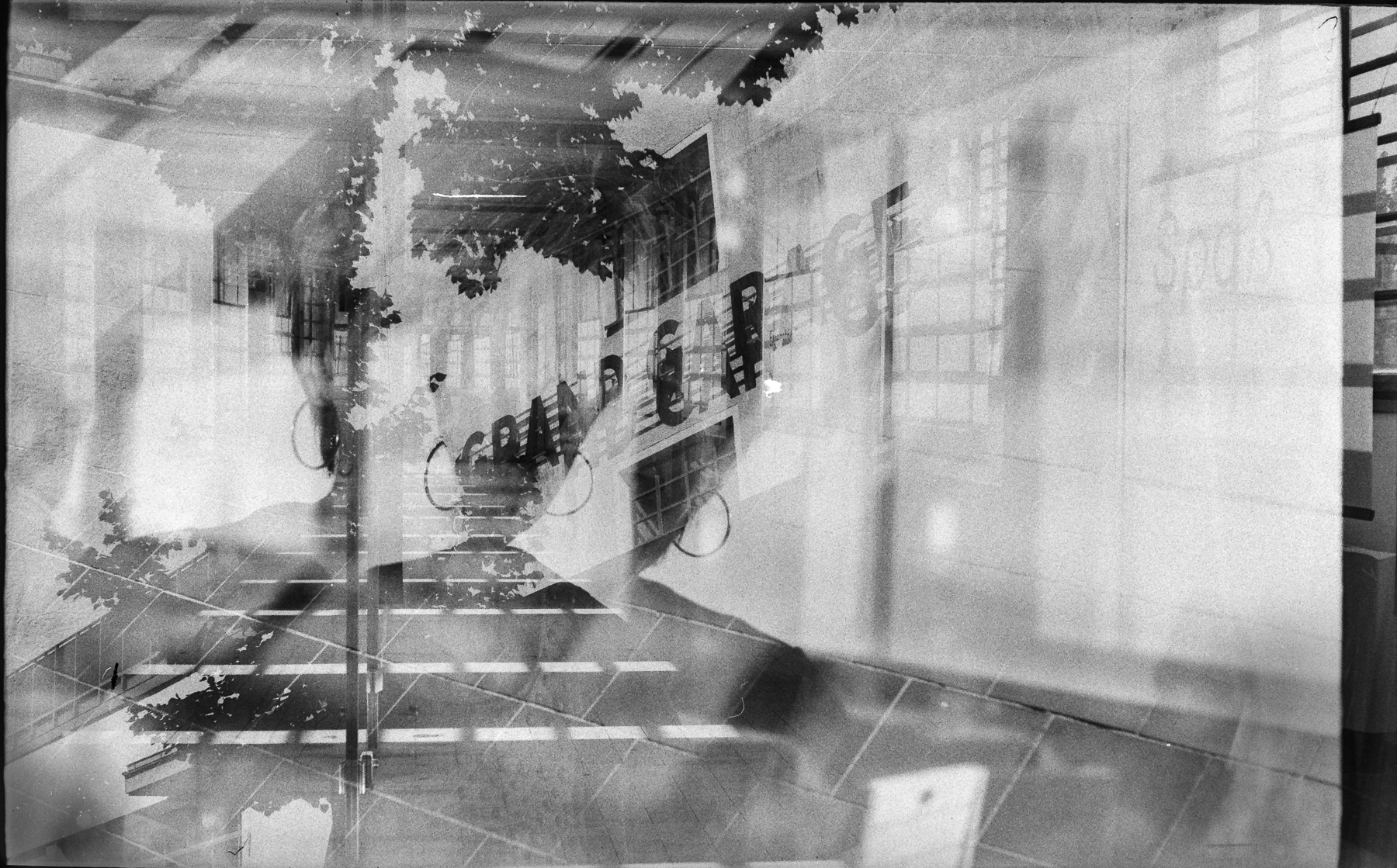
I shot all of my photos on the inexpensive Fomapan 100 film, a 100 ISO black and white film made by Foma in the Czech Republic. It is a traditional panchromatic film with a cubic grain structure. Supposedly it is known for its sharp images, high contrast, and rich tonality, but I really cannot confirm the part about the contrast. After I developed the film in Rodinal I “scanned” them with my digital camera and a macro lens. I found them to be lacking in contrast even for very sunny situations. No matter though, once I ran them through basic clarity and contrast adjustments in Lightroom, they looked just fine to me, with quite good level of detail and tonal range.
Now, analogue enthusiasts may object that processing an analog negative digitally makes no sense – to that I say that, having taken a one week analog workshop at Prager Fotoschule in Linz in August and developed my own film and then enlarged negatives on paper, I now know all that is and was possible in terms of post-processing in the analog days. Dodge and burn was commonly practiced, though of course the whole process was a lot slower and more cumbersome than the tools we have available to us today. I very much enjoyed the slow process in the darkroom, but I am not about to get my own enlarger, and I am quite happy to do some post processing digitally. I am no purist. But I welcome your comments on this matter.

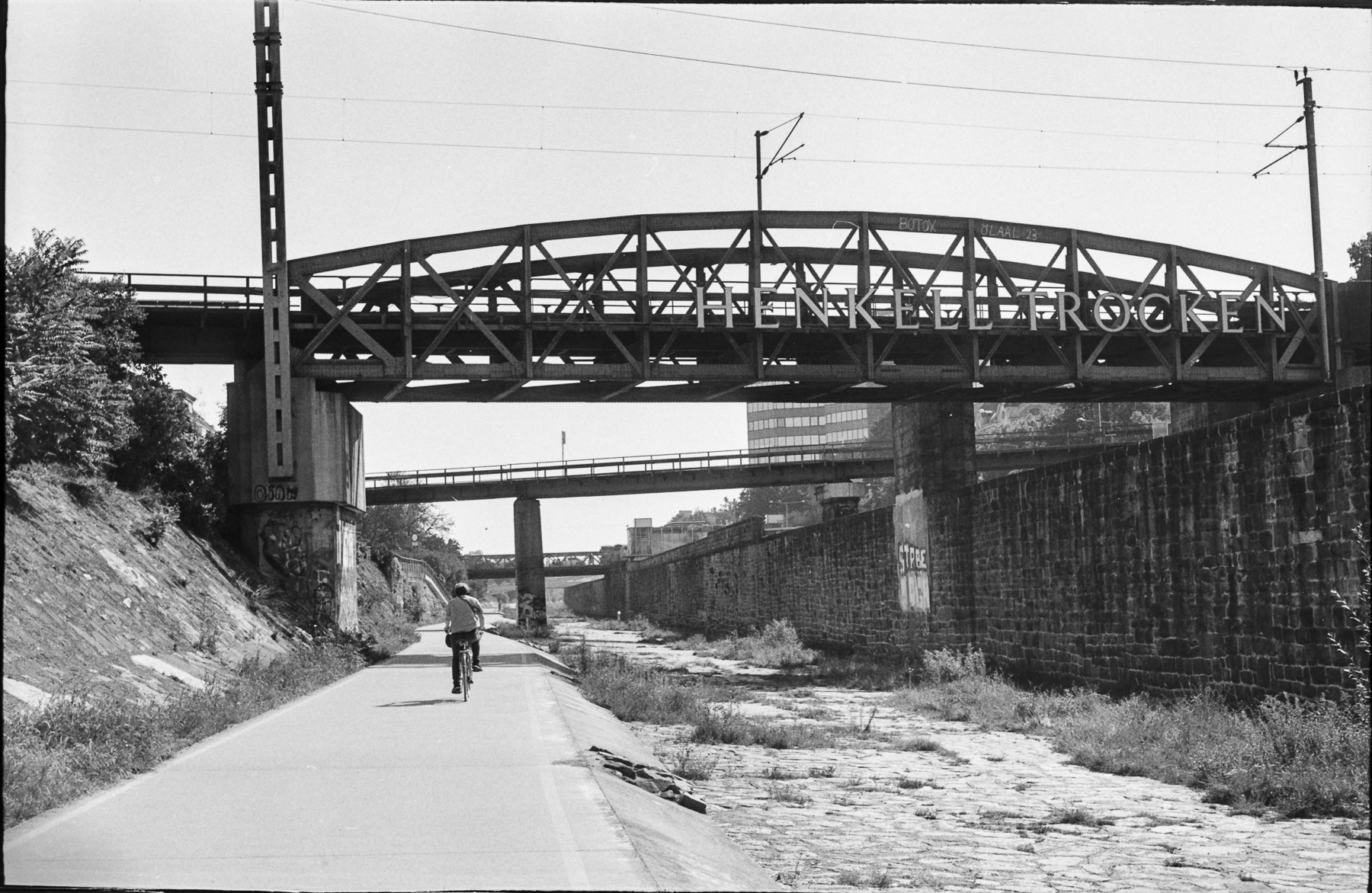
The Fomapan 100 is a cheap film, and after the initial digitalisation of the negatives I found it to be rather low on contrast, but it retains a very decent amount of detail and has quite small grain. I will definitely be using this camera again, trying it with another film next time. I have no problem with the look of the Fomapan, especially after doing some contrast improvement in post (which, after all, the analogue photographers of yesteryear all did too), but I want to see what the camera does with other film material.
If you would like to know more about the Exakta and Exa camera line, there is a great page (in German) about it here – this is where I did my initial research.


ALL PHOTOGRAPHS © 2023 KARIN SVADLENAK-GOMEZ
 ViennaCultgram