
When I was working on my portrait project for the “17 Sisters” analogue exhibition at Fine Art Galerie Traismauer with Reinhard Prenn´s Yashica Electro 35, the analogue bug got me and I went a little bit crazy and began accumulating a whole bunch of old cameras (bought cheaply on a used goods platform or inherited) from different decades. They are now for the most part sitting on my shelf in what has become a minitiature “camera museum”, but I do aim to test them all eventually. So lately I have tried out a camera from the GDR, made in the 1970s: the Praktica B200.
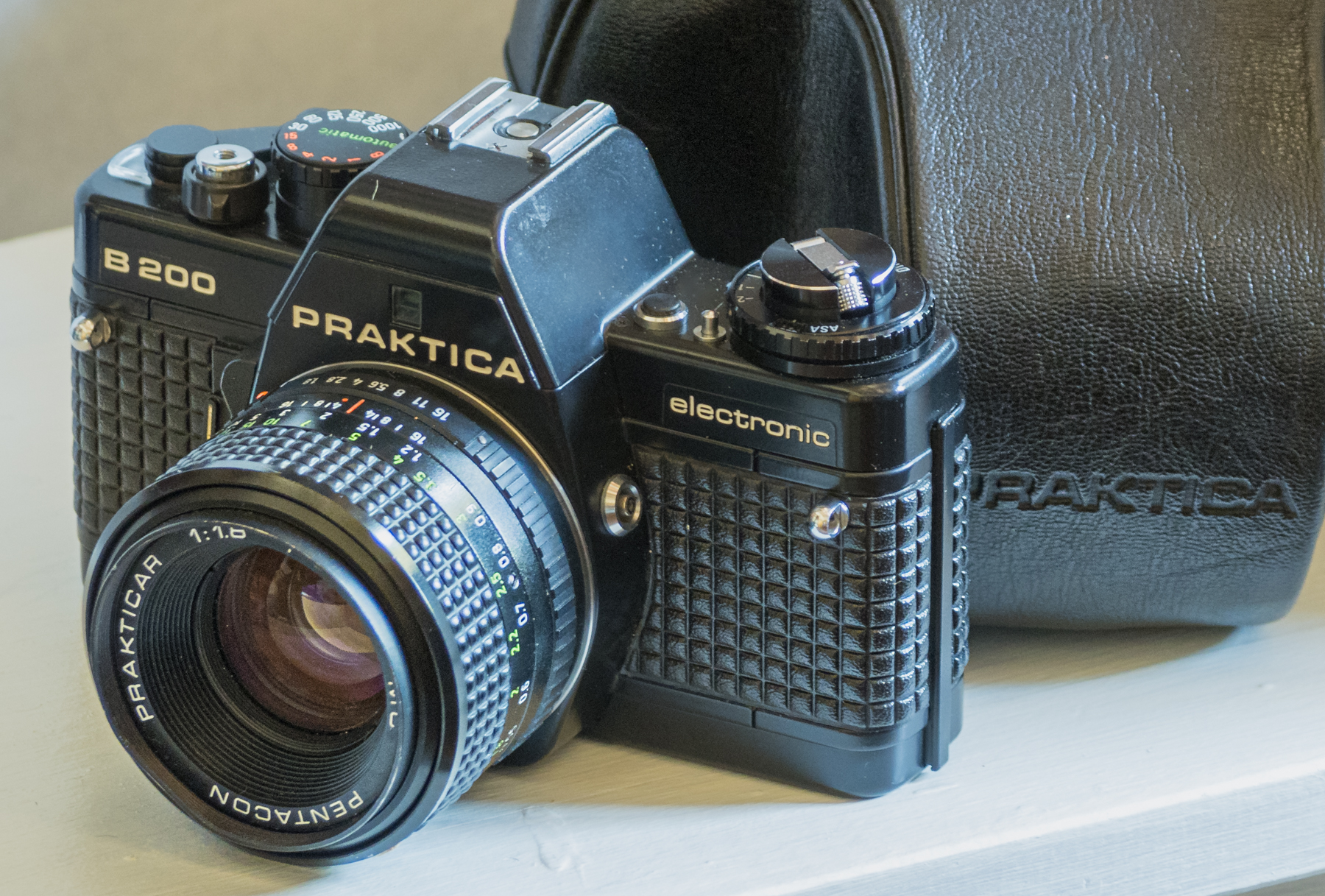
Let’s take a moment to appreciate the Praktica B200, a true classic among 35mm film SLR cameras. Praktica is originally the brand name for a series of SLR cameras from the manufacturer Kamera-Werke Dresden-Niedersedlitz (“KW”), which was taken over by Pentacon, Dresden-Striesen. The cameras manufactured in the GDR were also exported abroad and sold in West Germany, for example, by the mail order company Quelle under the RevueFlex brand name. The Praktica B200 was developed by Pentacon in the late 1970s, and it quickly gained popularity for its solid construction and reliable performance. It was produced from December 1979 to August 1982.
Today, the landscape of camera production has shifted, with a majority of cameras being manufactured elsewhere in the world. Leading camera manufacturers are now based in various countries, including Japan, South Korea, and China, among others. This globalization of camera production reflects the changing dynamics of the industry, driven by technological advancements and market forces.
With its mechanical design, the B200 offers photographers complete manual control over essential settings like shutter speed, aperture, and focus. It has an interchangeable lens system, although I only have the one 50 mm lens that it came with. With its textured surface, the camera’s body design exudes a nostalgic 1970s charm that I find particularly appealing. I have a genuine fondness for the original soft leather case adorned with the Praktica imprint as well.
Focusing manually works well, and I love the decided clack sound the shutter makes, while the camera feels solid in my hands. I also like that it has a (battery-powered) built-in exposure meter.
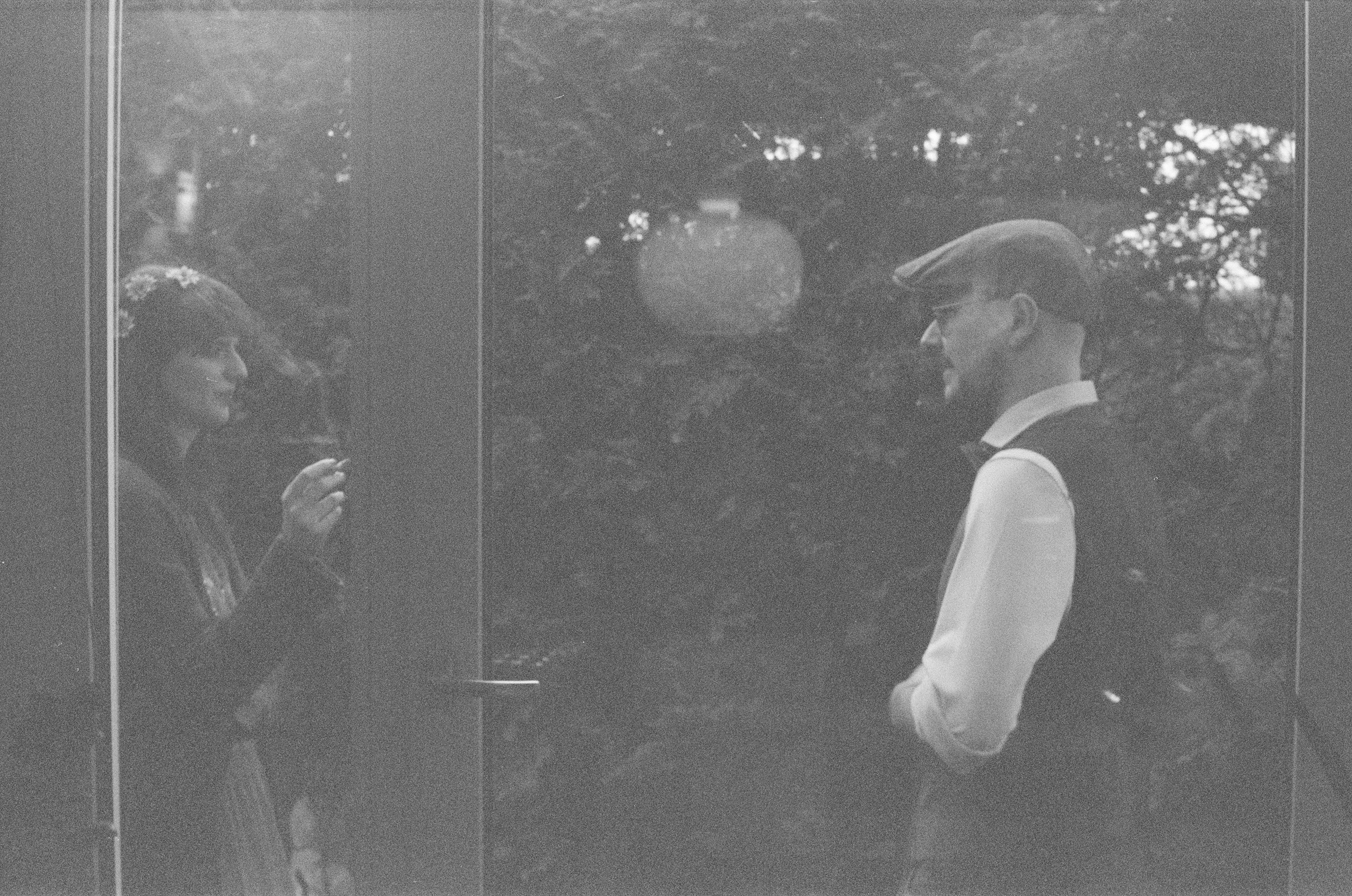
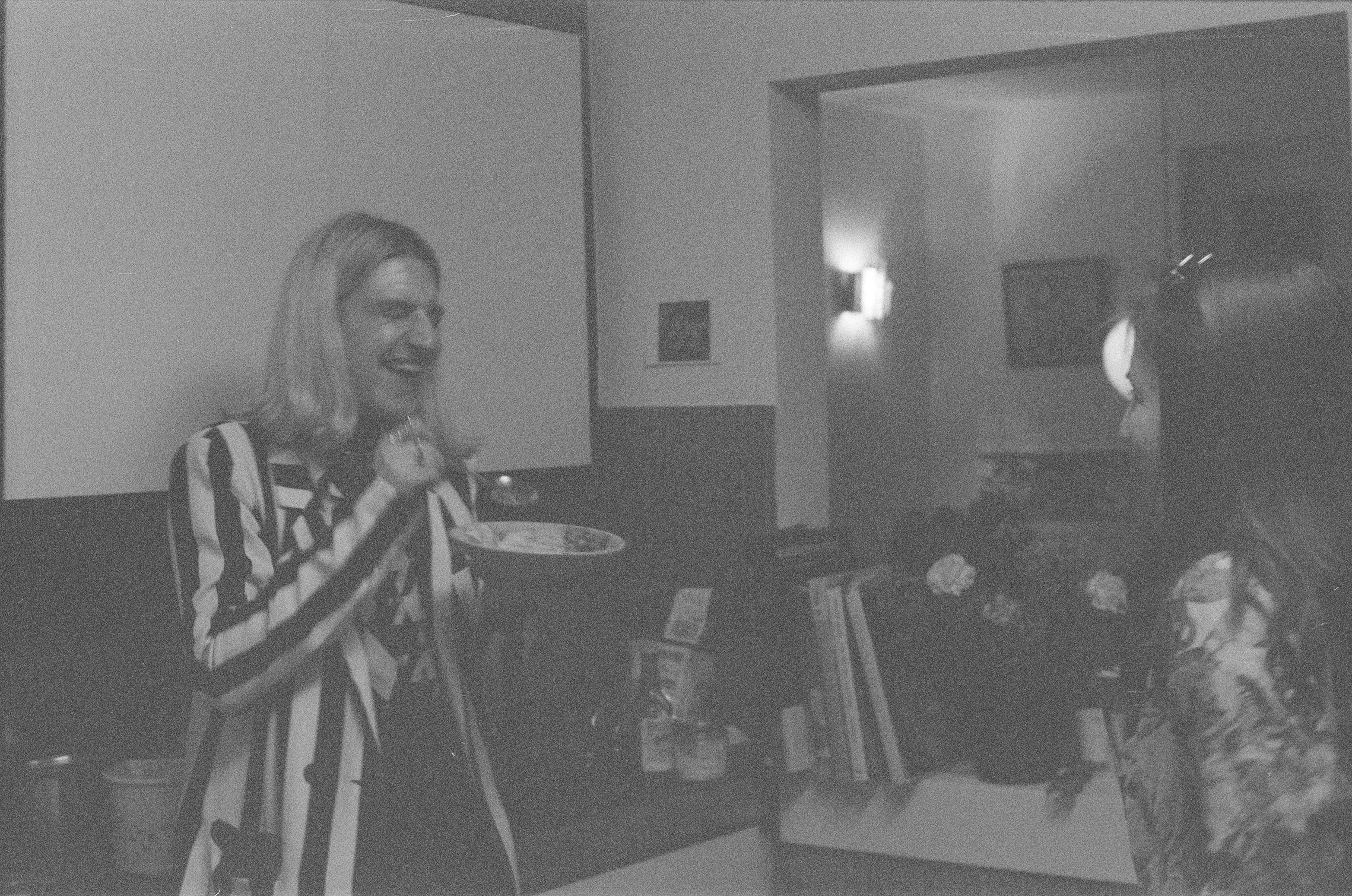
The first time I took the Praktica B200 for a spin was at my daughter´s 70s-themed house party. I thought I’d go all out and, given the low-light situations I was expecting, loaded the Praktica up with a super high ISO 3200 black and white film, the Kodak T-MAX P3200. But here’s the thing—I then neglected to tell the folks at the photo lab to bump up the contrast during development. So the images turned out flat with almost zero contrast, and the grain was off the charts, no surprises there. Although they have a certain retro coolness to them, I must confess that the experience has left me hesitant to revisit this particular film choice in the future.
This is not the camera´s fault, of course. In June during the Vienna Rainbow Parade, part of the annual Pride Month celebrations, I tried it out again, this time with a roll of Fujicolor 200 film, a daylight-balanced film that is known for its versatility, affordability, and widespread availability.
This time it worked, although I have to practice focusing a bit more – some of my images came out rather blurry. I used the automatic exposure meter of the camera, and it turns out that I probably should have underexposed a bit, as most of the pictures appear somewhat overexposed, though still within the acceptable range. I like the look, wich is not overly saturated, but still has a pleasant colour spectrum. Unlike with the Kodak Ektar 100, for example, the reds seem more realistic, and the greens are – pleasingly – understated.
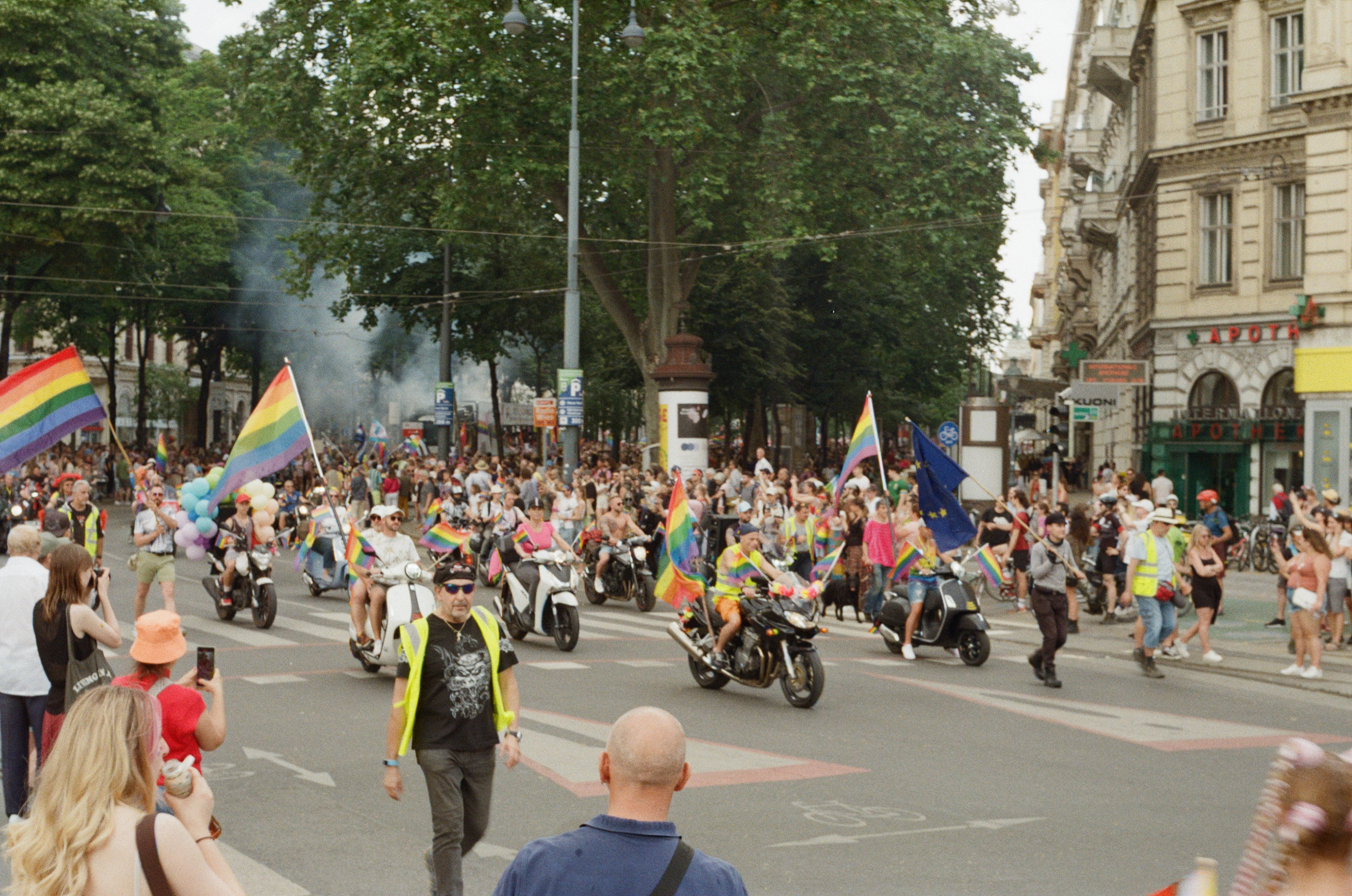

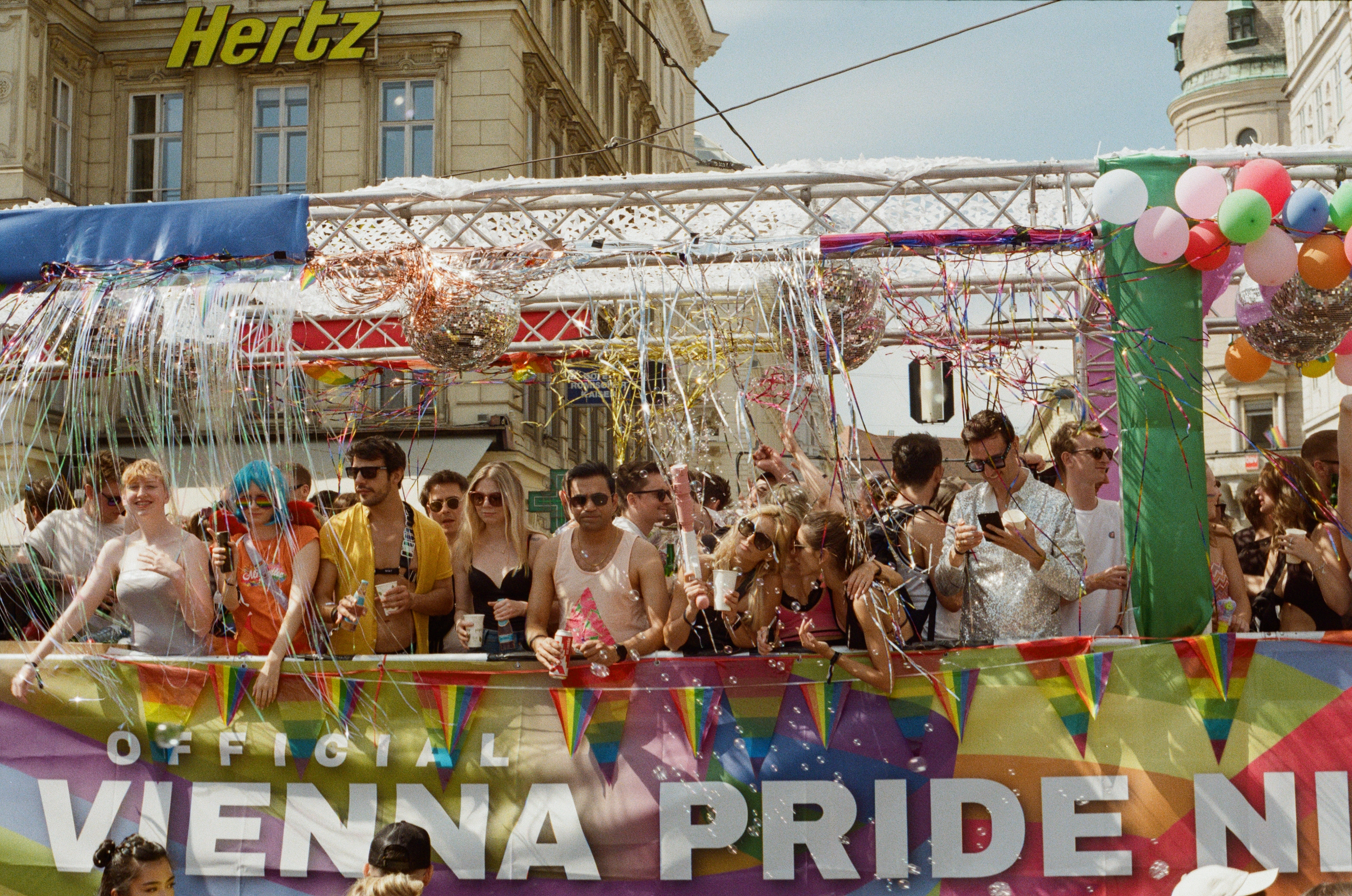
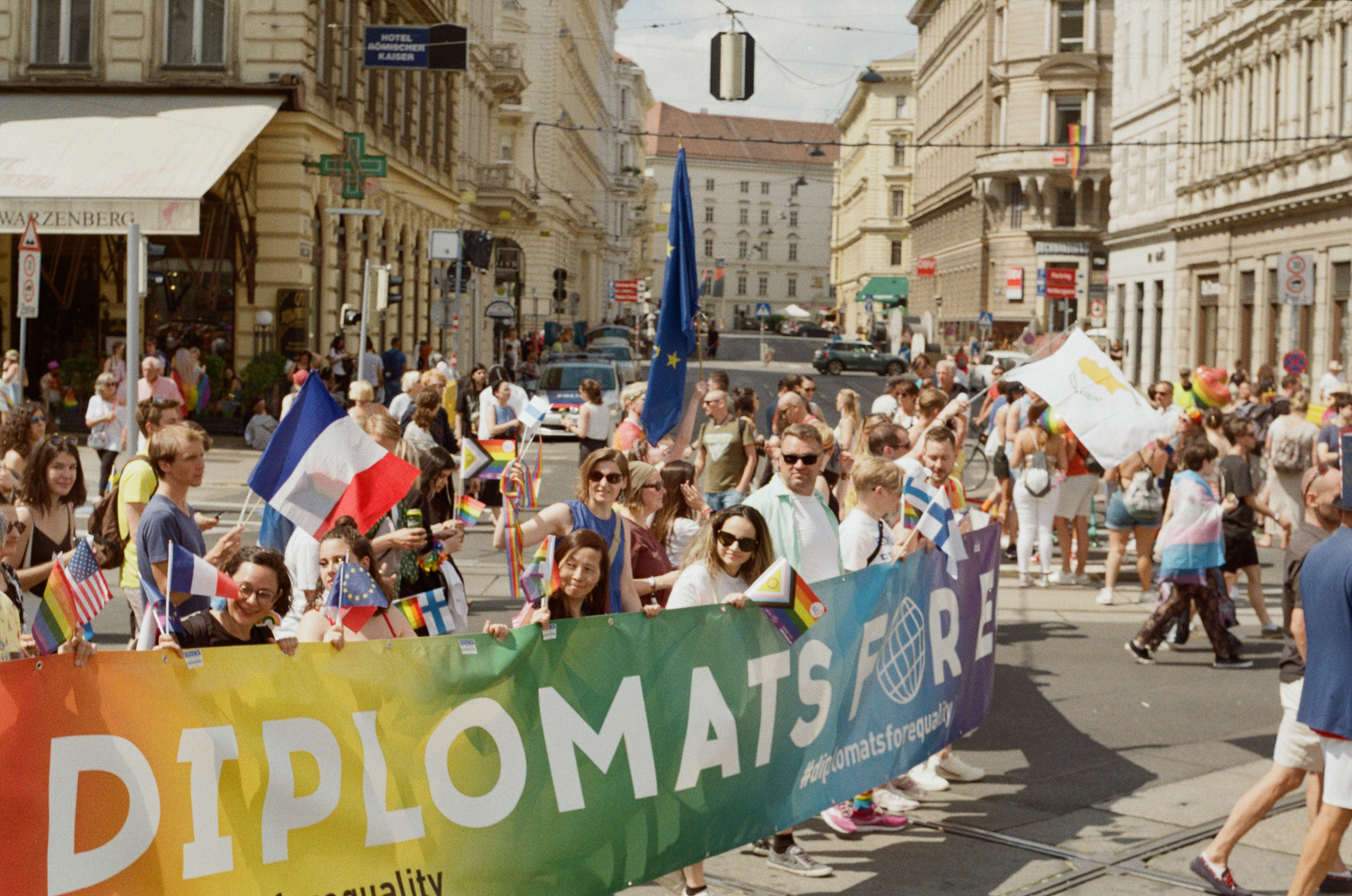
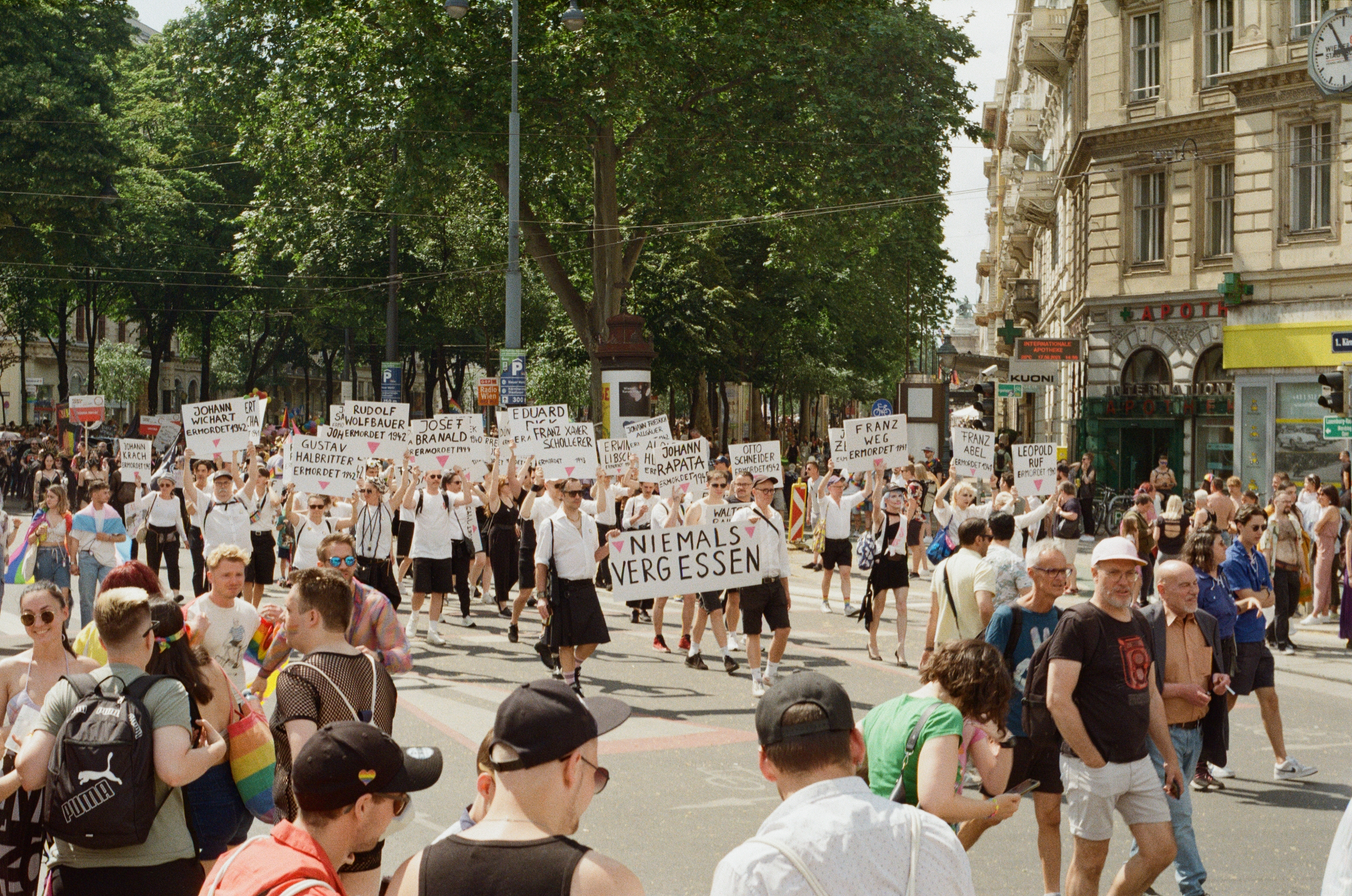
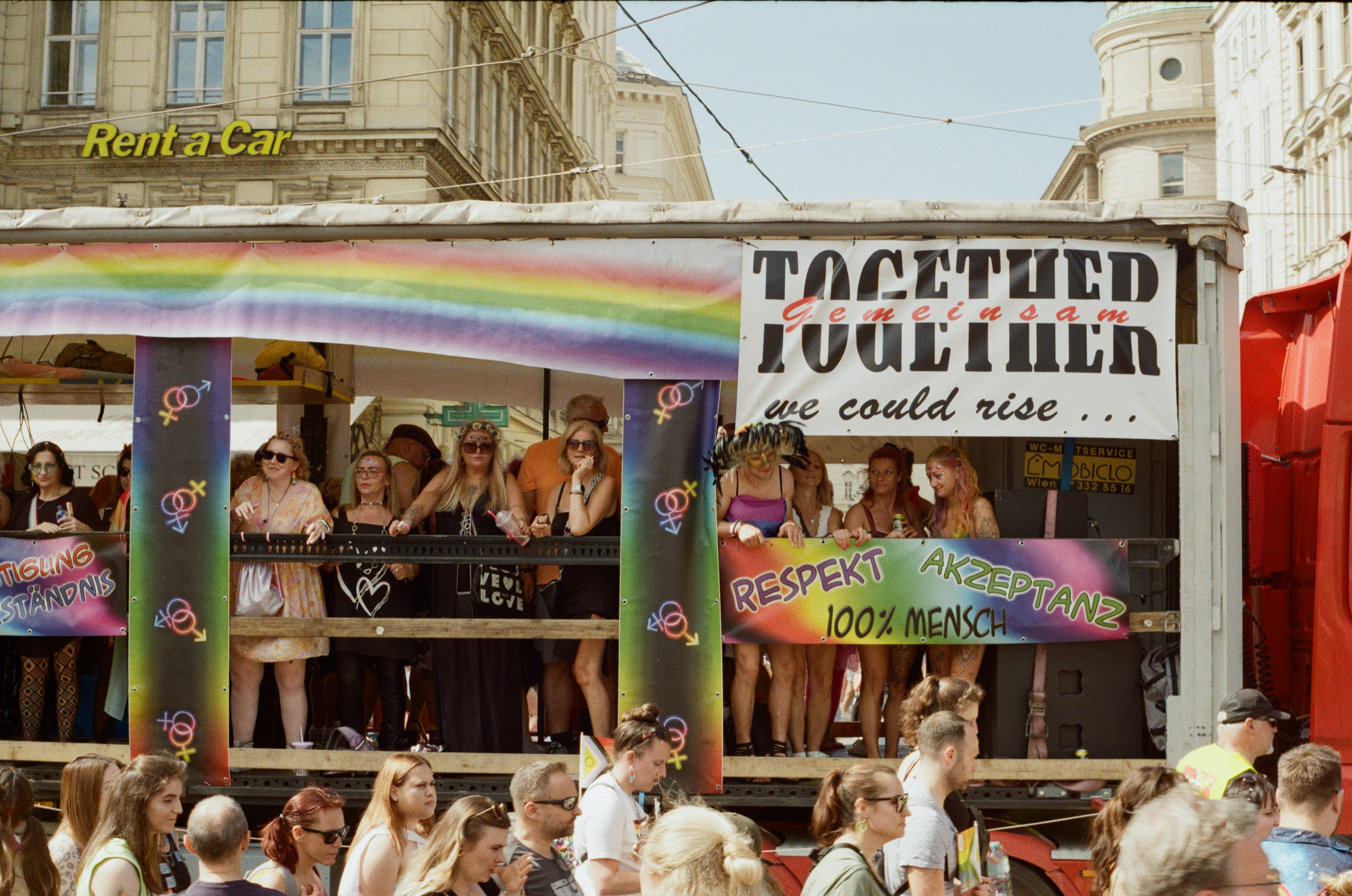
As you can see, the Fujicolor 200 produces vibrant, natural colours with a slightly warm tone, characteristic of Fujifilm. It offers a good balance between fine grain and moderate sensitivity, resulting in images with pleasing detail and decent sharpness, sufficient for everyday shooting situations. The images were scanned from the negative film at a professional photo lab, and I have not done any editing.

If I compare it to Kodak Ektar 100, which I used in the Yashica and have yet to try out in the Praktica, that film had more sharpness and finer grain, with its a lower ISO rating of 100, providing increased detail and also more vibrant, saturated colors with a higher level of contrast. So it really depends what you want.
The Praktica B200 serves as a nostalgic reminder of a time when cameras were manufactured in the long defunct GDR, and it remains cherished by many as a symbol of a unique era and a testament to the craftsmanship and innovation that emerged from the GDR.
I will be using this camera again, trying it with another film. So stay put, I will show the results here in due course.
ALL PHOTOGRAPHS © 2023 KARIN SVADLENAK-GOMEZ
 ViennaCultgram