
In the age of datafication, our world is increasingly mediated by algorithms and machine learning. These technologies have the power to shape our understanding of the world, but they also raise important questions about the nature of knowledge and truth. One lust run before the WERK X-Petersplatz theater closes for the summer and goes on a break to reinvent itself, STREAMS: Catching Caches, it is all about this topic, which has been occupying my and the global mind (if there is such a thing) a lot lately: data and what we do with them.
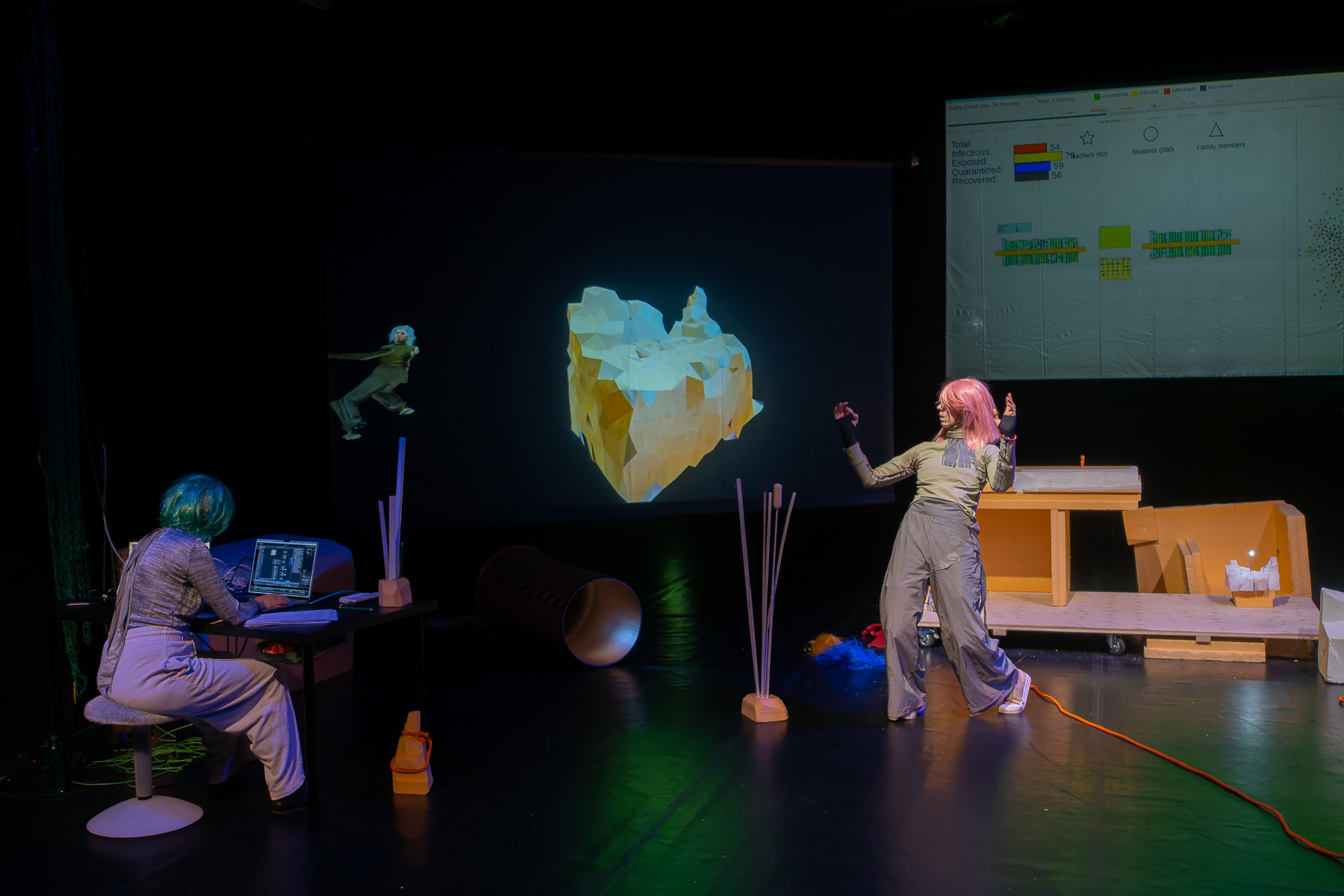
It has not been possible to avoid the inevitable (and very necessary) discussions about artificial intelligence and machine-learning that dominate media reports these days, between ChatGPT and image-generating systems that have begun to compete for attention on photo sharing platforms and generated a lot of controversy. How interesting then, that this performative evening was conceived by the artistic directors Julia Novacek und Artemiy Shokin a couple of years ago, before the current hype over AI began. The performance event actually premiered in 2021, but since only three of the six scheduled performances could take place due to pandemic-related restrictions, the series is finally able to conclude now.
When I spoke to Julia she told me that she had starte wondering how all the scientific information we get is actually gathered and evaluated. To learn more the creator team of this performative event interviewed several scientists and then put together a multimedia performance event that deals with “datafication”. “The stage gives us the opportunity to bring different disciplines together in a completely non-hierarchical, sometimes associative manner. Here we can also make them aesthetically tangible, stage them performatively. The creation of knowledge now has a lot to do with digitality and algorithms in almost all areas. Not only in this area, but above all there, we usually have no insight into the processes, we only know the results,” says Julia Novacek.
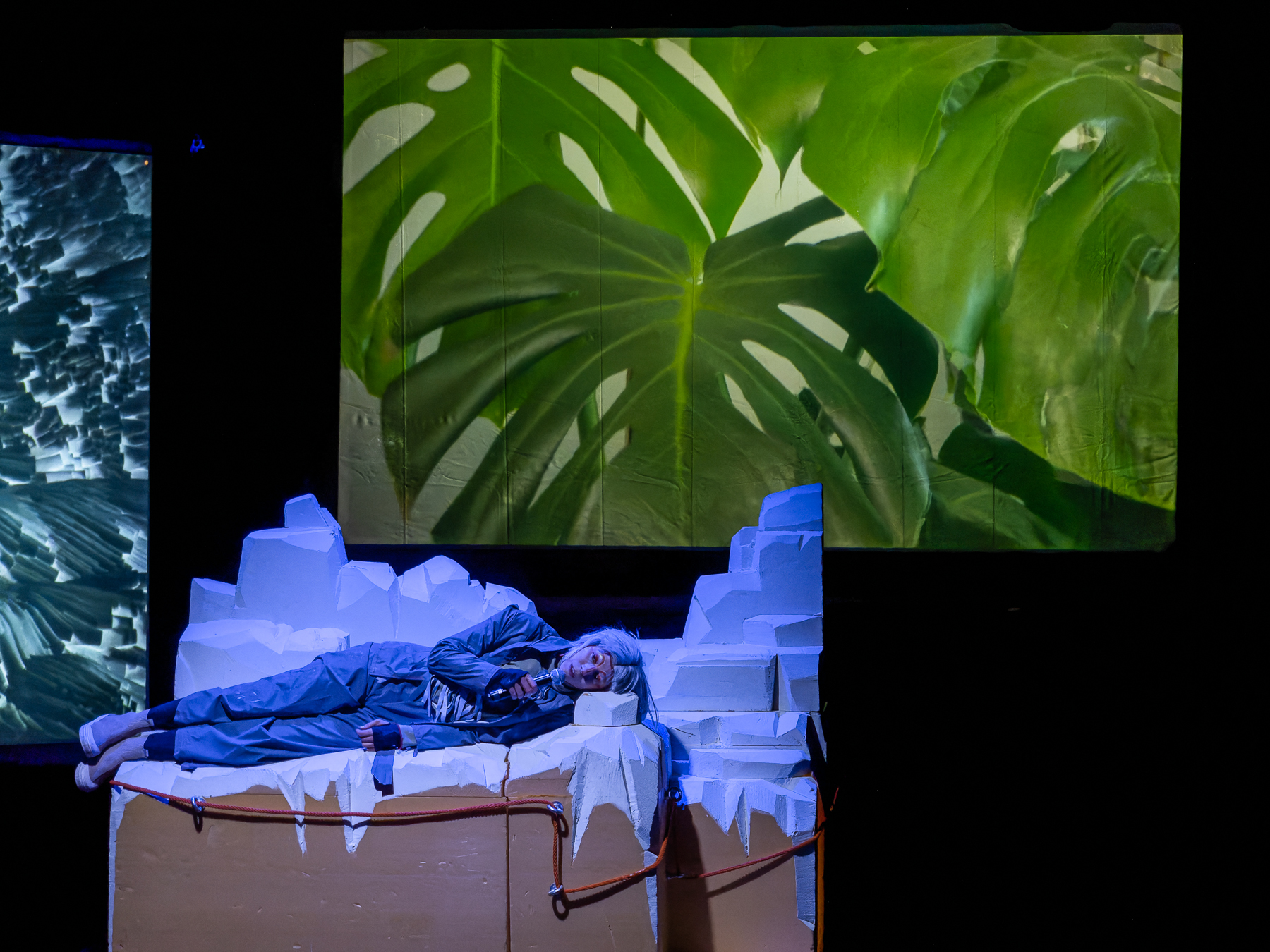

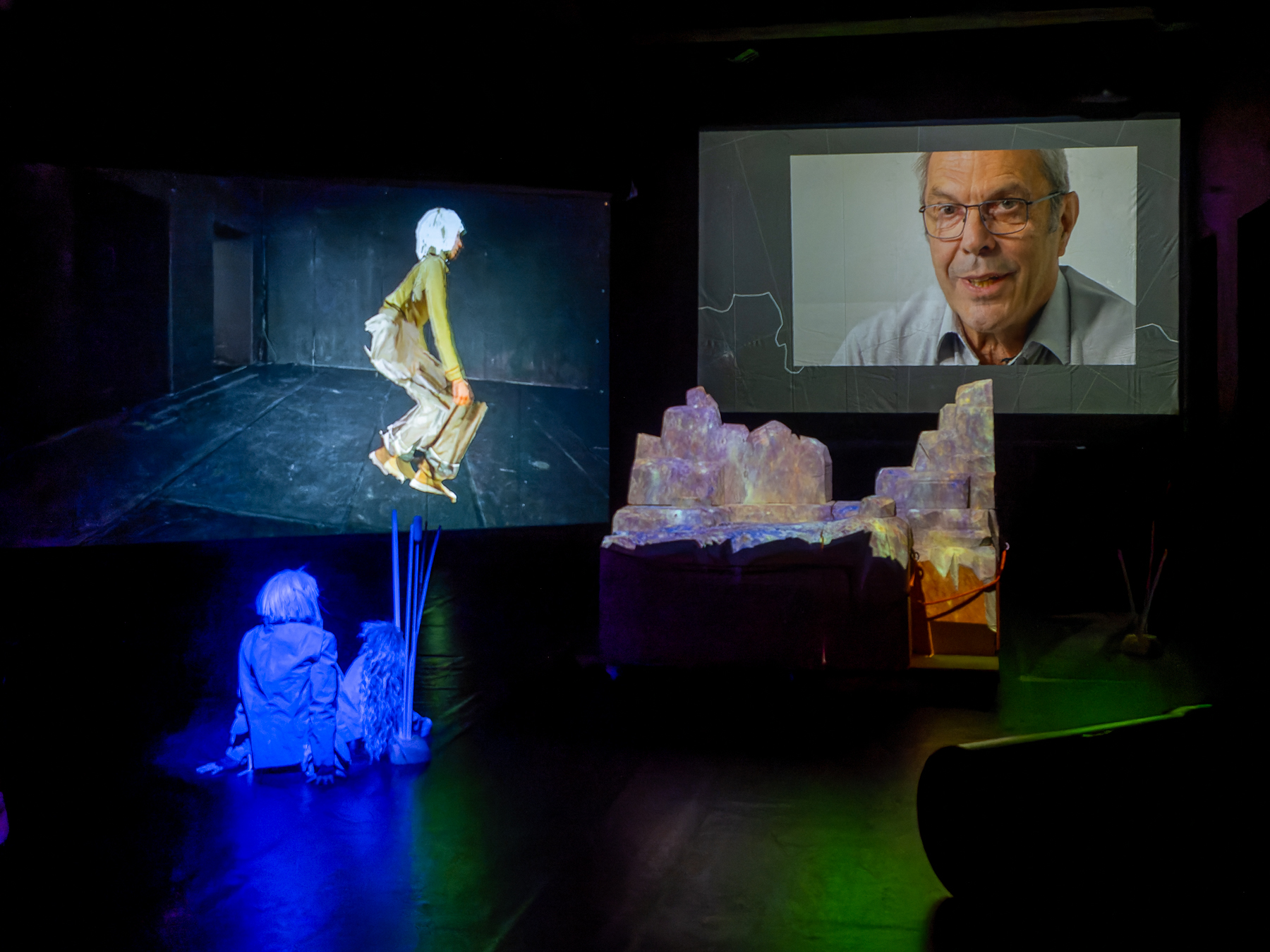
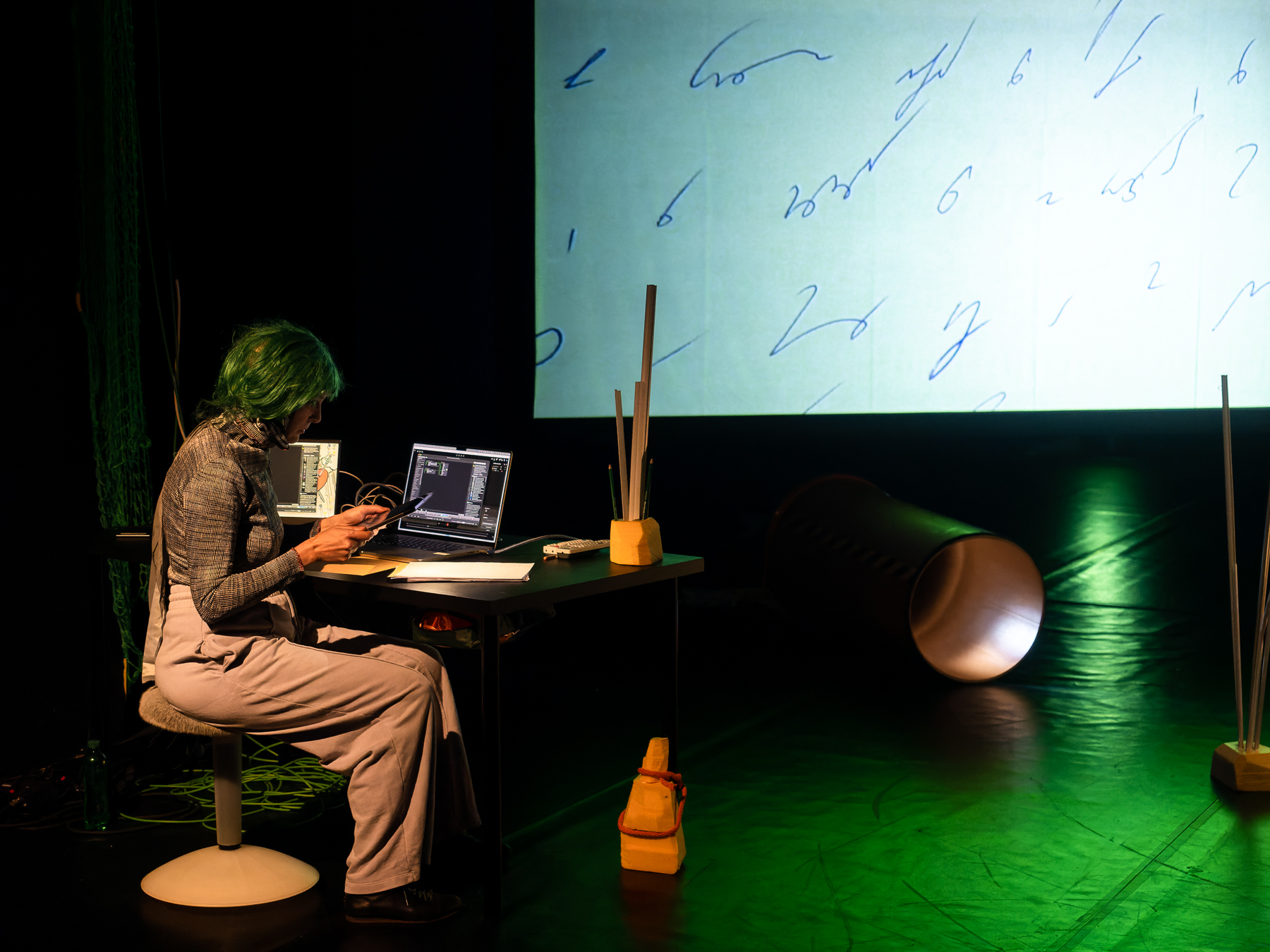
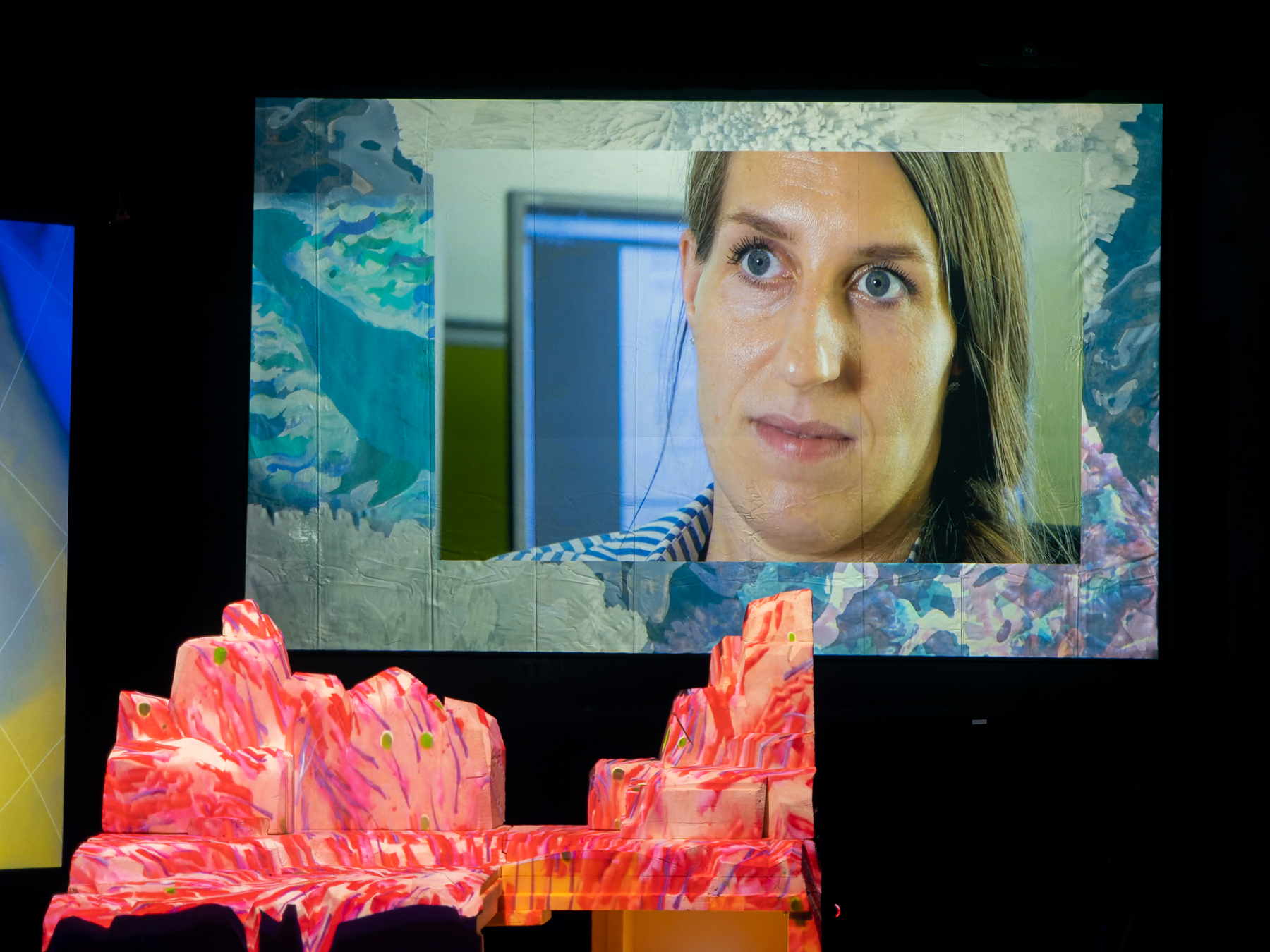


STREAMS. Catching Caches: A Performative Documentary on the Creation of Knowledge explores knowledge questions through a unique collaboration between artists, scientists, and technological experts.
The performative event brings together experts in shorthand, climate research, data forensics, and even astrology (yes, not astronomy, astrology) to explore different ways of knowing and generating knowledge. It highlights the different ways in which knowledge can be created, as the interviewed experts use a variety of methods to collect and work with information, including observation, recording, and forecasting. Brief recordings of a series of interviews with experts are illustrated with digital projections of data streams from their various fields. This narrative is then performed live, in a sense commented on, by a dancer/actress. She is joined by a stenographer and a media artist to create a unique and immersive performance experience.

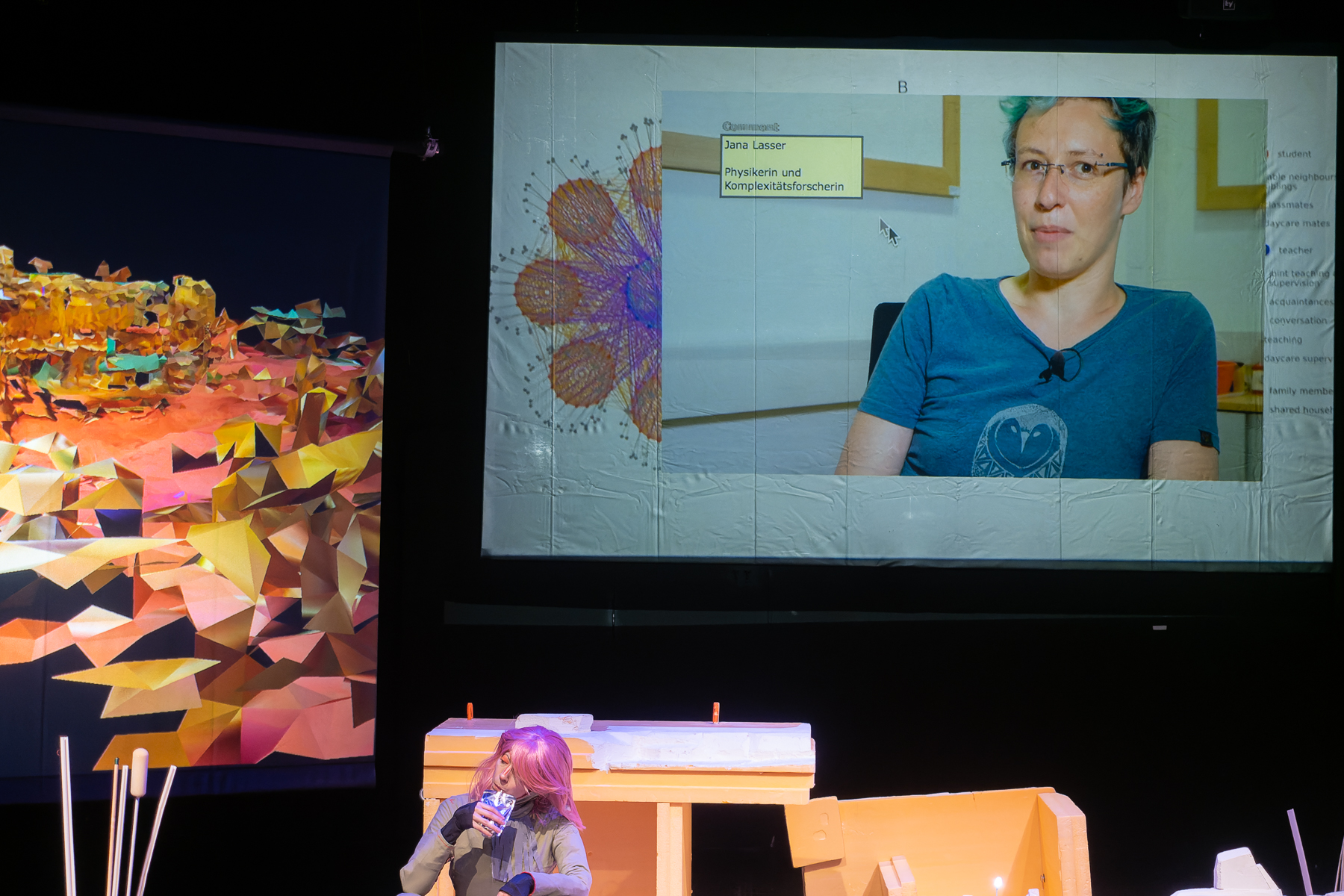
For example, Jana Lasser’s field of research is called computational social science, a combination of digital methods, computational methods and social research. She explains what complexity means to her: “For us, complexity is when things are made up of, for example, many small parts and then the whole thing behaves differently from what a single part would lead you to believe, i.e. emergent behavior. … And another feature of complexity is, for example, when there are a lot of interactions and feedback processes between different components in a system. That also makes things very complex.” Jana uses an “agent-based model” in her work. “So this agent-based model that I’m working with is a programme on the computer that I wrote. And this programme tries to abstract: agents, i.e. people, people who can interact with each other. … The model helps me first of all to depict reality, to bring it into my computer, and then I can do things with it that I can’t try out so easily and quickly in reality, just to answer questions.”

The science and technology researchers Sofie Kronberger and Katja Mayer say about the use of machine learning: “Of course algorithms control themselves or other algorithms. They also learn from each other, of course these systems already exist, neural networks or deep learning and all of these keywords that keep coming up are intended precisely for the simple fact that the systems learn most efficiently from within themselves, and as a scientist who helped develop it, you sometimes don’t know exactly what was decisive, that a weighting like this was made at the end, simply because the system optimized itself in the background.”
The performance also explores the role of algorithms and machine learning in the creation of knowledge, symbolically, through the movements of a human, but somehow robotic seeming dancer whose every move is recorded and live-streamed onto a projection screen. The results are colourful but imperfect, with little glitches and blips in the data making the images jerky and somewhat erratic. The machine here is sometimes lagging behind the human´s movements, taking short “coffee breaks” to calibrate itself.

Streams also tackles the idea of a dichotomy and at the same time a synergy between analogue processes (manual recording by a stenographer) and digital data collection (e.g. cameras in parliament, where the stenographer works alongside these digital recording devices, which are considered insufficient to capture the entirety of the debate). It questions the role of human judgment in the creation of knowledge. I found it quite interesting and a bit surprising that with all the recording technology available today in a setting like parliament or court, the stenographer’s interpretation of the interviews is still essential, as they are recording in great detail every side remark, every expressed emotion, even the “mood”.

There are important questions about the nature of truth here Truth can change over time, as data gathered by scientists create new information and what we once thought true may no longer be so. Sometimes the truth is only partially recorded. The well-known climate researcher Helga Kromp-Kolb talks about the role of science in informing politicis, which ultimately is supposed to use the knowledge to make informed fact-based decisions. “But,” she says. “one must be aware that above all the politicians, who are really in decision-making roles, also have limited ability to take things in and it’s difficult to get their attention long enough to convey a more difficult thing. So I see that as a problem: How do politicians arrive at their decision-making bases.”

Talking about politics, we go full circle to parliamentary debates. Here, the stenographer’s analog recording provides a more detailed and nuanced account of the interviews than the digital recordings. She records not only the words that are spoken, but also the gestures, the mood, and any remark made by anyone within her hearing reach. This detailed recording is essential to the creation of the narrative.

STREAMS. Catching Caches is a thought-provoking and visually interesting performative documentary that explores important questions about the nature of knowledge and truth and humanity in the digital age. It does not answer any questions, it leaves us thinking. But what I took from it is that there is still room, indeed a necessity, for a human element, in this brave new world of algorithms that seem to run our lives and will continue to do so ever more.
A production of Salon Situation in cooperation with WERK X-Petersplatz
With: Clara Reiner, Eni Brandner, Monika Schmatzberger
Concept, artistic direction, staging, video: Julia Novacek
Concept, artistic direction, set, costume: Artemiy Shokin
Experts: Helga Kromp-Kolb, Sofie Kronberger, Jana Lasser, Katja Mayer, Alice Vadrot, Gerald Amon, Harald Thurnher
Choreography & Performance: Clara Reiner
Animation, programming, media technology & performance: Eni Brandner
Shorthand & Performance: Monika Schmatzberger
Composition, live music: Sara Trawöger
Dramaturgy: Elena Höbarth, Anna Laner
Remaining performances
Tue June 27, 2023 at 7:30 p.m
Wed June 28, 2023, 7:30 p.m
Thu June 29, 2023, 7:30 p.m
Following the Dernière on June 29th, there will be an expert* talk with Dr. Katja Mayer (sociologist at the Department for Science and Technology Studies at the University of Vienna), Dr. Alice Vadrot (Professor for International Relations and Environment at the Institute for Political Science at the University of Vienna and international research project MARIPOLDATA) and the ensemble. Start: 9 p.m., free entry.
Thanks for the interesting chat, Julia, and for having me Team Werk X-Petersplatz!

All photos © Karin Svadlenak-Gomez
 ViennaCultgram
This looks and sounds like a challenging performance to attend, but one that’s highly relevant. I imagine it leaves the viewer quite unsettled.
LikeLike
It was actually quite a positive take on the whole thing, with a sense of humour.
LikeLike